Pick a method · Lesson 6 of 12
Zero-Based Budgeting: Give Every Dollar a Job
Learn zero-based budgeting step by step: plan every dollar of your take-home pay on paper, in order, and adjust the plan during the month.
 Video coming soon
Zero-based budgeting is a method where every dollar of your pay gets a job before the month begins. It takes more work than the 50/30/20 rule, but nothing is left to chance. In this lesson you learn the idea, the order to follow, a worked example and an honest look at the trade-off.
The idea
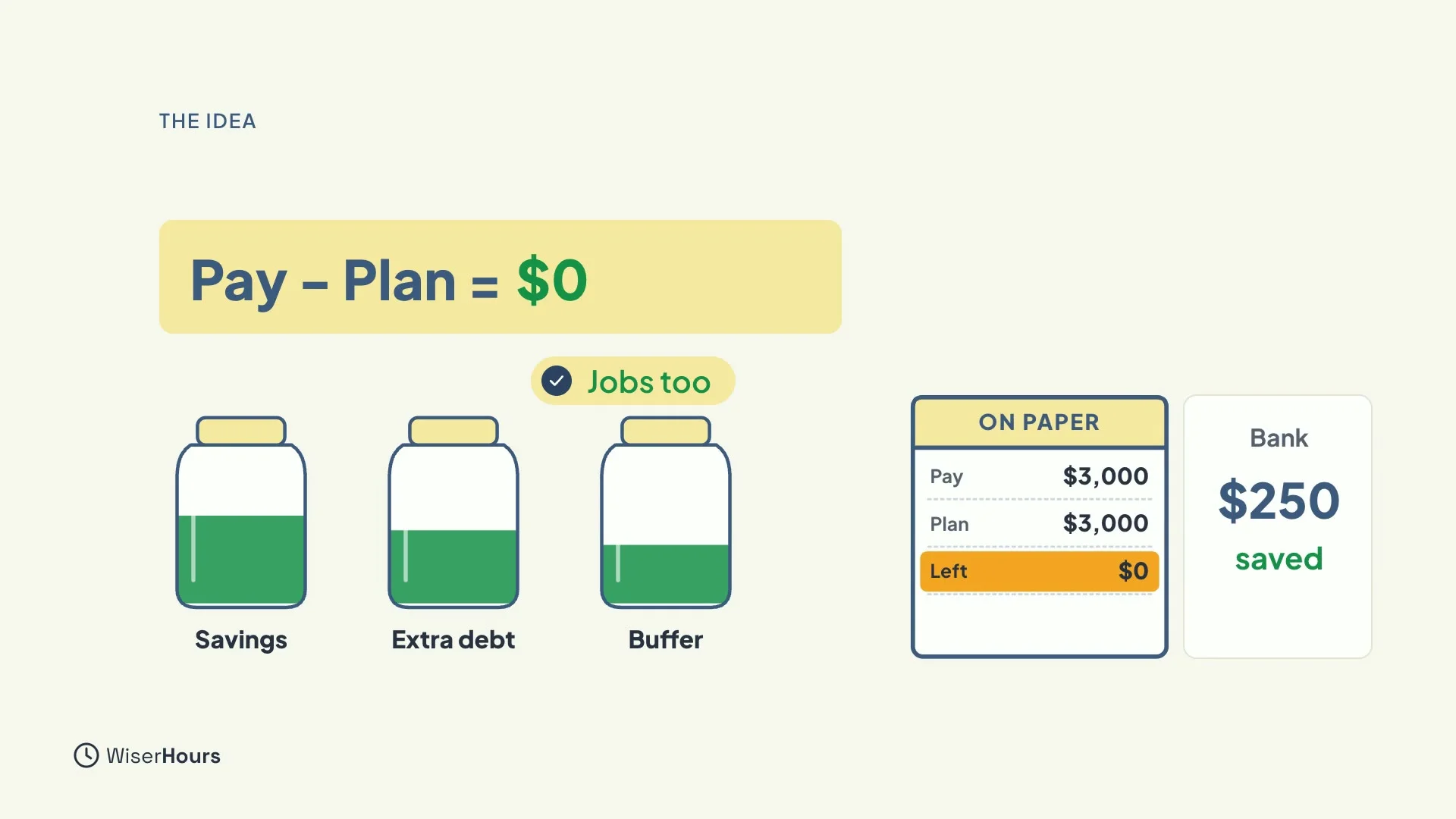
Your take-home pay, minus everything you plan for it, should equal zero. That does not mean you spend it all. Savings, extra debt payments and a small buffer count as jobs too.
The zero is on paper, not in your account. Your budget sheet can show $0 left while your bank account still holds your savings.
 (opens the full-size picture)
First, the musts
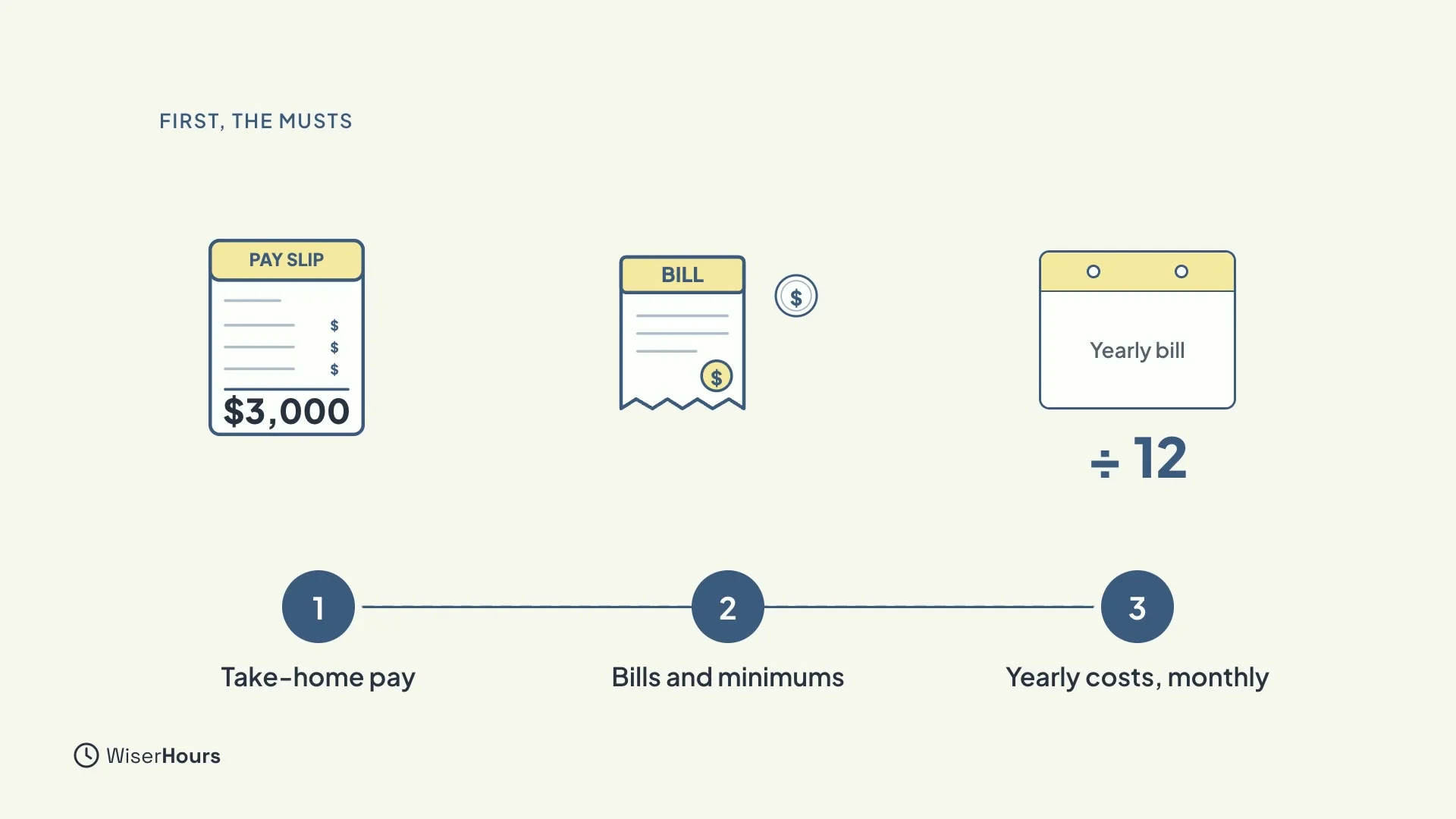
Work in order. First, write down your take-home pay. Then fund your bills and minimum debt payments, the things that must be paid. Then turn yearly costs into a monthly line, so they do not catch you by surprise: divide the yearly amount by 12 and set that money aside each month.
If you need your take-home number, see finding your real take-home pay.
 (opens the full-size picture)
Then the rest
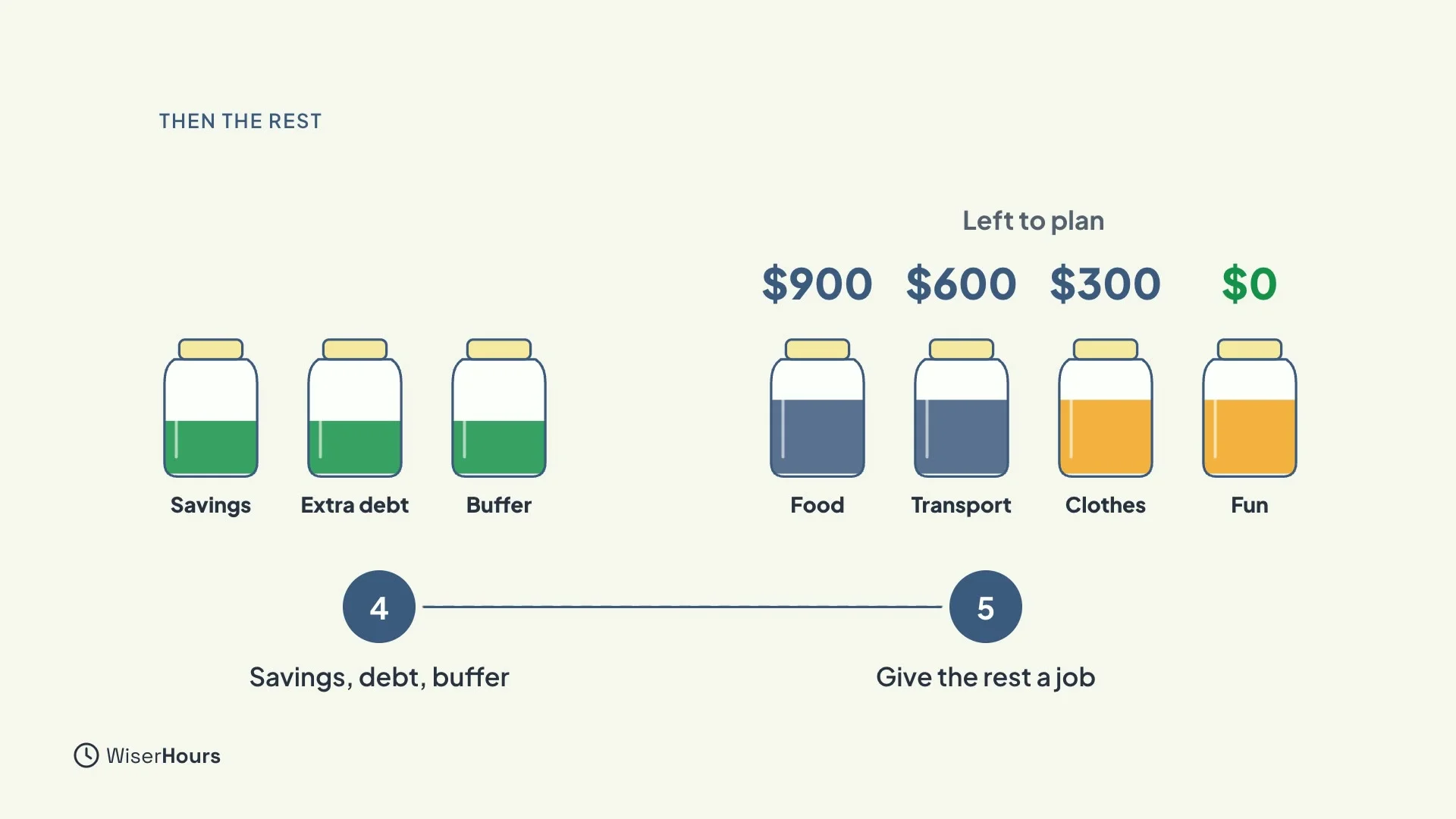
Next, give money to savings, extra debt payments and a buffer for small surprises. Finally, give the rest a job, like food, transport, clothes and fun, until what is left reaches zero.
The picture shows a different amount left to plan, to show how the number falls as each line is filled in. Each time you give a dollar a job, the amount left to plan gets smaller.
 (opens the full-size picture)
An example
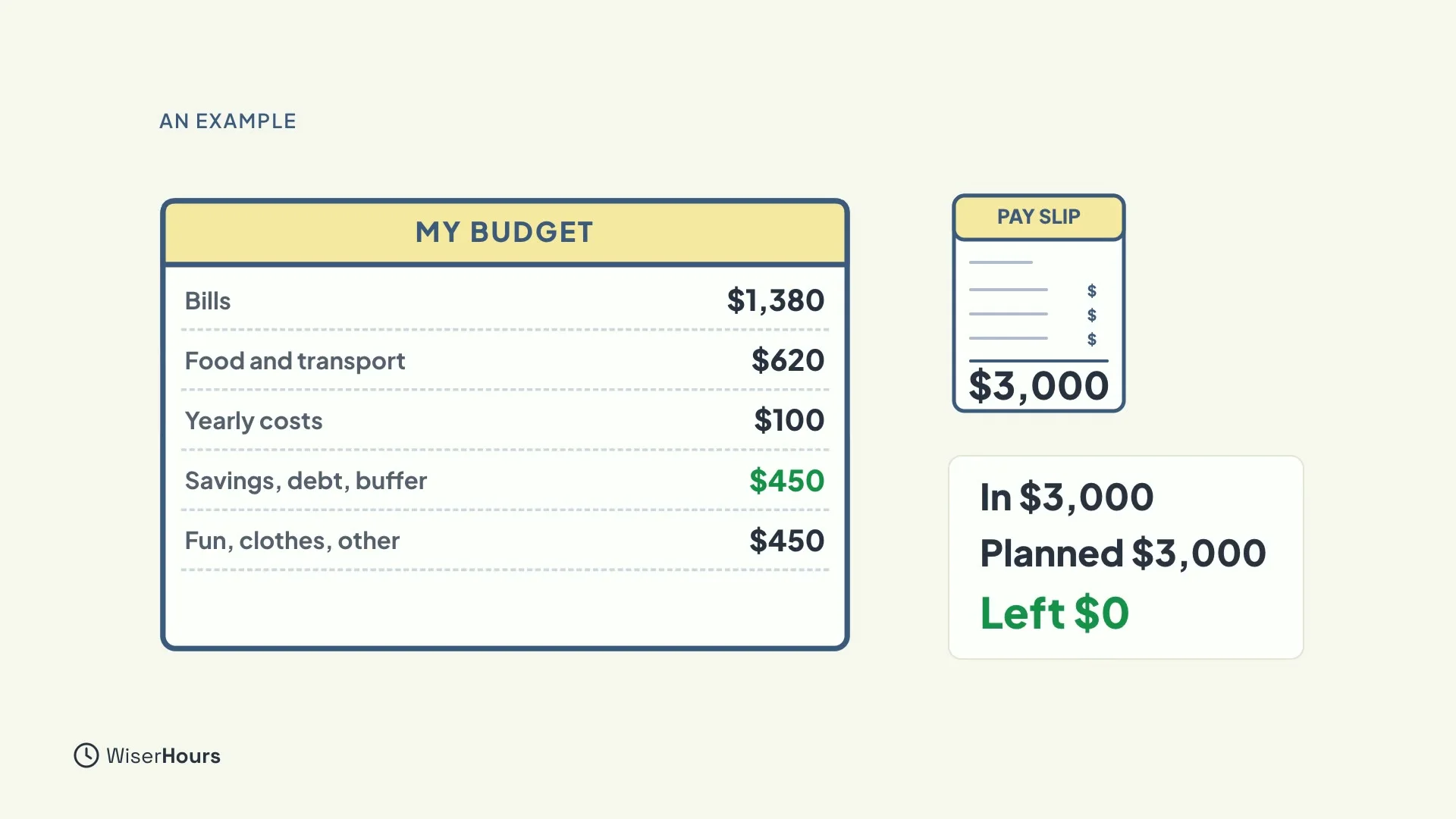
Here is an example on $3,000 a month. Rent, utilities and a loan payment take $1,380. Groceries and transport take $620. Yearly costs take $100. Savings, extra debt and a buffer take $450. Fun, clothes and everything else take $450.
Add them up: $3,000 in, $3,000 planned, $0 left. Your own lines and amounts will differ.
 (opens the full-size picture)
When a line runs out
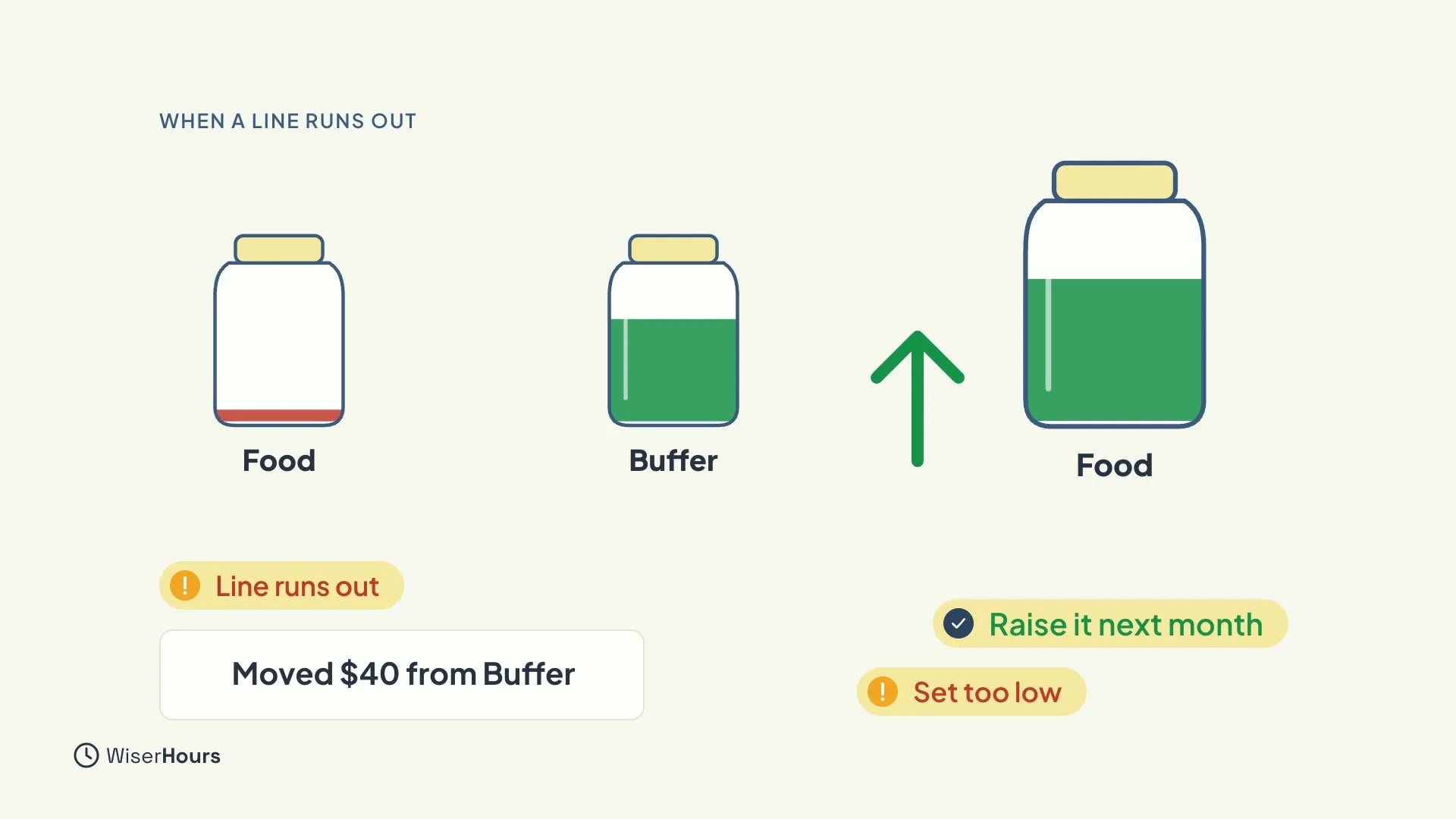
What if a line runs out in the middle of the month? Move money from another line, the buffer or a want first, and write the change down. For example: “Moved $40 from Buffer.”
If the same line runs dry every month, it was set too low. Raise it next month. That is not failure. It is the plan getting more accurate.
 (opens the full-size picture)
The honest trade-off
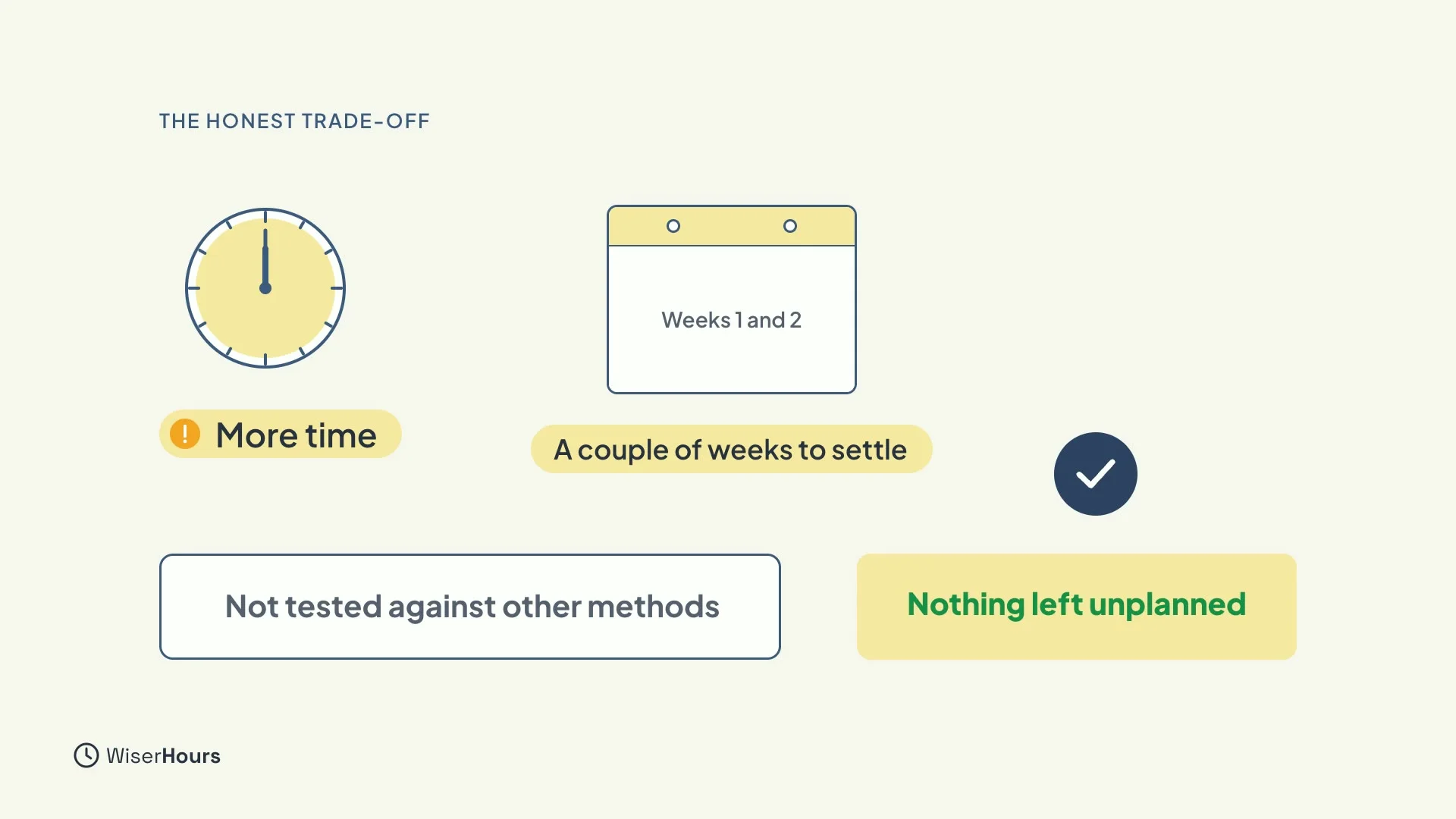
Zero-based budgeting takes more time than other methods, and a first plan can take a couple of weeks to settle. No study has tested it against the other methods for households. Its strength is simple: nothing is left unplanned.
If it feels like too much, you can start with the 50/30/20 rule and come back to this method later.
 (opens the full-size picture)
YOUR TURN
Read more
- Zero-Based Budgeting: the full method, with the evidence and a longer worked example.
- Sinking Funds: how to save for yearly and irregular costs.
Read the full lesson script
Welcome back. In this lesson, you'll learn zero-based budgeting: a method where every dollar of your pay gets a job before the month begins.
Here's the idea. Your take-home pay, minus everything you plan for it, should equal zero. Not because you spend it all, but because savings, extra debt payments and a small buffer count as jobs too. The zero is on paper, not in your account.
Start in order. First, your take-home pay. Then fund your bills and minimum debt payments, the things that must be paid. Then turn yearly costs into a monthly line, so they don't catch you by surprise.
Next, give money to savings, extra debt payments, and a buffer for small surprises. Finally, give the rest a job, like food, transport, clothes and fun, until what's left reaches zero.
Here's an example on three thousand dollars. Rent, utilities and a loan payment take thirteen hundred and eighty. Groceries and transport, six hundred and twenty. Yearly costs, one hundred. Savings, extra debt and a buffer, four hundred and fifty. Fun, clothes and everything else, four hundred and fifty. Three thousand in, three thousand planned, zero left.
What if a line runs out mid-month? Move money from another line, the buffer or a want first, and write the change down. And if the same line runs dry every month, it's set too low. Raise it next month.
Zero-based budgeting takes more time than other methods, and a first plan can take a couple of weeks to settle. No study has tested it against the others for households. Its strength is simple: nothing is left unplanned.
So remember: every dollar gets a job, including savings and a buffer. Fund bills first, then yearly costs, savings, and the rest. And move money between lines on purpose, then write it down. Before the next lesson, give every dollar of next month's pay a job on paper. Next, you'll try envelopes, on paper or on your phone.
MAKE IT A SMALL WIN
Finished this lesson?
Mark it complete to save your progress on this device.