Keep it going · Lesson 11 of 12
Living Paycheck to Paycheck: Four First Steps
Four small steps for when money runs out before payday: priority bills, early calls, a tiny buffer and free help.
 Video coming soon
If your money runs out before payday, this lesson is for you. It will not give you a perfect budget. It gives you four small steps that can make a tight month easier to get through, and it starts with a fact that may help: you are not the only one.
You are not alone
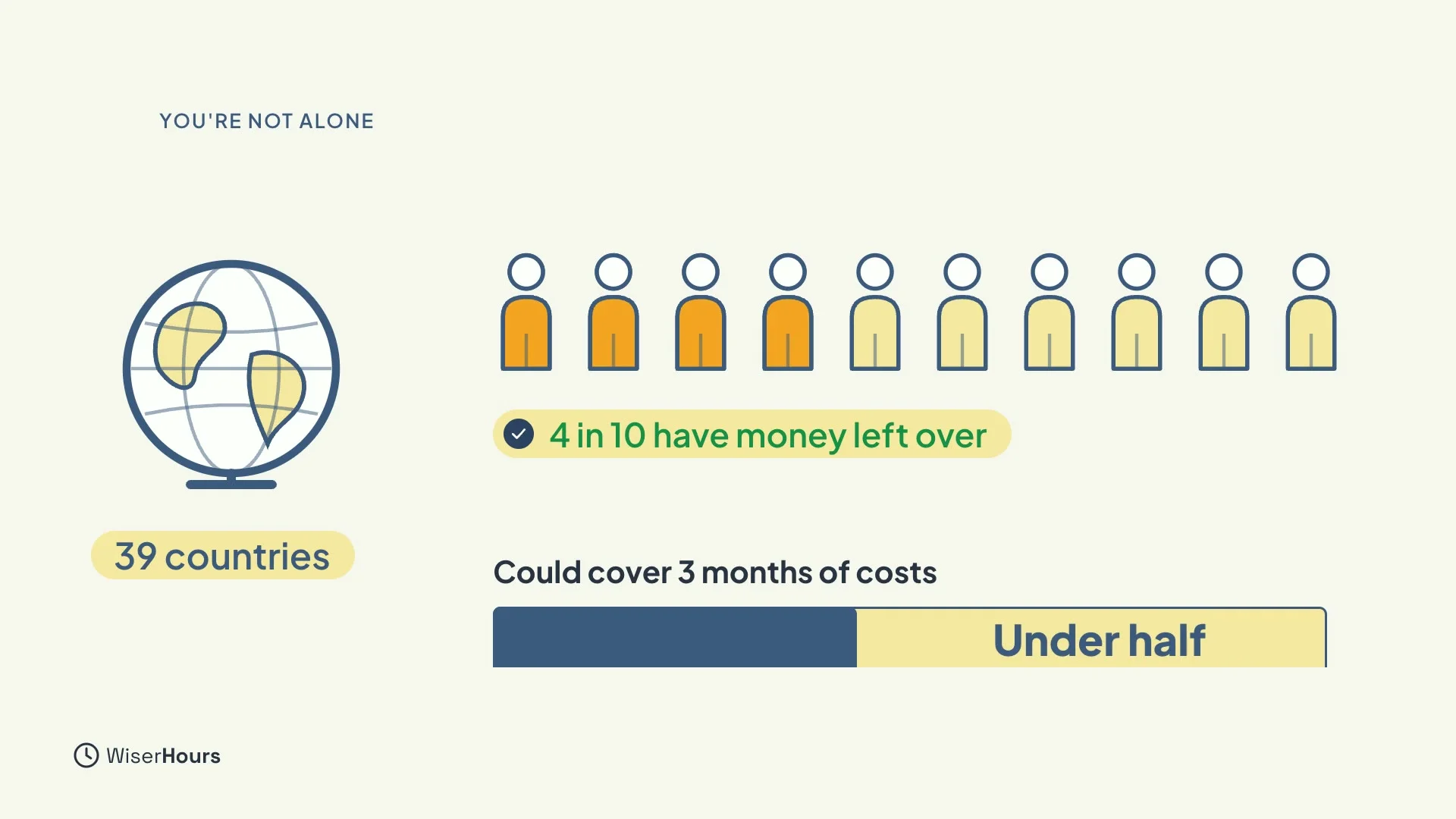
In a survey across 39 countries, only about four in ten adults said they usually have money left over at the end of the month. And fewer than half could cover three months of living costs if they lost their main income. Running short is common, and it is rarely a sign that you are bad with money.
 (opens the full-size picture)
Small and clear
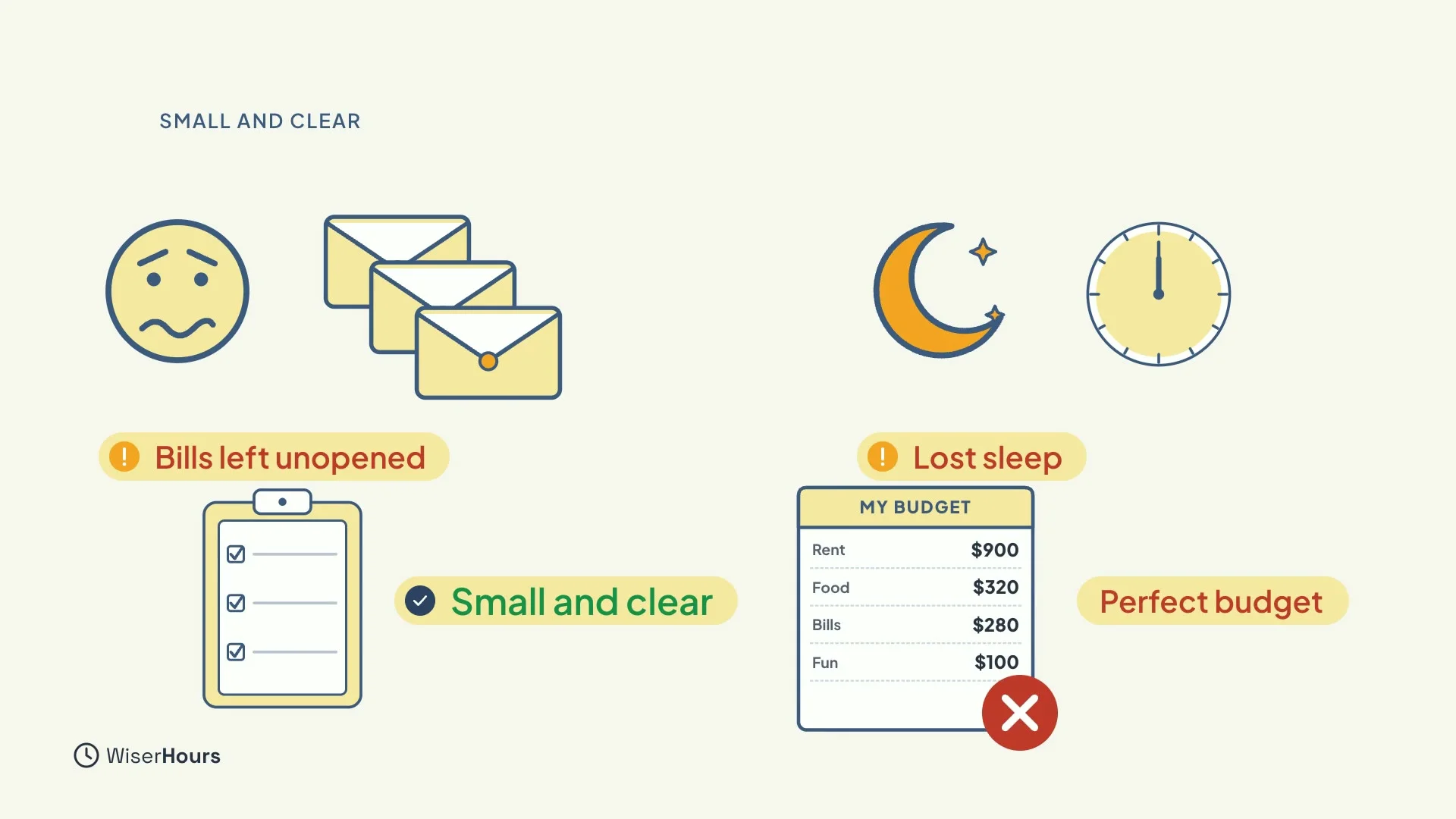
Money worry takes up your attention. People under money stress often put off opening bills, and lose sleep. That is why the first steps should be small and clear, not a perfect budget. A short list you can finish beats a long plan you avoid.
 (opens the full-size picture)
Step 1: Priority bills first
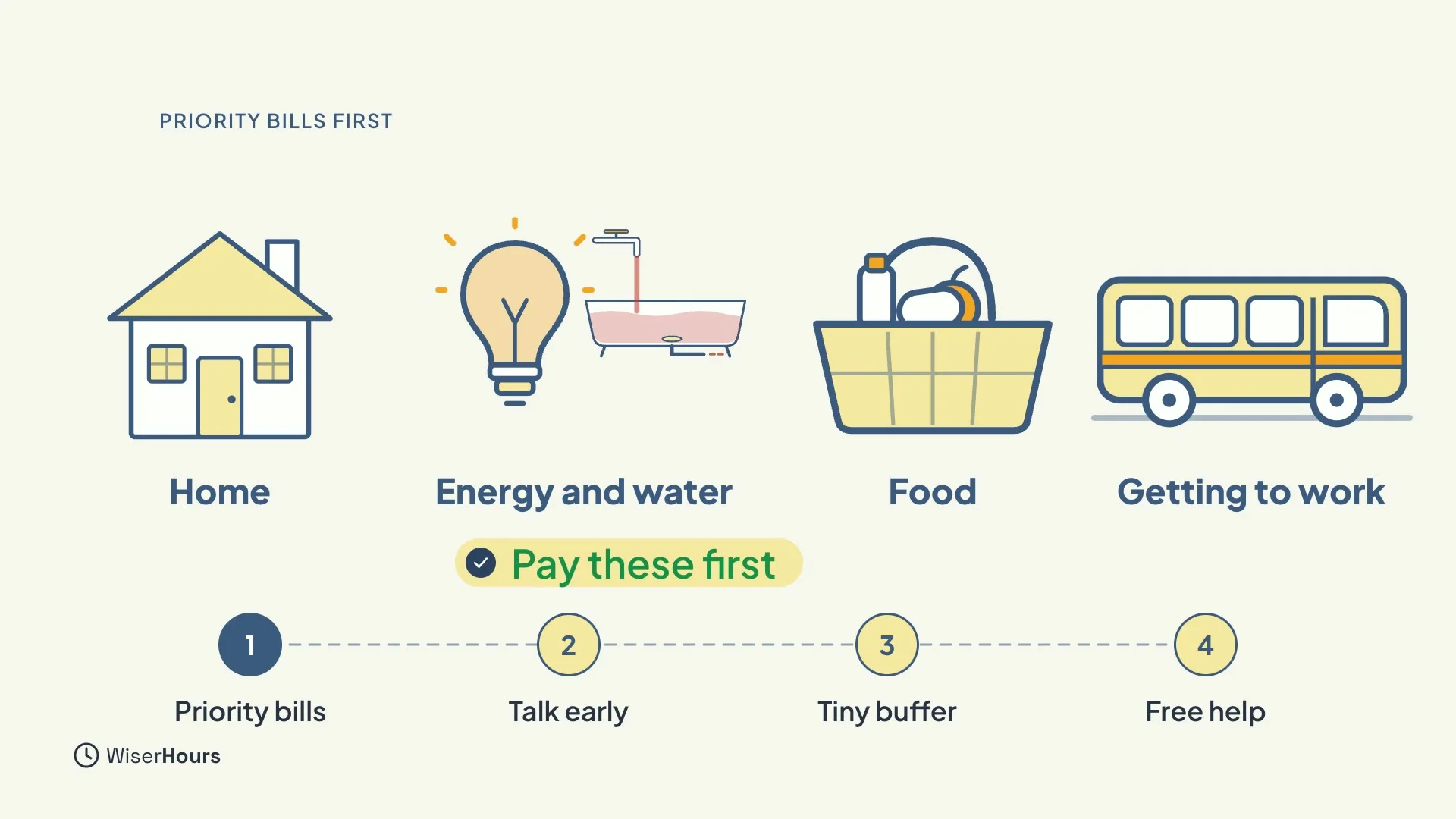
Put the bills that matter most first. That means your home, energy and water, food, and whatever you need to keep working, such as getting to your job. List them, and pay them first, before anything else.
 (opens the full-size picture)
Step 2: Talk early
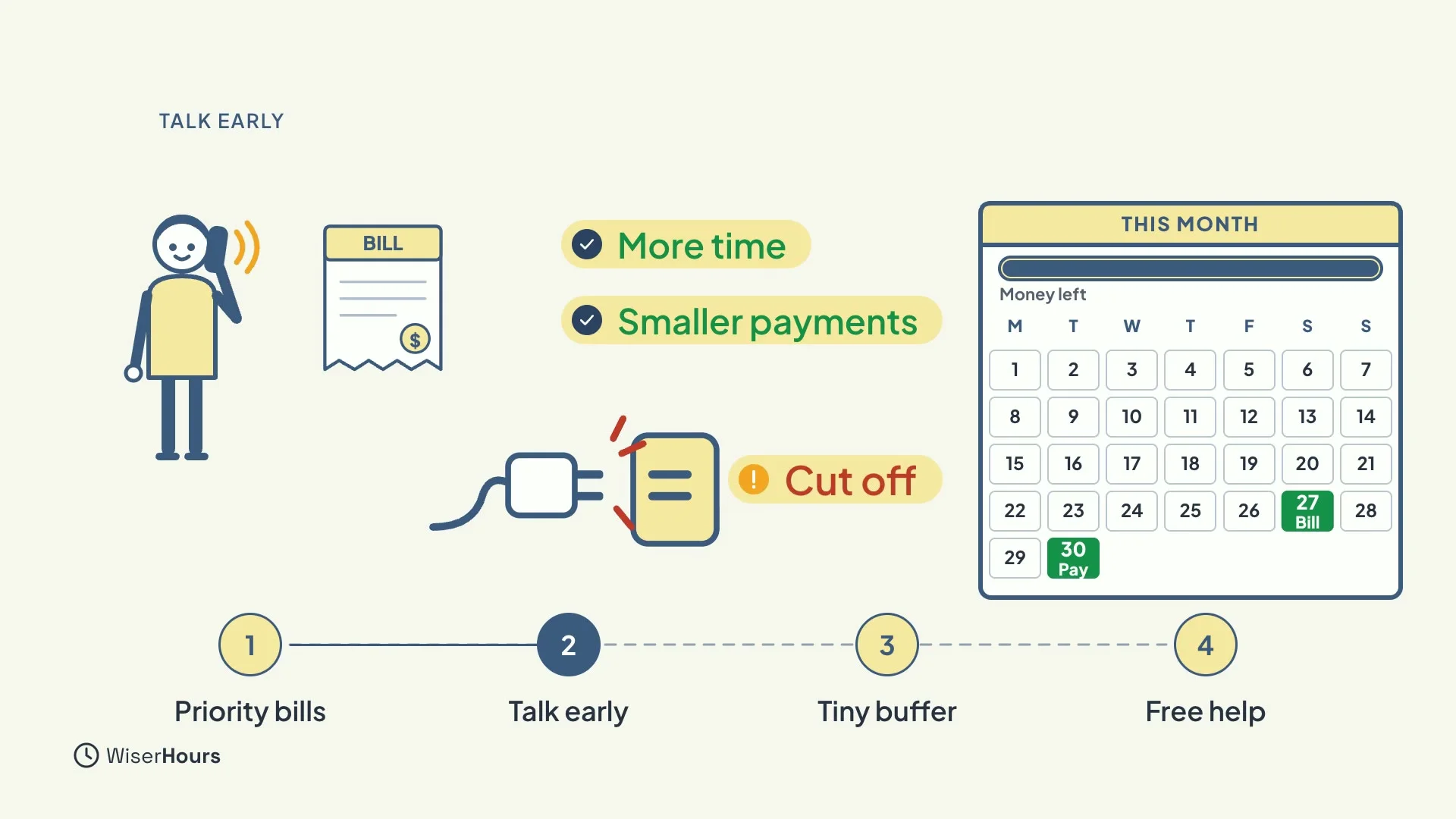
If you cannot pay a bill, contact the company before you miss it, not after. Many will offer more time or smaller payments, and you can ask to move a due date closer to your payday. If you say nothing, a service may be cut off.
 (opens the full-size picture)
Say it plainly
You can start with one sentence: “I may not be able to pay this on time. What can you offer?” Write down what they agree, and the date.
Step 3: A tiny buffer
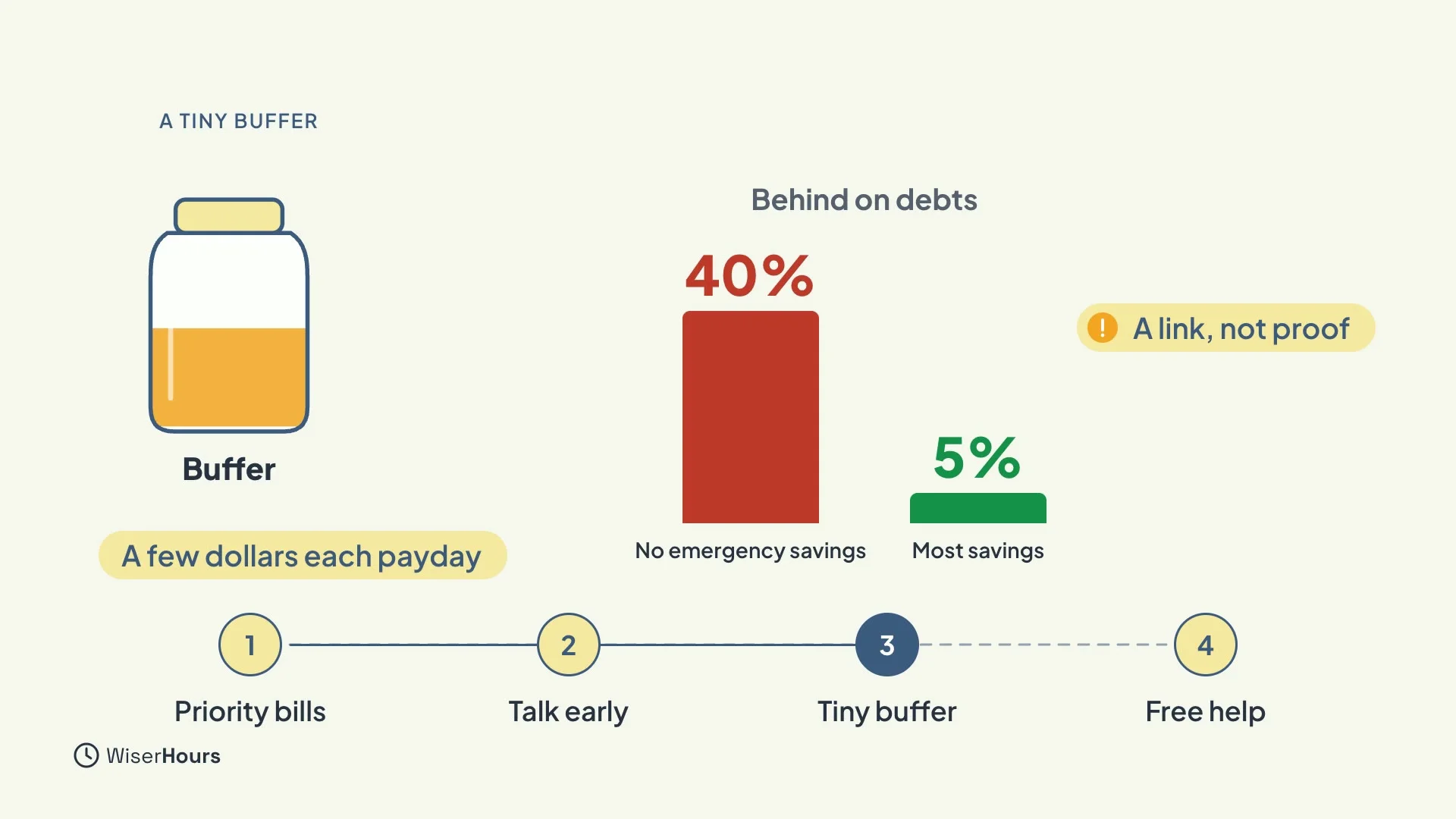
Start a tiny buffer, even a few dollars each payday. It matters. In one survey, people with no emergency savings were far more likely to fall behind on debts: 40 percent, against 5 percent of people with the most savings. That is a link, not proof, but every bit of cushion helps. An emergency fundemergency fund: Money kept in an account you can reach quickly, to cover unexpected costs or a drop in income without borrowing. How much to hold depends on your circumstances, and official guidance differs by country.Full entry in the glossary can begin very small.
 (opens the full-size picture)
Step 4: Get free help
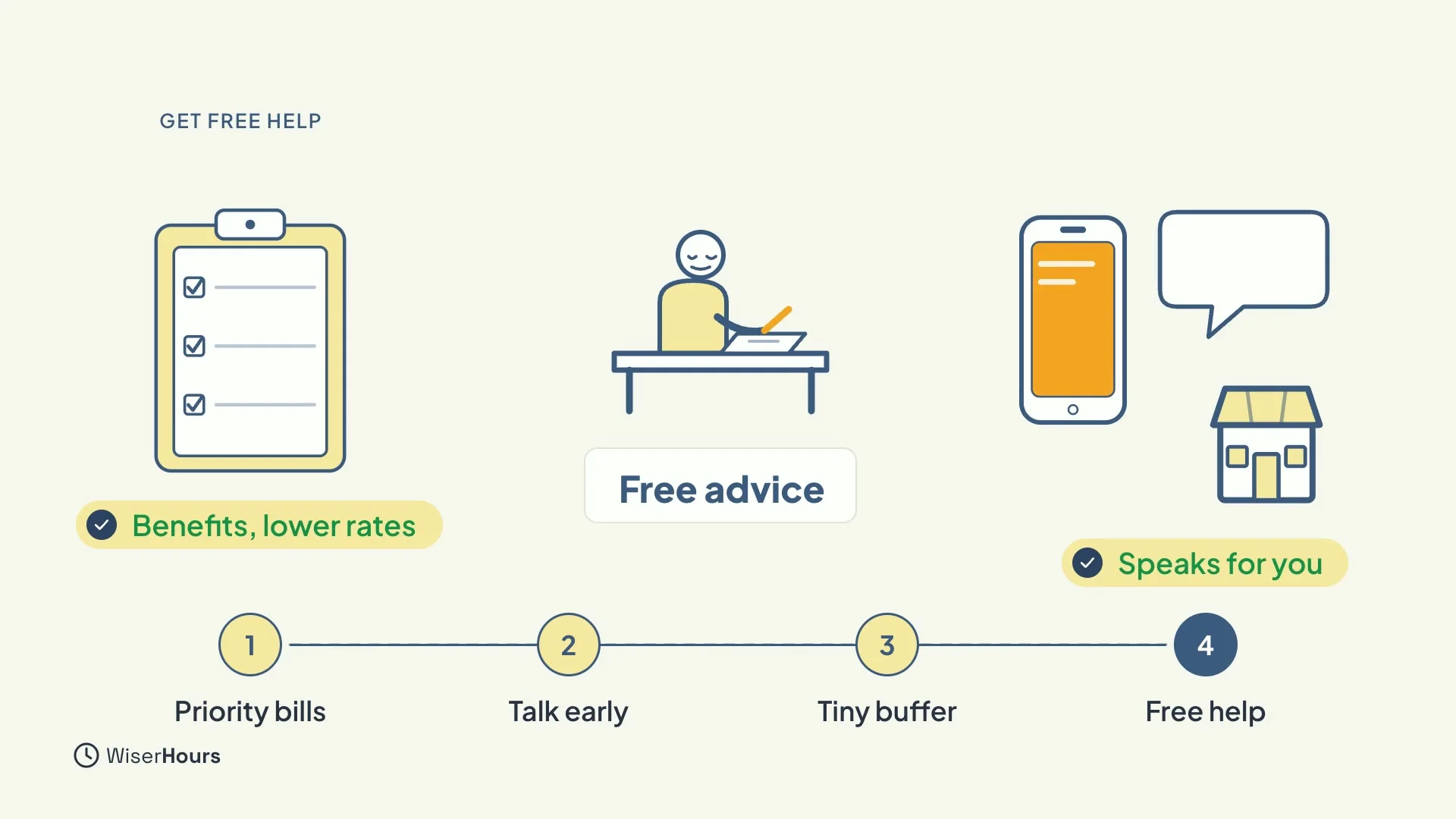
Check what help you may be entitled to, like benefits or lower rates, and talk to a free money advice service in your country. Free advisers can look at your whole situation, and some will even talk to the companies you owe for you.
 (opens the full-size picture)
Look after yourself too
If money worry is wearing you down, or you are not sleeping, talk to a doctor. If you are in crisis or in danger, call your local emergency number now.
YOUR TURN
Read more
- Money Anxiety: Why It Happens, How It Shows Up, and What Helps: how money worry affects you, and who to talk to.
- Emergency Fund Basics: What It’s For, How Big, and Where to Keep It: how to start a small cushion.
- OECD/INFE international survey of adult financial literacy: the survey across 39 countries.
- Behind on bills? (US Consumer Financial Protection Bureau): a booklet on which bills to pay first and how to call lenders.
- Problems paying your bills (Moneysmart, Australia): contacting providers early, and free financial counsellors.
Read the full lesson script
Welcome back. In this lesson, you'll see first steps for when money runs out before payday: small steps that make a tight month easier to get through.
If your money runs out before payday, you're far from alone. In a survey across thirty-nine countries, only about four in ten adults said they usually have money left over at the end of the month. And fewer than half could cover three months of living costs if they lost their main income.
Money worry takes up your attention. People under money stress often put off opening bills, and lose sleep. That's why the first steps should be small and clear, not a perfect budget.
Step one: put the bills that matter most first. That means your home, energy and water, food, and whatever you need to keep working. List them, and pay them first.
Step two: if you can't pay a bill, contact the company before you miss it, not after. Many will offer more time or smaller payments, and you can ask to move a due date closer to your payday. If you say nothing, a service may be cut off.
Step three: start a tiny buffer, even a few dollars each payday. It matters. In one survey, people with no emergency savings were far more likely to fall behind on debts: forty percent, against five percent of people with the most savings. That's a link, not proof, but every bit of cushion helps.
Step four: check what help you may be entitled to, like benefits or lower rates, and talk to a free money advice service in your country. Free advisers can look at your whole situation, and some will even talk to the companies you owe for you.
So remember: pay for your home, energy, food and getting to work first. Talk to companies before you miss a payment. And start a tiny buffer, and get free help early. Before the next lesson, list your priority bills and their due dates, next to your paydays. Next, you'll learn a monthly review that keeps your budget going.
MAKE IT A SMALL WIN
Finished this lesson?
Mark it complete to save your progress on this device.