Keep it going · Lesson 10 of 12
When You Overspend: Adjust Your Budget, Don't Quit
Learn to move money on purpose, spot a line that is set too low, and know when to ask for free money advice.
 Video coming soon
Overspending a line is normal, especially in the first few months of a budget. This lesson shows what to do when it happens, and why it is a reason to adjust your budget, not to quit it.
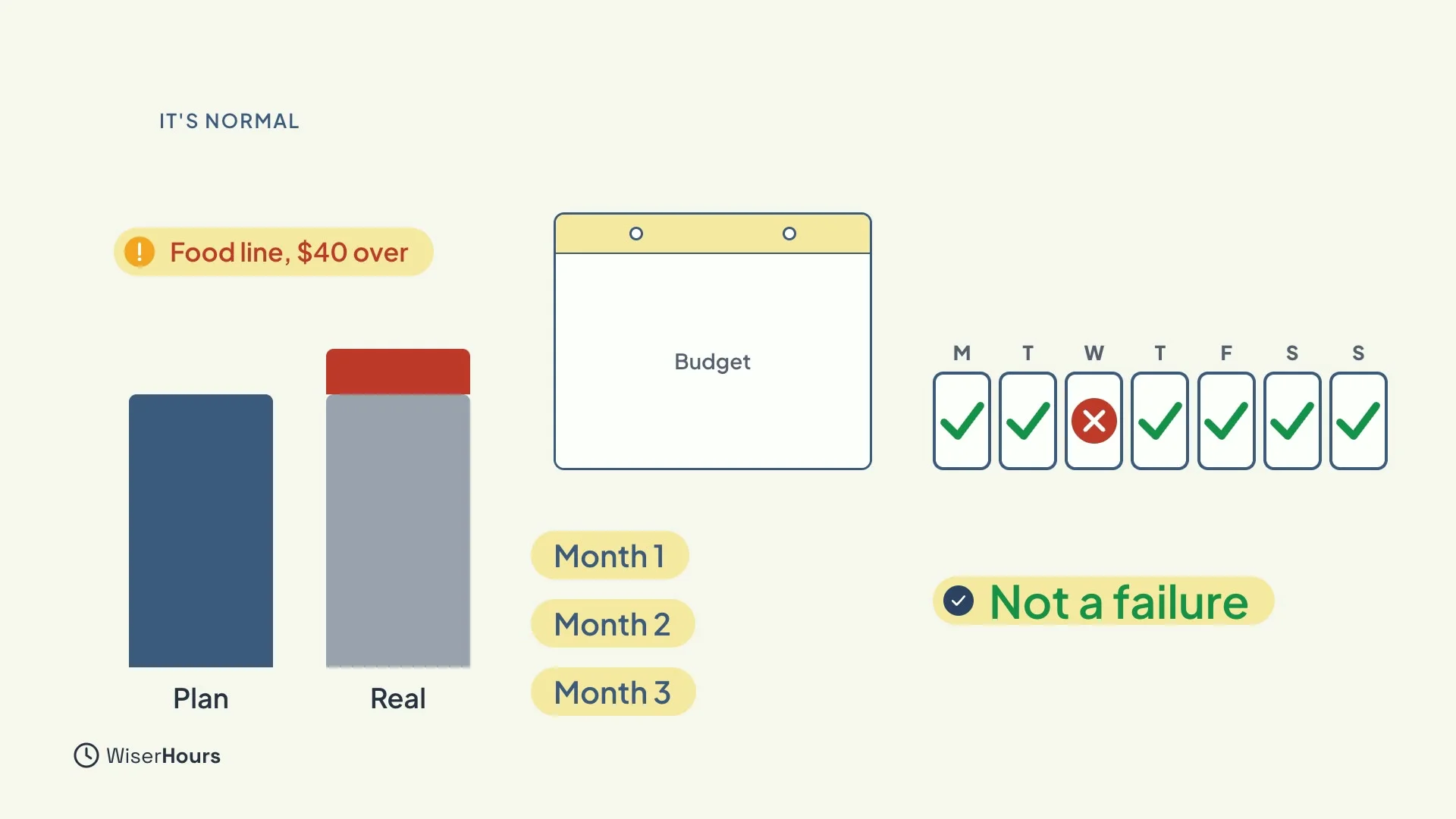
Overspending is normal
A budget is a plan made before the month happens, and real life rarely matches it exactly. Overspending a line is normal, especially in the first few months. One bad week does not mean the budget failed.
 (opens the full-size picture)
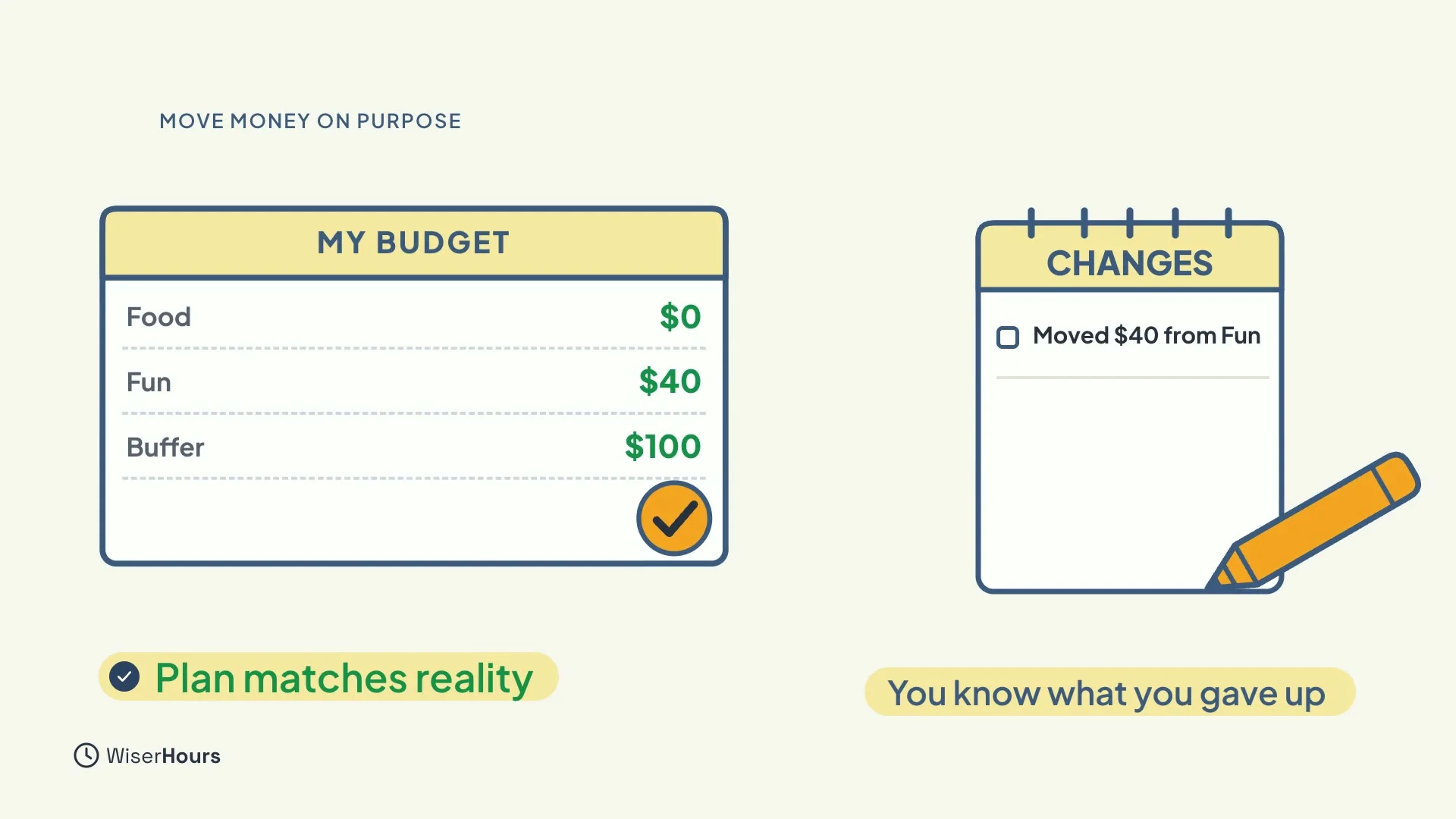
Move money on purpose
When a line runs over, move money from another line to cover it. Take from the buffer or from a want first, and write the change down. Now the plan matches reality again, and you know exactly what you gave up.
 (opens the full-size picture)
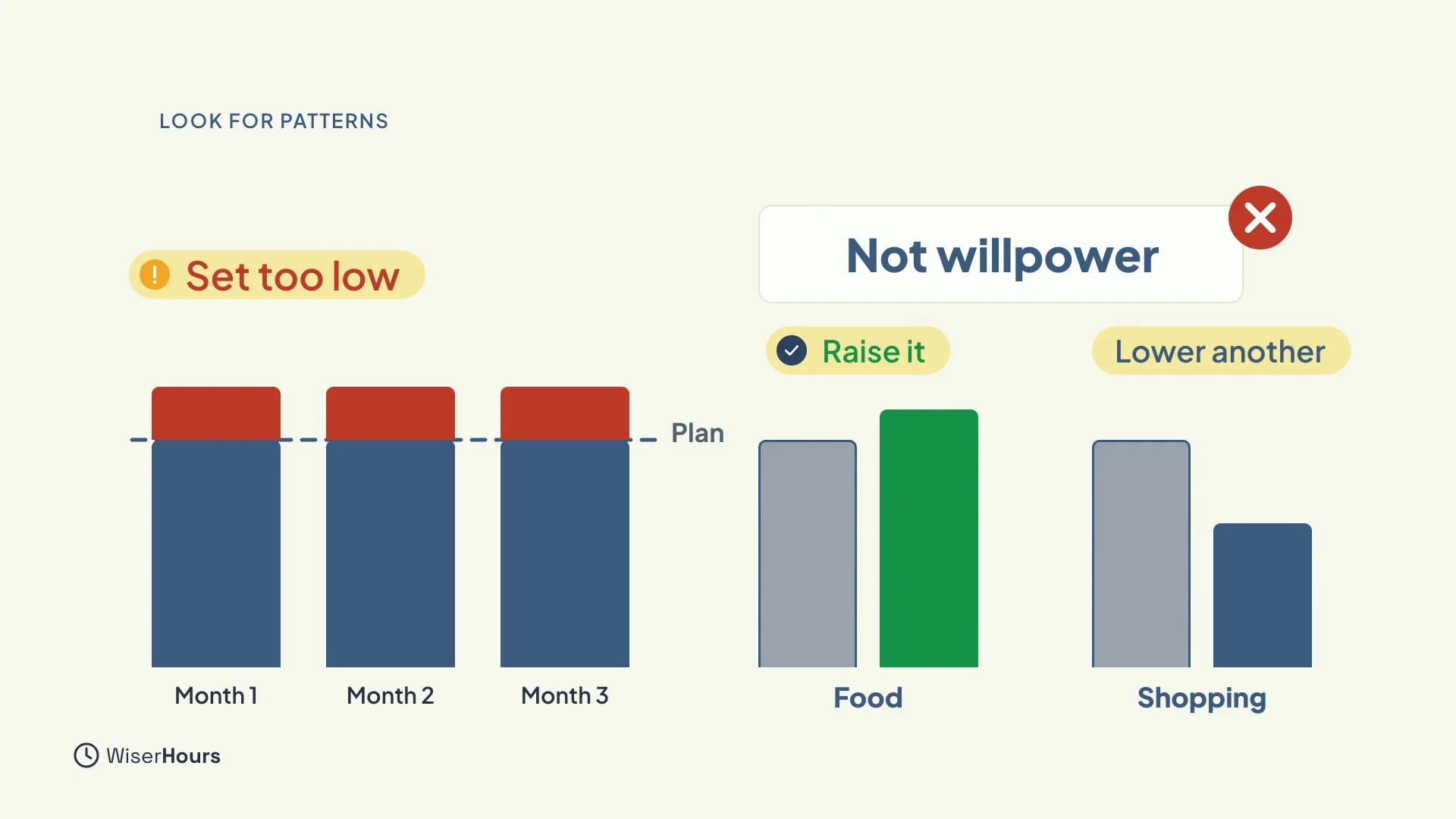
Look for patterns
Then look for patterns. If the same line runs out every month, it is not a lack of willpower. The line is set too low. Raise it, and lower another one to make room.
 (opens the full-size picture)
Adjust both ways
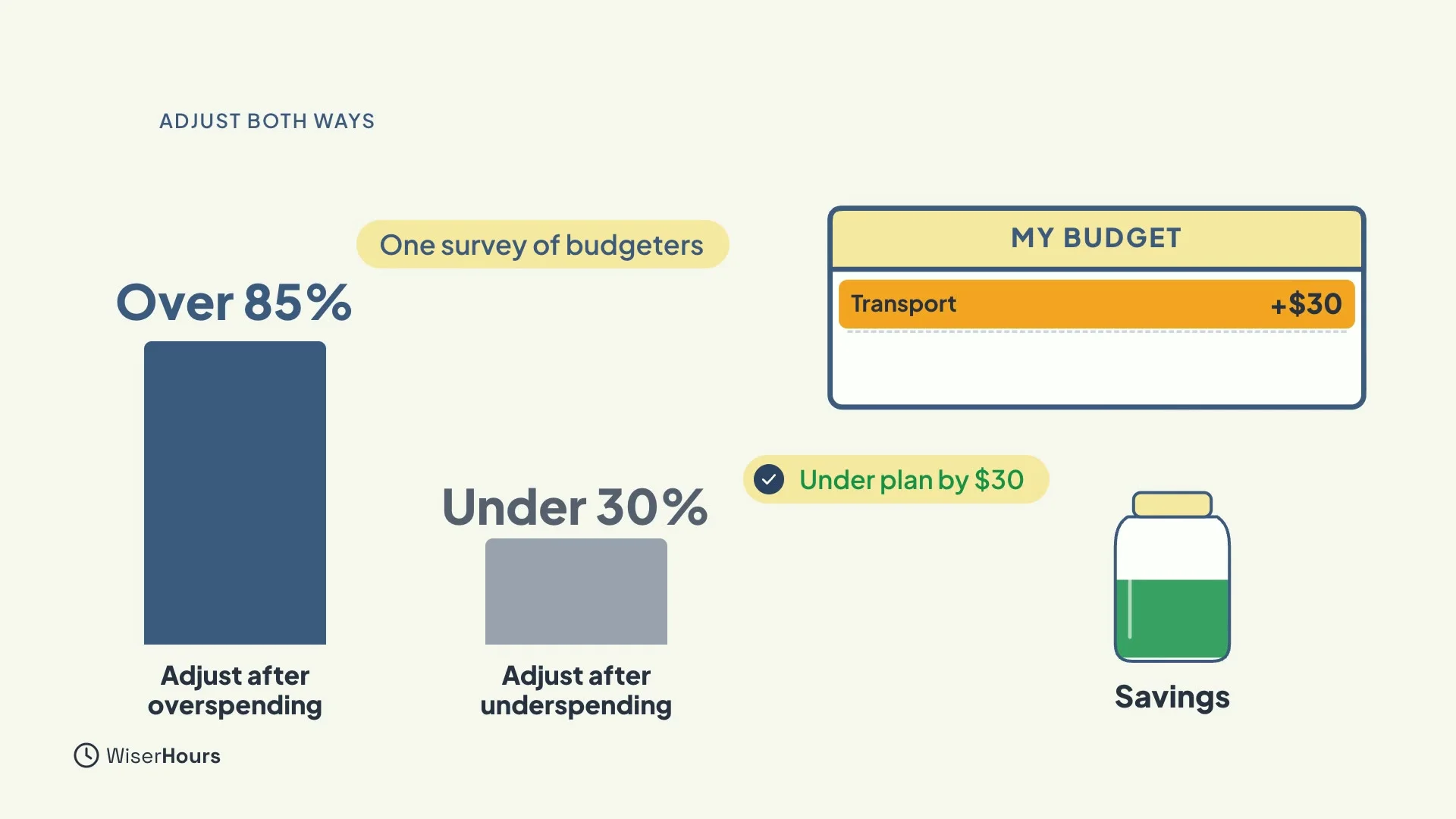
Most people do adjust after overspending. In one survey of budgeters, over 85 percent said they would change their plan after overspending a category, but fewer than 30 percent would after underspending. So check the lines that come in under, too. That money can go to savings.
 (opens the full-size picture)
Know your triggers
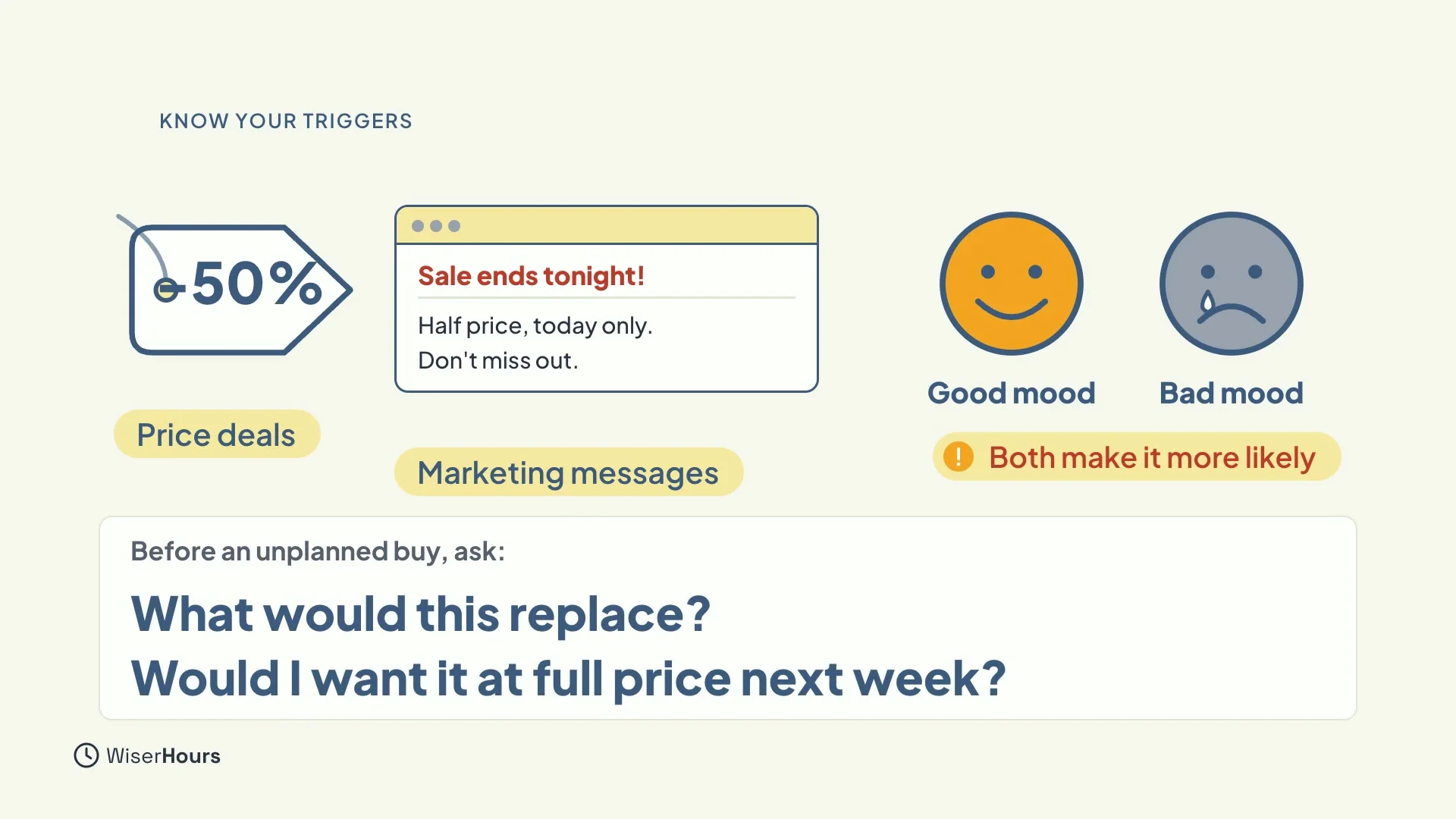
To overspend less, know your triggers. In a large review, marketing messages and price deals were the strongest outside triggers for impulse buying, and both good and bad moods made it more likely. Before an unplanned buy, ask: what would this replace, and would I still want it at full price next week?
 (opens the full-size picture)
More than a slip
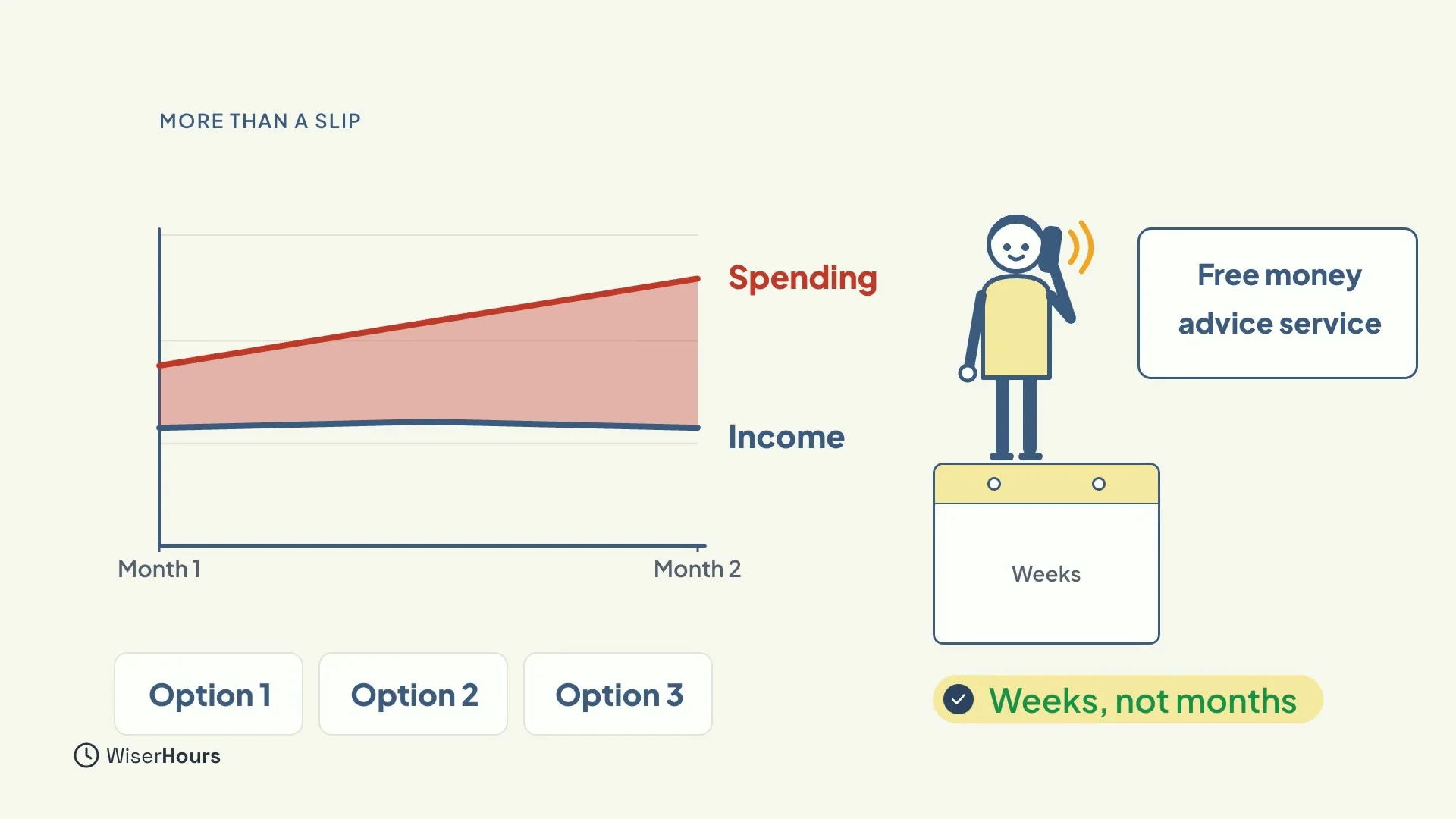
If your spending is bigger than your income for more than a month or two, that is not a slip. Contact your country’s free debt or money advice service within weeks, not months. Getting help early gives you more options.
 (opens the full-size picture)
Free first
Use a free, independent service in your country. Be careful with anyone who asks for money before they help.
YOUR TURN
Read more
- Zero-Based Budgeting for Beginners: How to Plan Where Every Dollar Goes: adjusting lines when the month does not go to plan.
- How to Stop Impulse Buying: Strategies That Hold Up in Studies: what triggers unplanned buys and what helps.
- How to Make a Budget: A Step-by-Step Guide for Beginners: the monthly check that keeps a plan close to real life.
Read the full lesson script
Welcome back. In this lesson, you'll learn what to do when you overspend, because you will, and why it's a reason to adjust, not to quit.
Overspending a line is normal, especially in the first few months. A budget is a plan made before the month happens, and real life rarely matches it exactly. One bad week doesn't mean the budget failed.
When a line runs over, move money from another line to cover it, from the buffer or a want first, and write the change down. Now the plan matches reality again, and you know exactly what you gave up.
Then look for patterns. If the same line runs out every month, it isn't a lack of willpower. The line is set too low. Raise it, and lower another one to make room.
Most people do adjust after overspending. In one survey of budgeters, over eighty-five percent said they would change their plan after overspending a category, but fewer than thirty percent would after underspending. So check the lines that come in under, too. That money can go to savings.
To overspend less, know your triggers. In a large review, marketing messages and price deals were the strongest outside triggers for impulse buying, and both good and bad moods made it more likely. Before an unplanned buy, ask: what would this replace, and would I still want it at full price next week?
But if your spending is bigger than your income for more than a month or two, that's not a slip. Contact your country's free debt or money advice service within weeks, not months. Getting help early gives you more options.
So remember: overspending is normal, so move money on purpose, and write it down. A line that always runs out is set too low. And if spending beats income for more than a month or two, get free advice early. Before the next lesson, decide which line you'll take from when one runs over. Next, you'll see first steps for when money runs out before payday.
MAKE IT A SMALL WIN
Finished this lesson?
Mark it complete to save your progress on this device.