Your plan · Lesson 12 of 12
When to Get Help for Burnout, and Your Recovery Plan
Know when to see a doctor, what help exists and who to call in a crisis, then fill in your own recovery plan.
 Video coming soon
This is the last lesson. You learn when to get help, what kinds of help exist, and you put your recovery and prevention plan together. This is general information, not medical advice.
When to see a doctor
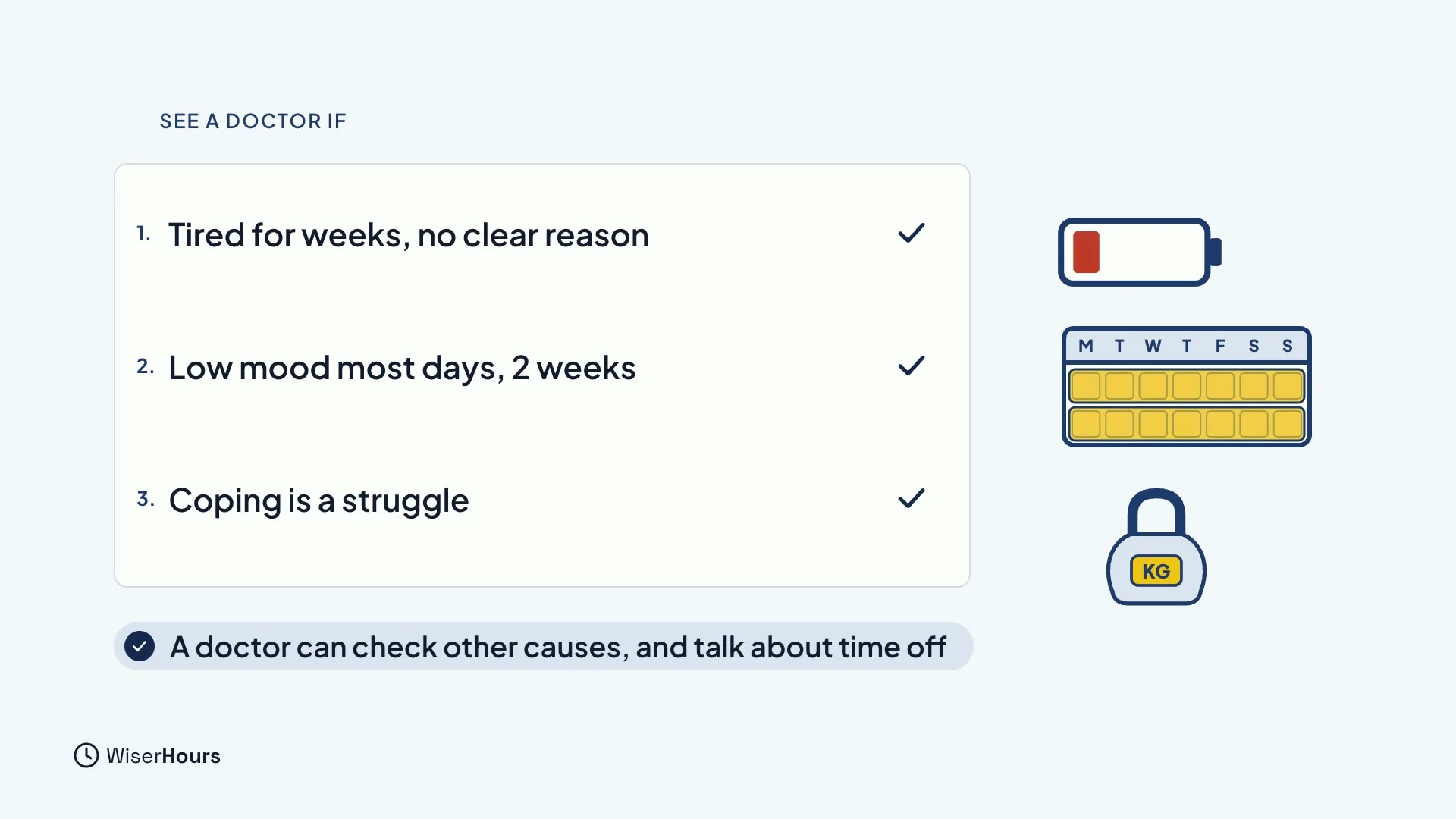
See a doctor if tiredness lasts a few weeks with no clear reason, if low mood or loss of interest lasts most days for two weeks, or if coping has become a struggle. A doctor can check for other causes of how you feel, and talk with you about time off.
 (opens the full-size picture)
Talking therapy
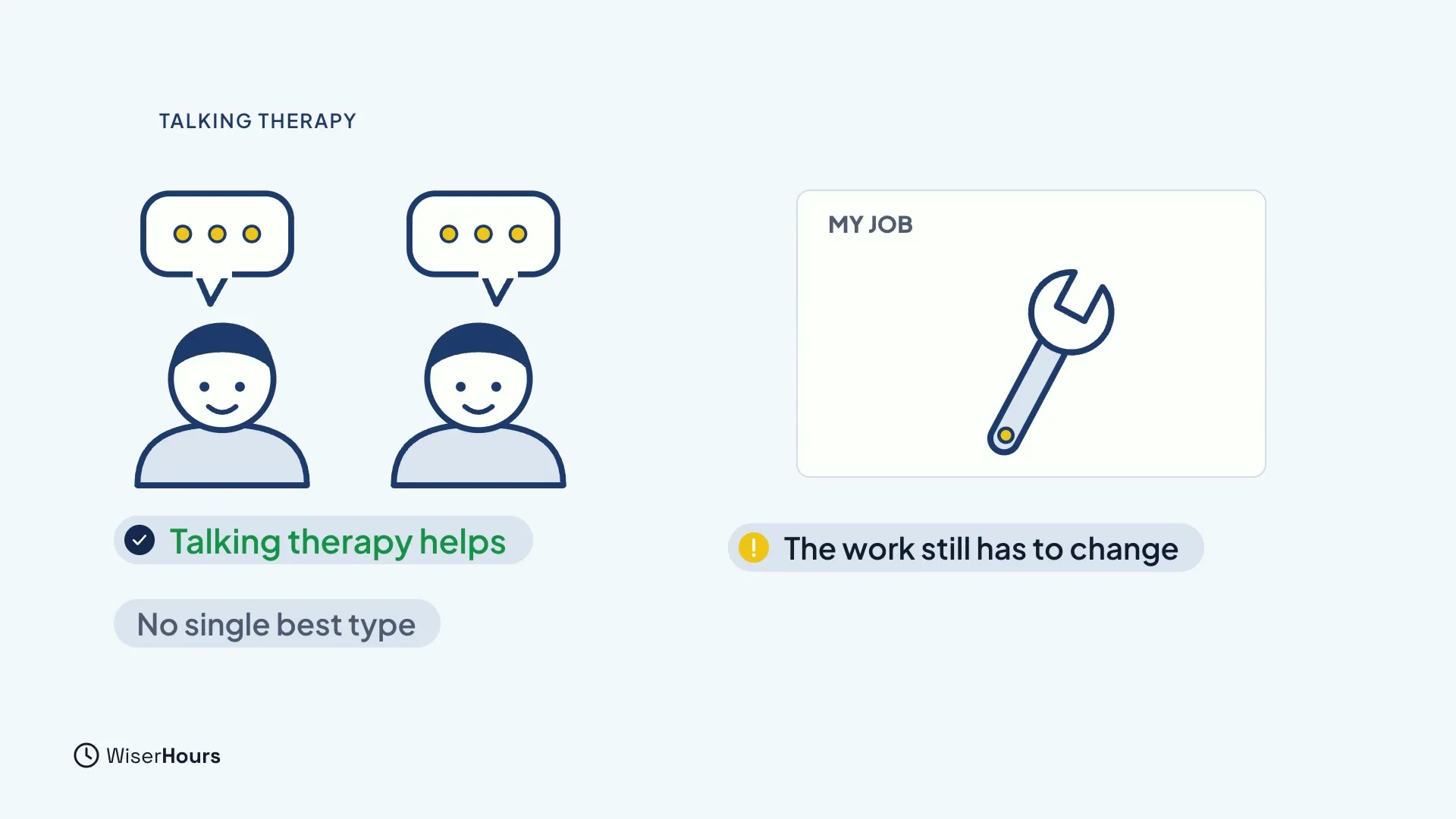
Talking therapy can help with how you carry the load. No single type has been shown to be best, so choose one that fits you, with a therapist who understands work stress. But something at work usually still has to change. Therapy and a changed job work best together.
 (opens the full-size picture)
Ways in
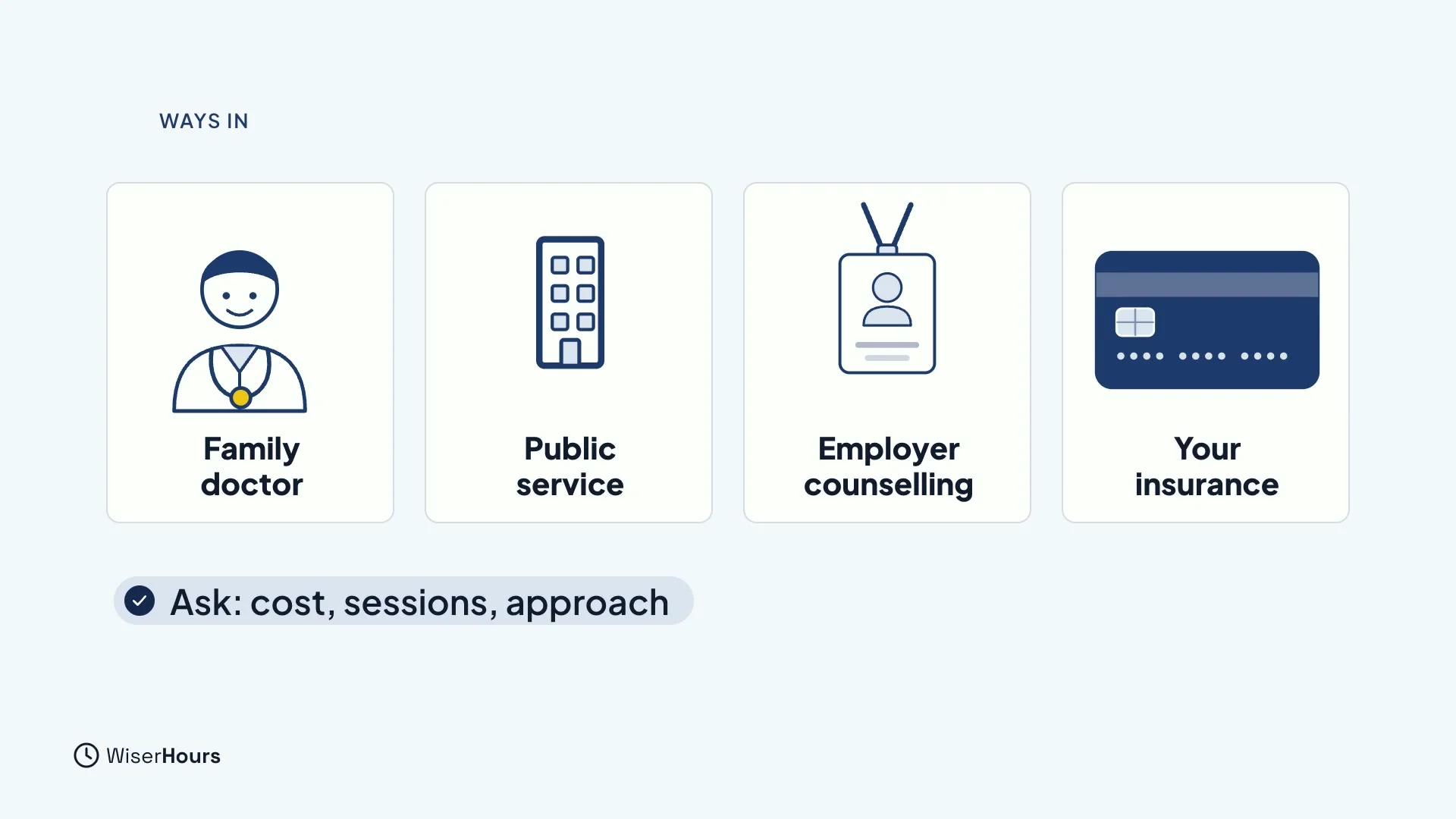
There are several ways in: your family doctor, a public talking therapy service where one exists, your employer’s counselling or occupational health service, or your insurance. Ask about the cost, the number of sessions and the approach before you book. What is on offer depends on your country.
 (opens the full-size picture)
If you are in crisis
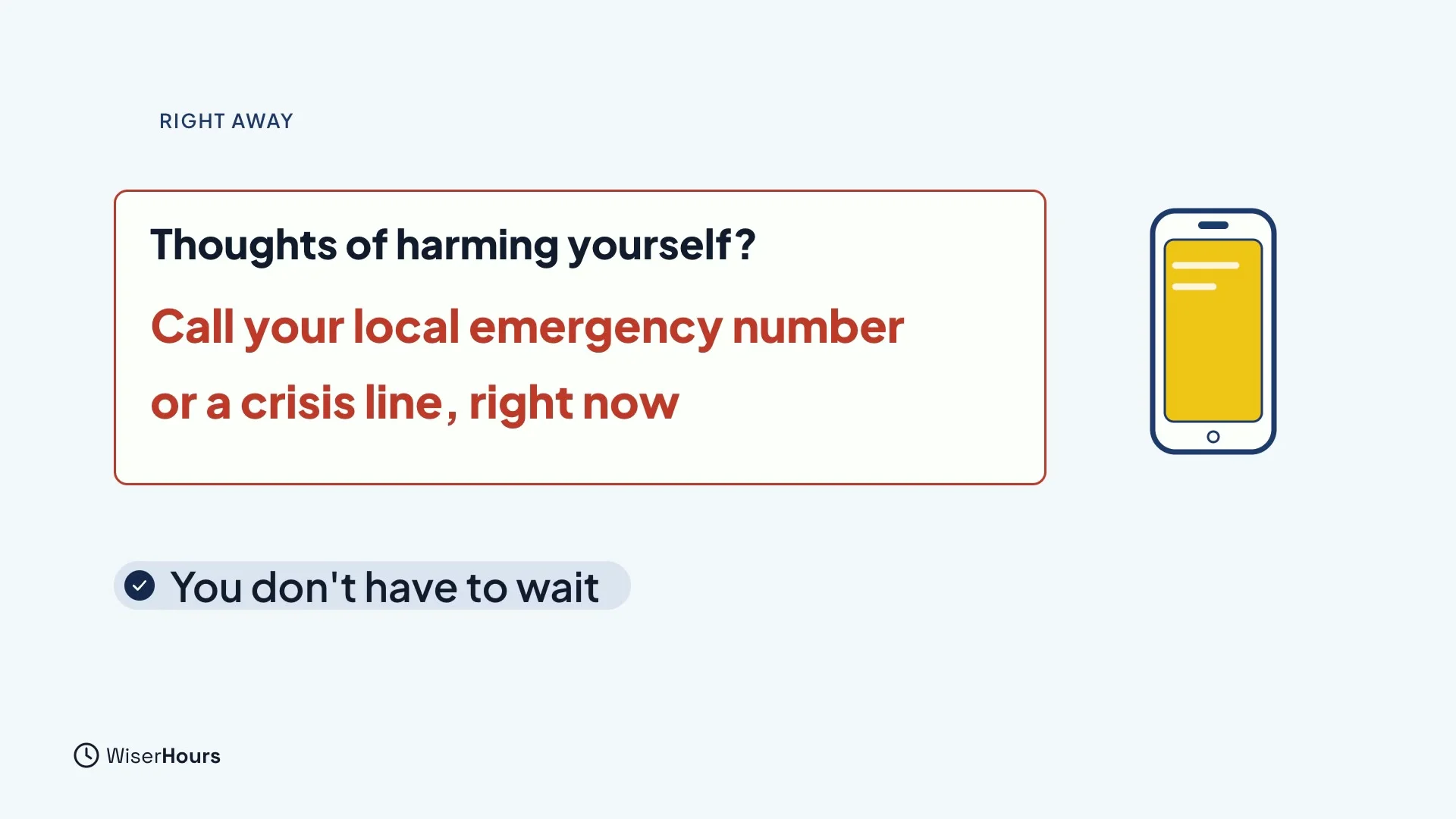
Thoughts of harming yourself? Get help right away
If you ever have thoughts of harming yourself, or feel unable to keep yourself safe, call your local emergency number or a crisis line right away. You do not have to wait. For example, in the US call 911 if a life is in danger, and call or text 988 to reach the Suicide and Crisis Lifeline. In the UK call 999, or call Samaritans free on 116 123 to talk. For other countries, Find A Helpline lists free helplines, and your local emergency number connects you to urgent help.
 (opens the full-size picture)
Your recovery plan
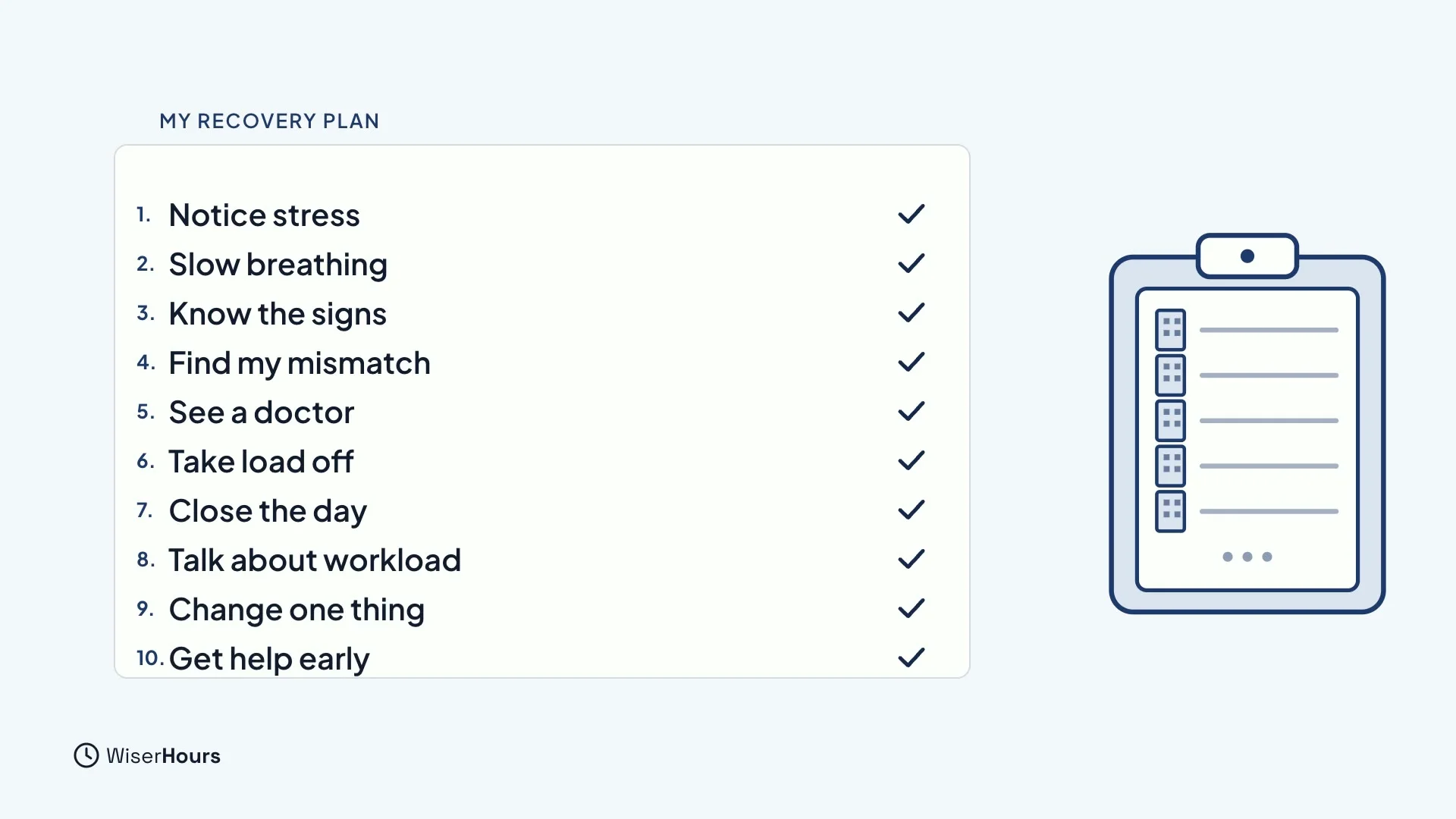
Now your plan. It has ten steps, one for each part of this course: notice when stress builds, calm down with slow breathing, know the early signs, find your mismatch, get checked by a doctor, take load off, close the day, talk to your manager about workload, change one thing about the work, and get help early.
You do not need to do all ten at once. Tick what you already do, and leave the rest as your next steps.
 (opens the full-size picture)
My recovery and prevention plan
Start small
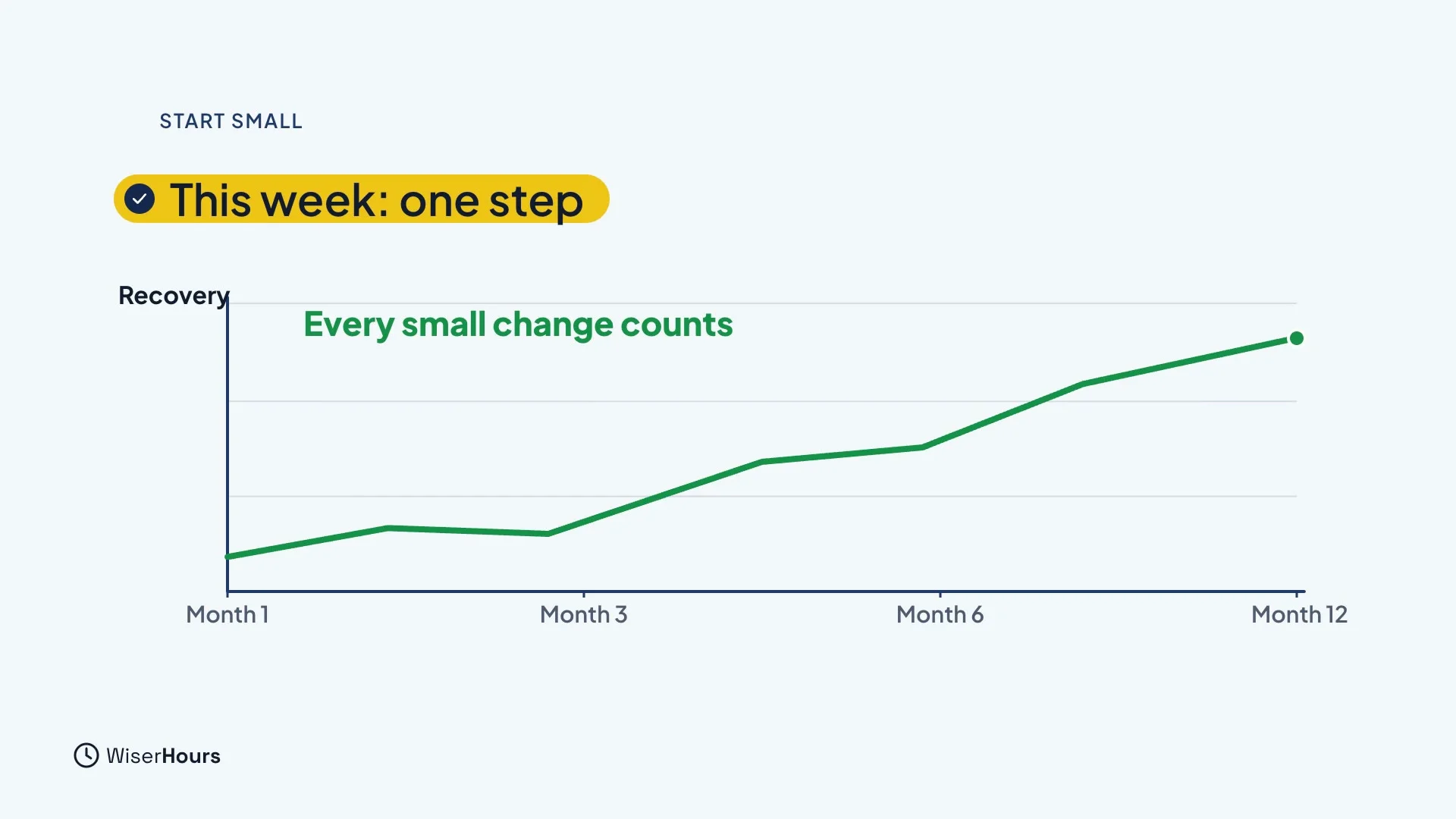
Pick the one step that would help most this week, and do just that. Recovery takes months, and every small change counts.
 (opens the full-size picture)
YOUR TURN
Well done for finishing Manage Stress and Recover from Burnout.
Read more
- Therapy for Burnout: When to Seek Help and What It Involves: the routes in, what therapy involves and when to get help.
- How to Recover From Burnout: A Realistic Step-by-Step Plan: the steps of recovery in order.
- How to Prevent Burnout: What You Can Do and What Needs to Change at Work: what you can do, and what needs to change at work.
Read the full lesson script
In this last lesson, you'll learn when to get help, what help is available, and you'll put your recovery and prevention plan together. This is general information, not medical advice.
See a doctor if tiredness lasts a few weeks with no clear reason, if low mood or loss of interest lasts most days for two weeks, or if coping has become a struggle. A doctor can check for other causes, and talk with you about time off.
Talking therapy can help with how you carry the load. No single type has been shown best, so choose one that fits you, with a therapist who understands work stress. But something at work usually still has to change.
There are several ways in: your family doctor, a public talking therapy service where one exists, your employer's counselling or occupational health service, or your insurance. Ask about the cost, the number of sessions, and the approach.
And if you ever have thoughts of harming yourself, or feel unable to keep yourself safe, call your local emergency number or a crisis line right away. You don't have to wait.
Now, your plan. Notice when stress builds. Calm down with slow breathing. Know the early signs. Find your mismatch. Get checked by a doctor. Take load off, and rest for real. Close the day, and switch off. Talk to your manager about workload. Change one thing about the work. And get help early.
Start small. Pick the one step that would help most this week, and do just that. Recovery takes months, and every small change counts.
So remember: see a doctor early, especially if low mood lasts. Therapy helps, but the work usually has to change too. And in a crisis, call your local emergency number right away. Fill in your recovery plan on the lesson page, and pick your first step. Well done for finishing Manage Stress and Recover from Burnout.
MAKE IT A SMALL WIN
Finished this lesson?
Mark it complete to save your progress on this device.