Recover and change · Lesson 9 of 12
Switch Off After Work: Stop Stewing and Close the Day
Learn to leave work behind in the evening with a ten-minute close-the-day list, a next step for every worry and a clear stop time.
 Video coming soon
Work can follow you home in your head long after you shut the laptop. In this lesson you learn which kind of after-hours thinking does the damage, and a simple routine that helps you leave the day behind.
Stewing or solving
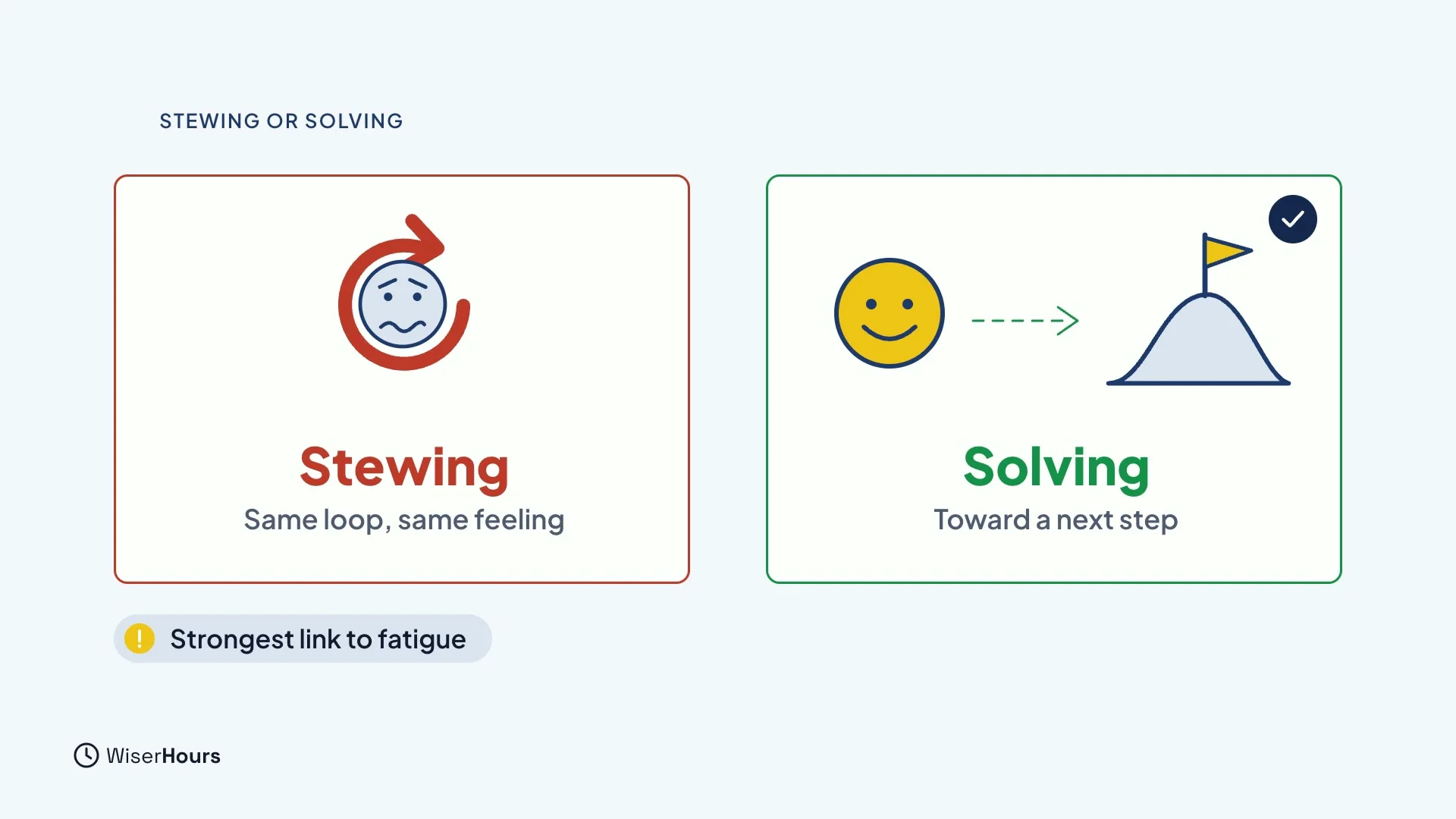
Thinking about work in your free time is not always harmful. What matters is the kind of thinking. Stewing means going round the same loop with frustration or dread, and getting nowhere. Solving means turning a problem over to find a next step. In one study, stewing had the strongest link to fatigue. Calm problem-solving did not.
That gives you a useful question for any work thought that arrives in the evening: is this going somewhere, or is it the same loop with the same feeling? A thought that is going somewhere can be finished and put down. A loop needs a different move, and the rest of this lesson gives you some. These findings show a link, not proof that one causes the other.
 (opens the full-size picture)
Close the day
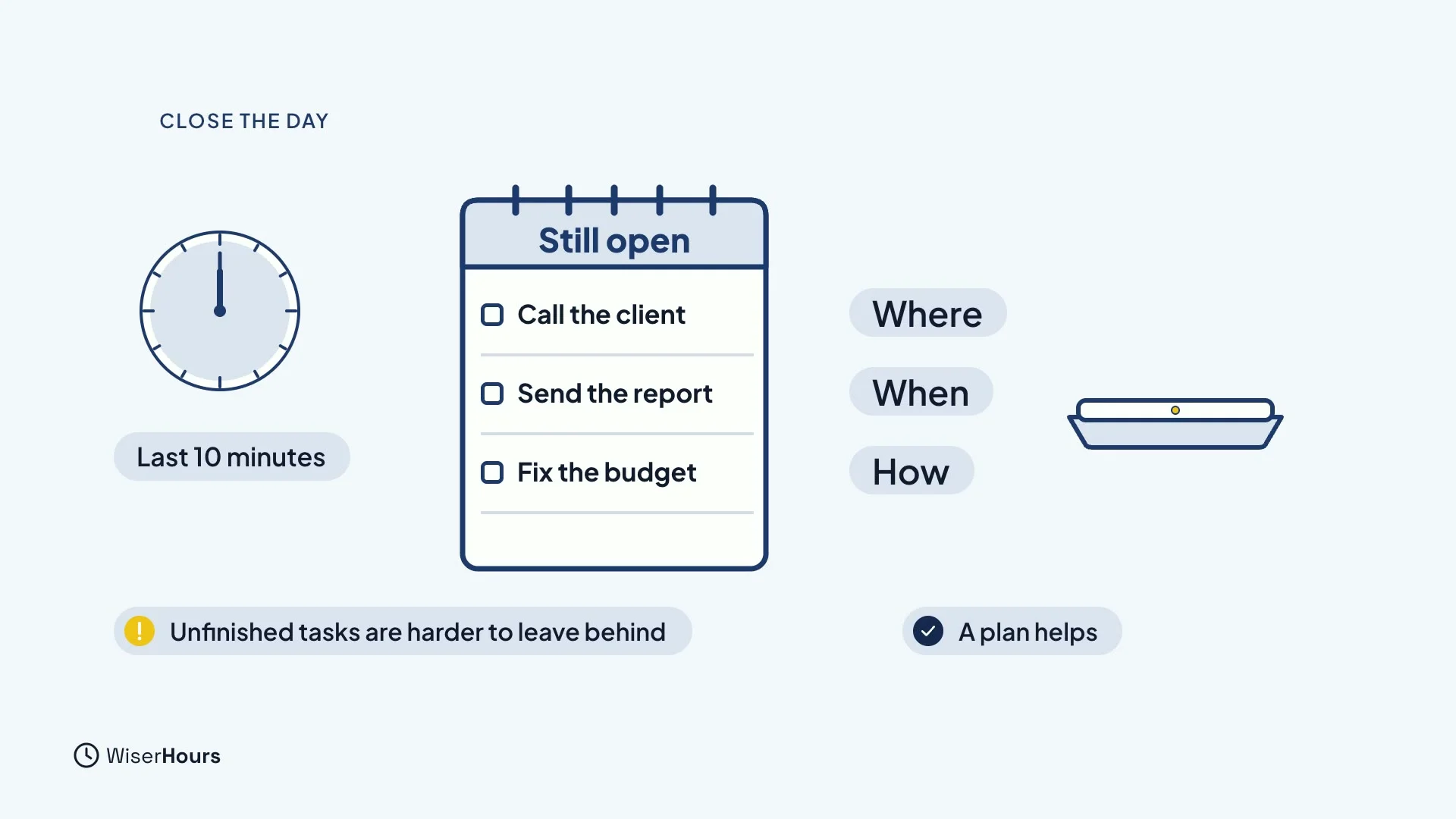
The most useful habit is to close the day. Unfinished tasks are harder to leave behind, and a plan helps. In the last ten minutes of work, list what is still open. For each item, write where, when and how you will finish it. For example: “Call the client: Tuesday, at my desk, after the morning meeting.” Then close the list, and close the laptop.
The plan does not finish the task. It tells your mind the task is safely held, so it can stop guarding it.
 (opens the full-size picture)
Turn a worry into a step
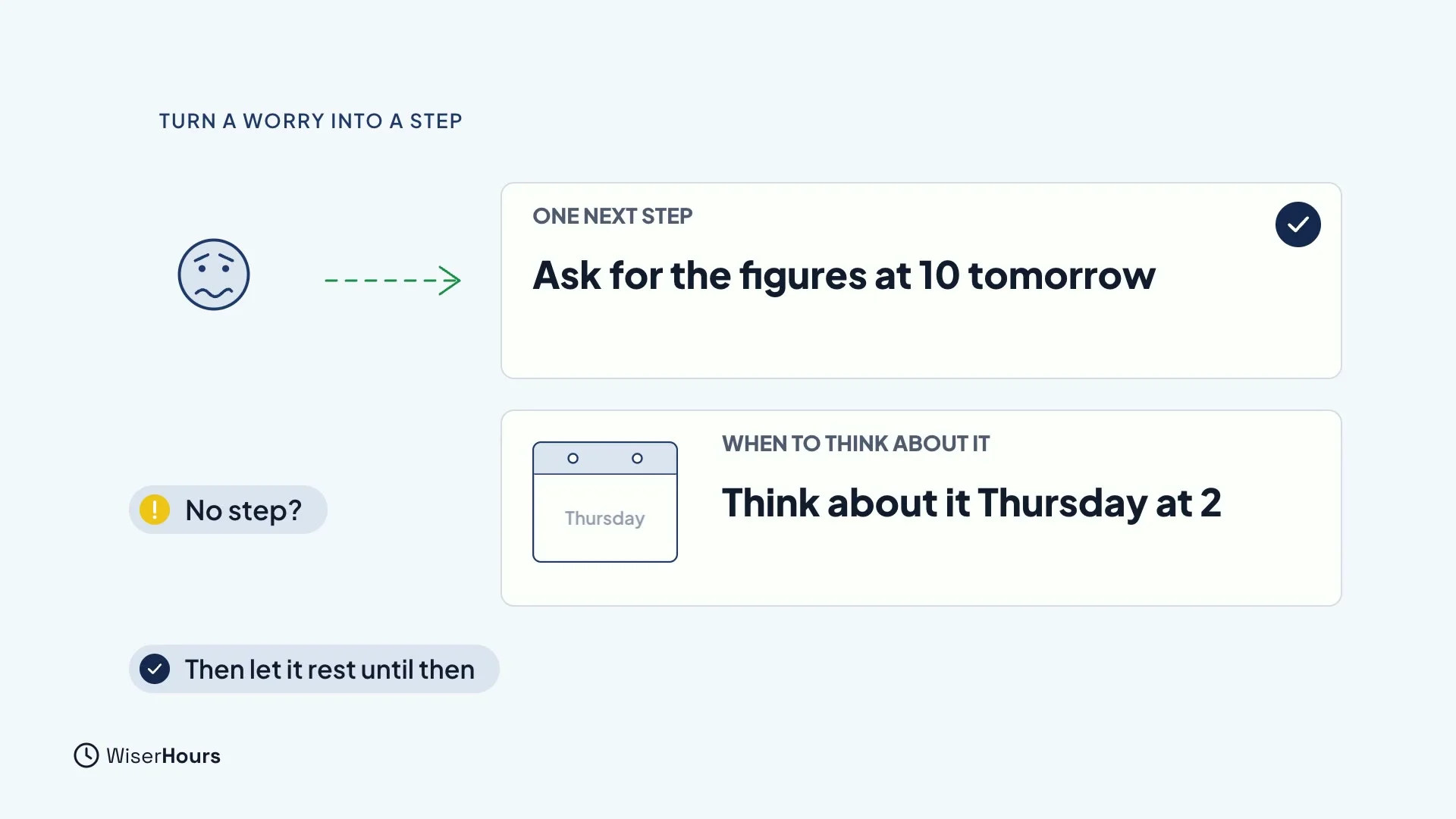
If a worry keeps looping in the evening, turn it into one next step. For example: ask for the figures at ten tomorrow. If there is no step you can take tonight, write down when you will think about it, for example Thursday at two. Then let it rest until then. You are not ignoring the worry. You are giving it an appointment.
 (opens the full-size picture)
An absorbing evening
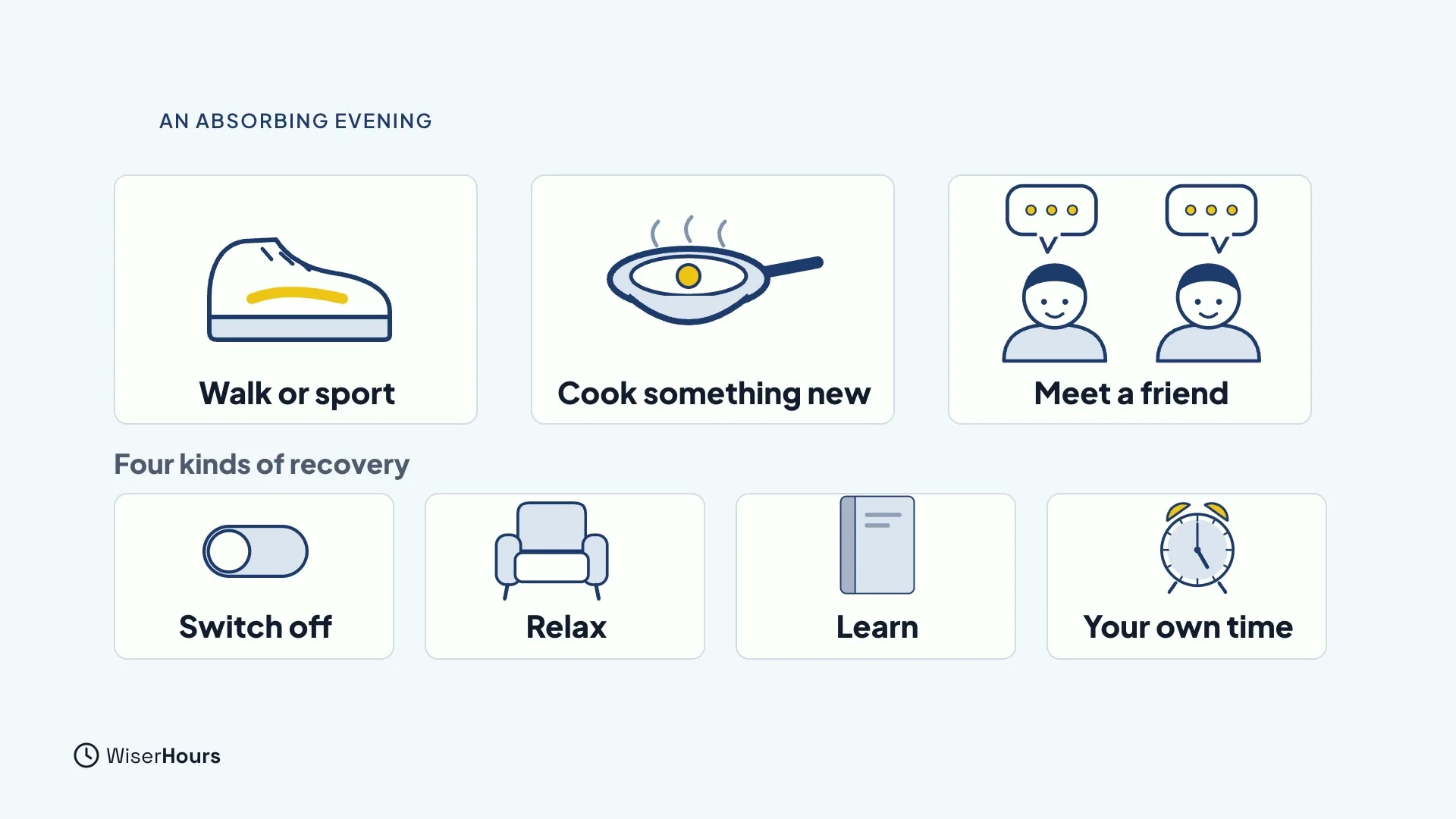
Give your evening something absorbing or calming: a walk, a sport, cooking something new, or meeting a friend. Researchers name four kinds of recovery: switching off, relaxing, learning something, and having control over your time. An evening with a bit of each is more likely to refill you than one spent scrolling and half-thinking about work.
 (opens the full-size picture)
Set a stop time
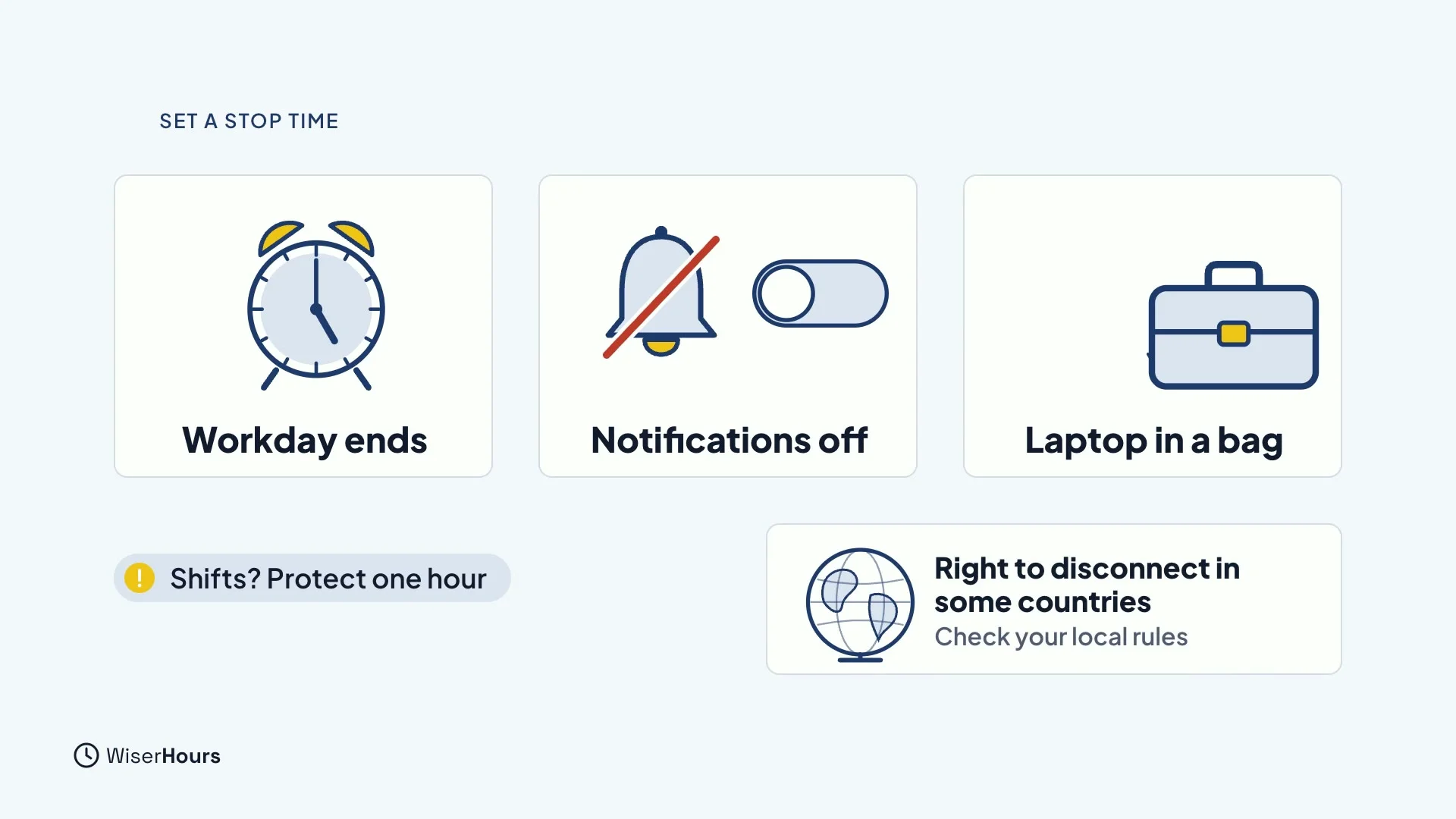
Decide when your workday ends, and what marks it. That could be turning off notifications, or putting the laptop in a bag. A clear end point is easier to keep than a vague one.
If you work shifts or across time zones, protect a smaller boundary, such as one hour. Some countries now give workers a legal right to disconnect from work contact outside working hours, so check your local rules with a union, labour office or official site.
 (opens the full-size picture)
If the loop keeps running
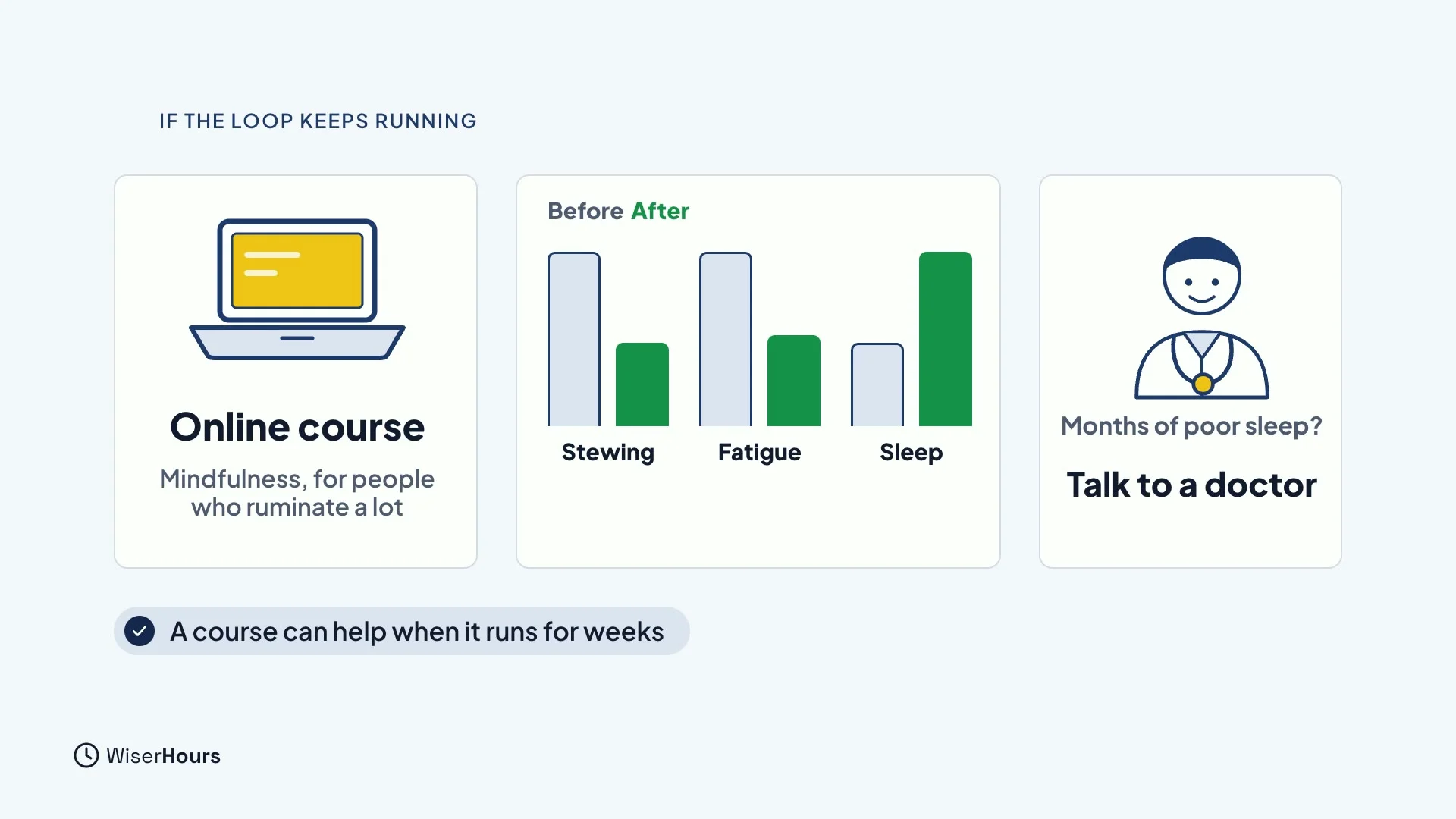
If the loop keeps running for weeks, a structured course can help. In one trial, an online mindfulness course for people who ruminated a lot about work reduced stewing and fatigue, and improved sleep, compared with a waiting list. Courses like this take weeks, not days.
If poor sleep lasts for months, talk to a doctor. This is general information, not medical advice.
 (opens the full-size picture)
YOUR TURN
Read more
- How to Stop Thinking About Work in the Evening: the five evening habits and what the studies found.
- How to Prevent Burnout: What You Can Do and What Needs to Change at Work: where switching off fits among the other steps.
Read the full lesson script
In this lesson, you'll learn how to stop work from following you home, with a simple routine for the end of the day.
Thinking about work after hours isn't always harmful. What wears you down is stewing: going round the same loop with frustration or dread. In one study, stewing was the strongest link to fatigue. Calm problem-solving was not.
The most useful habit is to close the day. In the last ten minutes of work, list what's still open. For each item, write where, when and how you'll finish it. Then close the list, and close the laptop. Unfinished tasks are harder to leave behind, and a plan helps.
If a worry keeps looping in the evening, turn it into one next step, like: ask for the figures at ten tomorrow. If there's no step, write when you'll think about it, like Thursday at two. Then let it rest until then.
Give your evening something absorbing or calming: a walk, a sport, cooking something new, or meeting a friend. Researchers name four kinds of recovery: switching off, relaxing, learning something, and having control over your time.
Decide when your workday ends, and what marks it, like turning off notifications, or putting the laptop in a bag. If you work shifts or across time zones, protect a smaller boundary, like one hour. Some countries now give workers a legal right to disconnect, so check your local rules.
If the loop keeps running for weeks, a structured course can help. In one trial, an online mindfulness course for people who ruminated a lot reduced stewing and fatigue, and improved sleep. And if poor sleep lasts for months, talk to a doctor.
So remember: stewing wears you down, solving doesn't. Close the day with where, when, and how. And set a time when work stops reaching you. Before the next lesson, do a ten-minute close-the-day list tonight. Next, you'll learn how to talk to your manager about workload.
MAKE IT A SMALL WIN
Finished this lesson?
Mark it complete to save your progress on this device.