Recover and change · Lesson 10 of 12
Talk to Your Manager About Workload Without Confessing
Learn a calm, five-step way to raise too much work with your manager: list hours, show trade-offs, ask for a ranking and confirm by email.
 Video coming soon
Too much work is hard to raise with a manager, and it is also one of the things most linked to burnout. In this lesson you learn a calm way to talk to your manager about workload, so the talk leads to real changes.
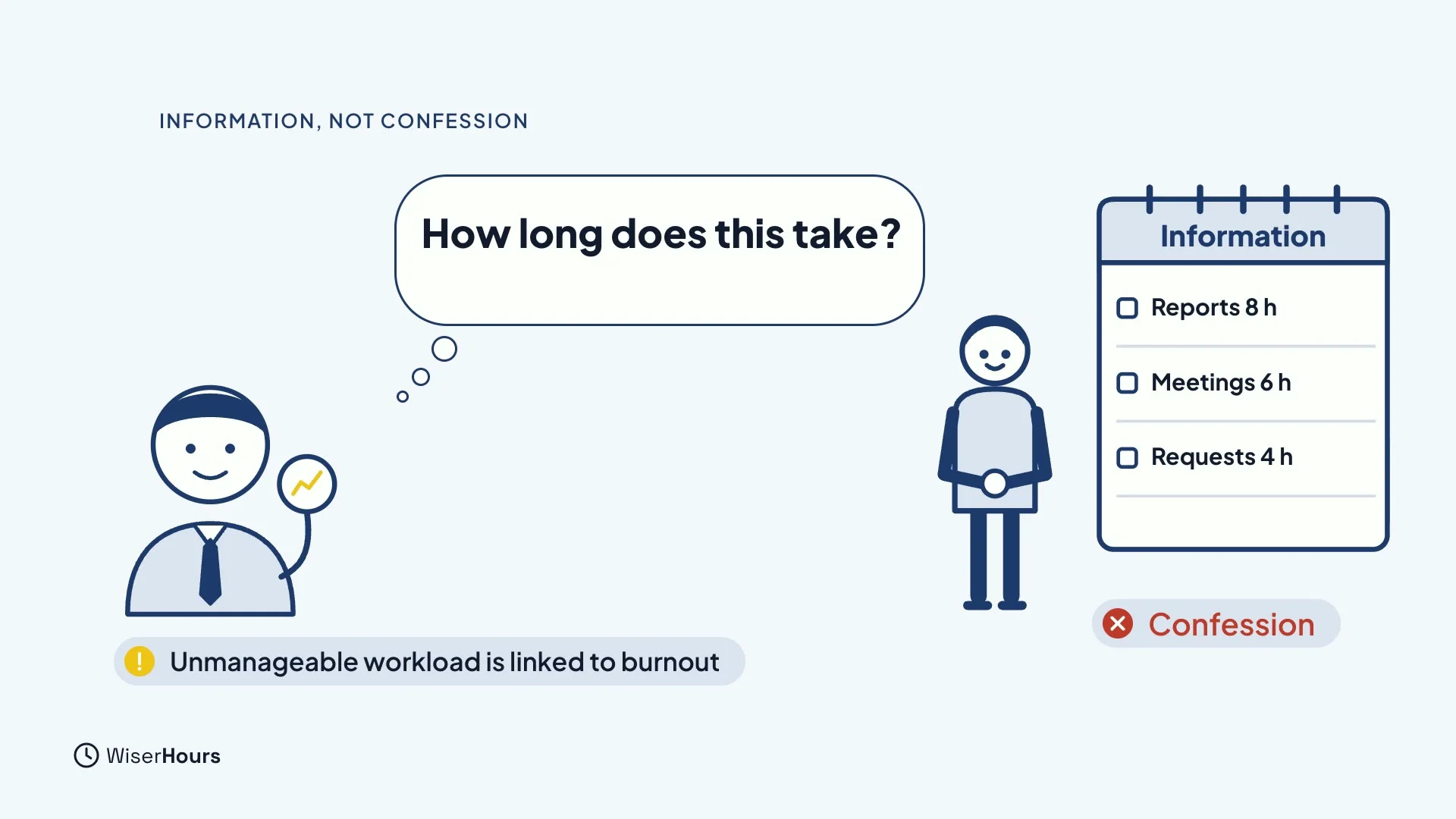
Information, not confession
Managers often hand out work without knowing how long it takes. So when you raise your workload, you are giving them information, not confessing that you cannot cope. This matters because an unmanageable workload is one of the things most linked to burnout, so it is worth a conversation.
 (opens the full-size picture)
List your tasks and hours
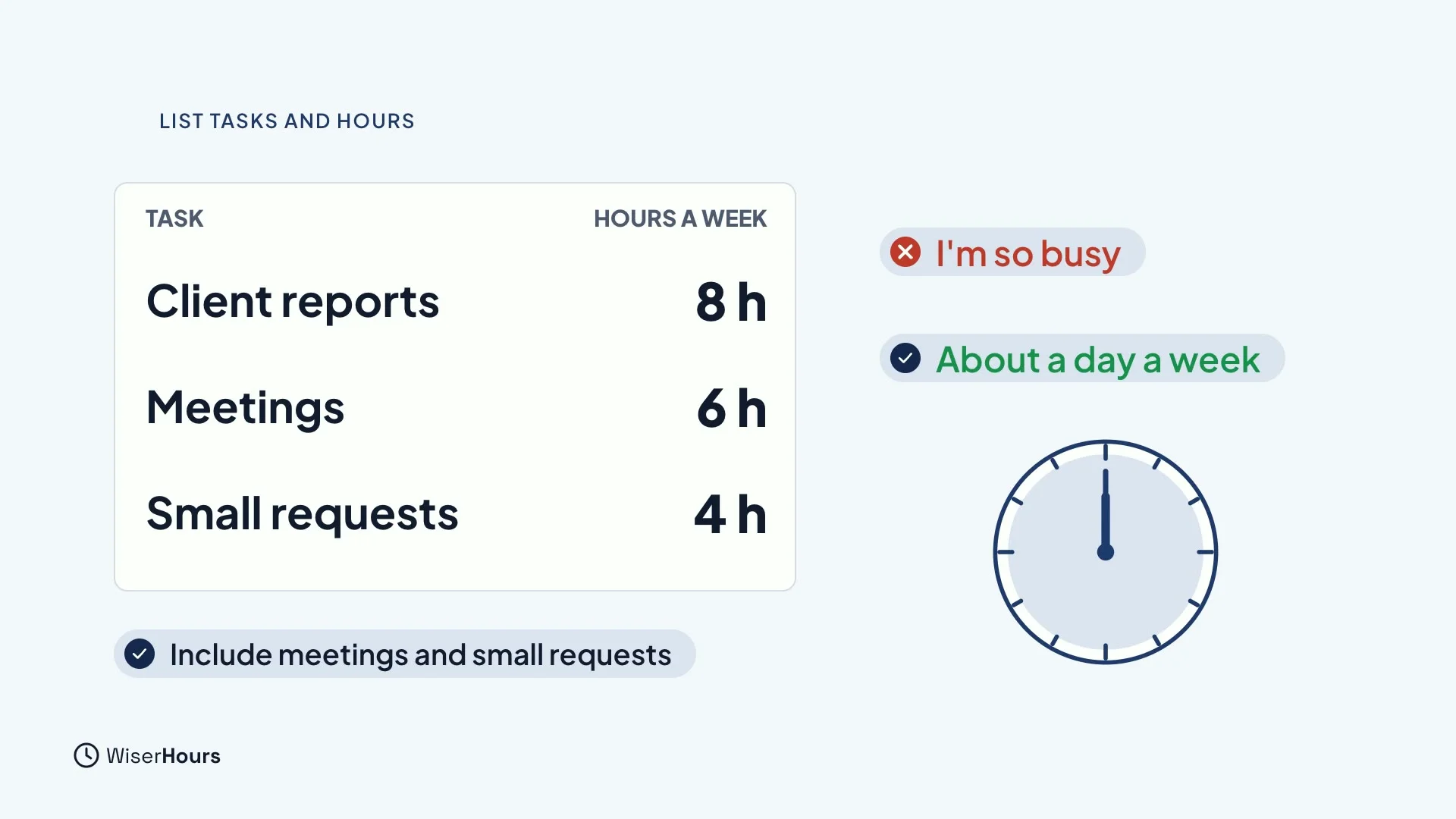
First, list your tasks and roughly how many hours each takes, based on the last two weeks. Include meetings and small requests, since those often hide the most time. Hours are more convincing than adjectives. “I’m so busy” invites reassurance. “The client reports take about a day a week” invites a decision.
 (opens the full-size picture)
Show the trade-off, then ask for a ranking
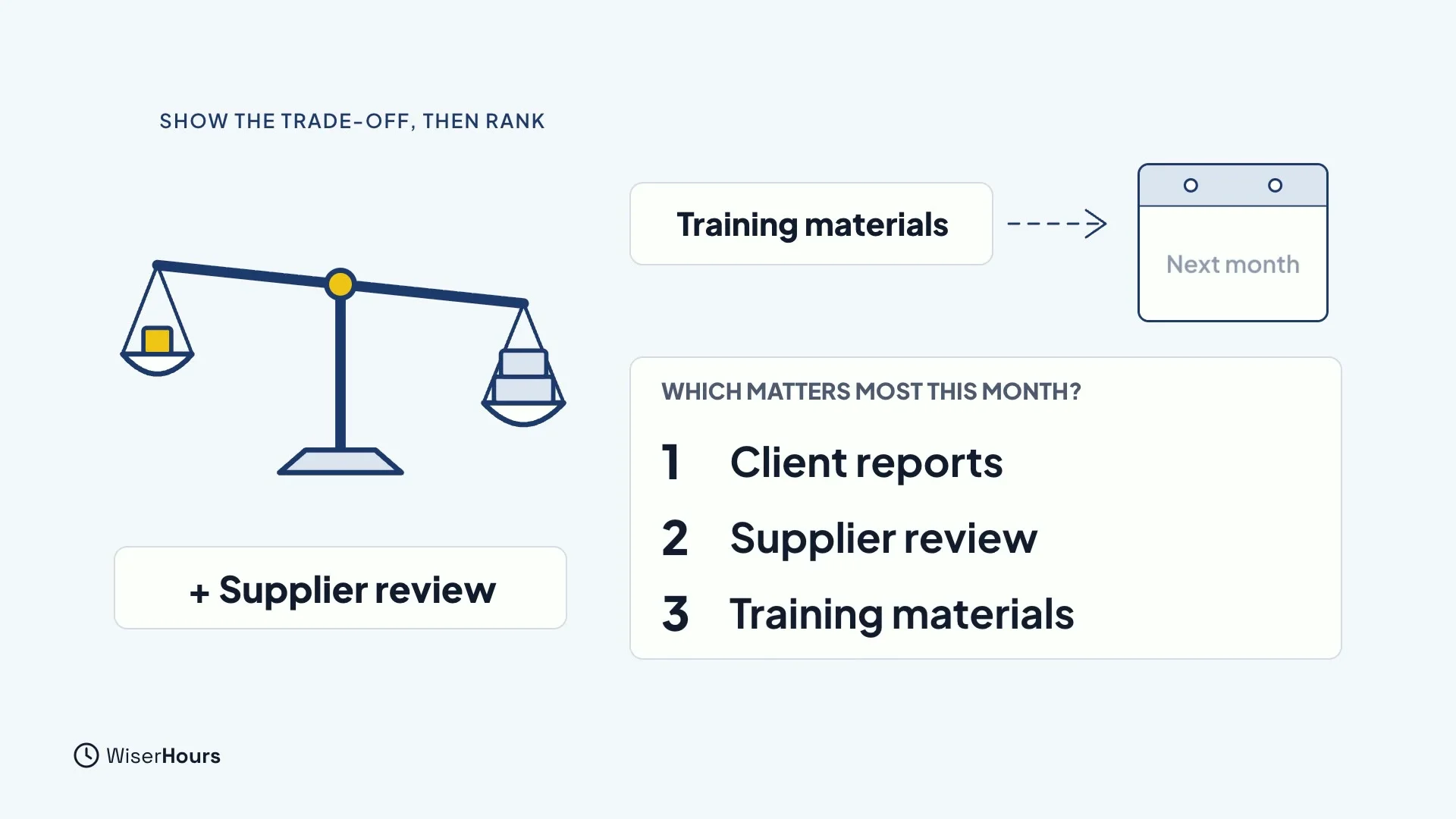
Next, show what each new request would push aside. For example: “I can take on the supplier review, but then the training materials move to next month.” That is neither a yes nor a no. It is an honest price.
Then ask your manager to rank the work: which of these matters most this month? A ranking turns a complaint into a decision that your manager is already responsible for.
 (opens the full-size picture)
Bring options
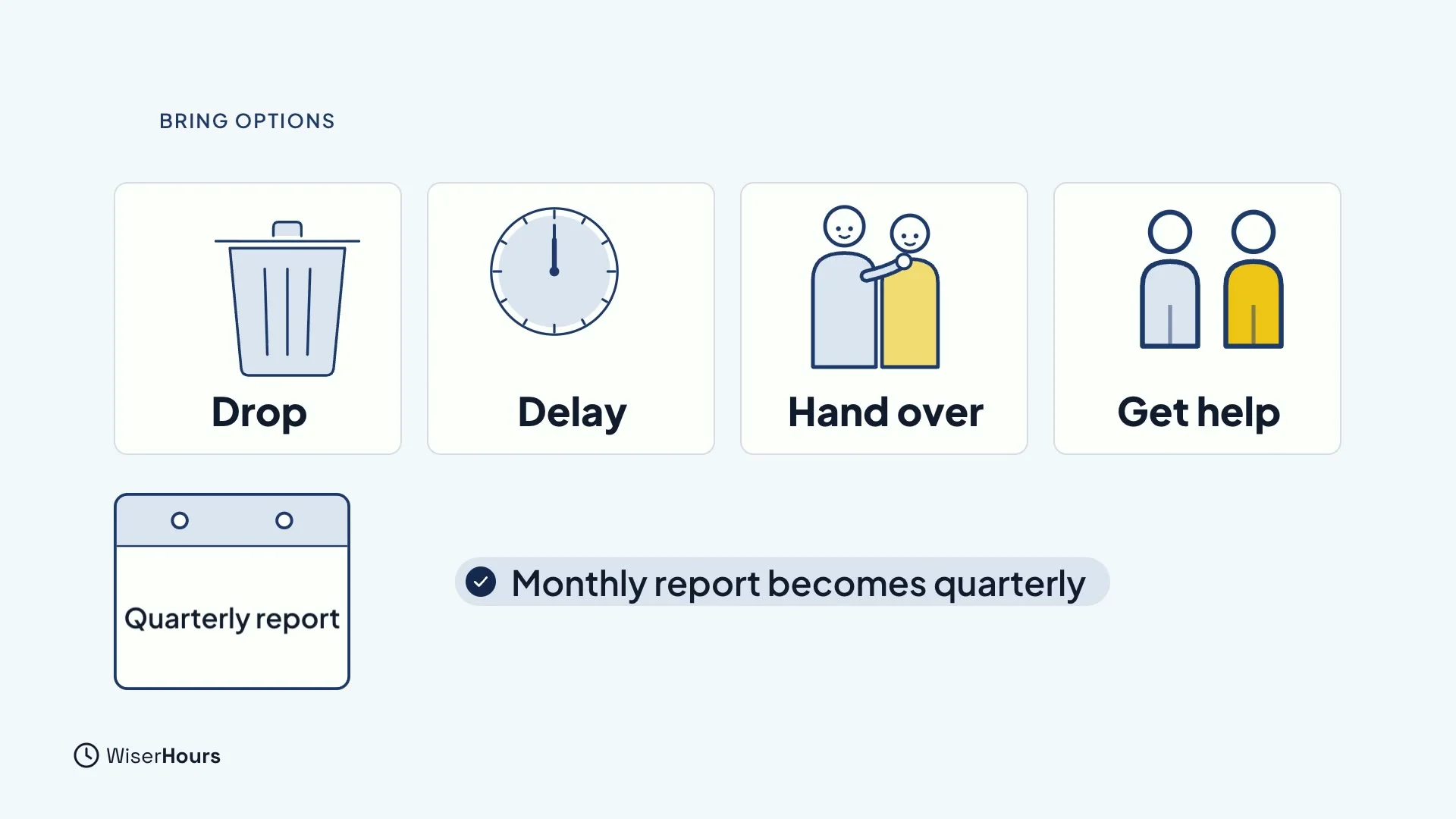
For every task that does not fit, bring options: drop it, delay it, hand it to someone else, or get temporary help. A monthly report might become quarterly, for example. Options show you are working on the problem with your manager, not just handing it over.
 (opens the full-size picture)
Words that work
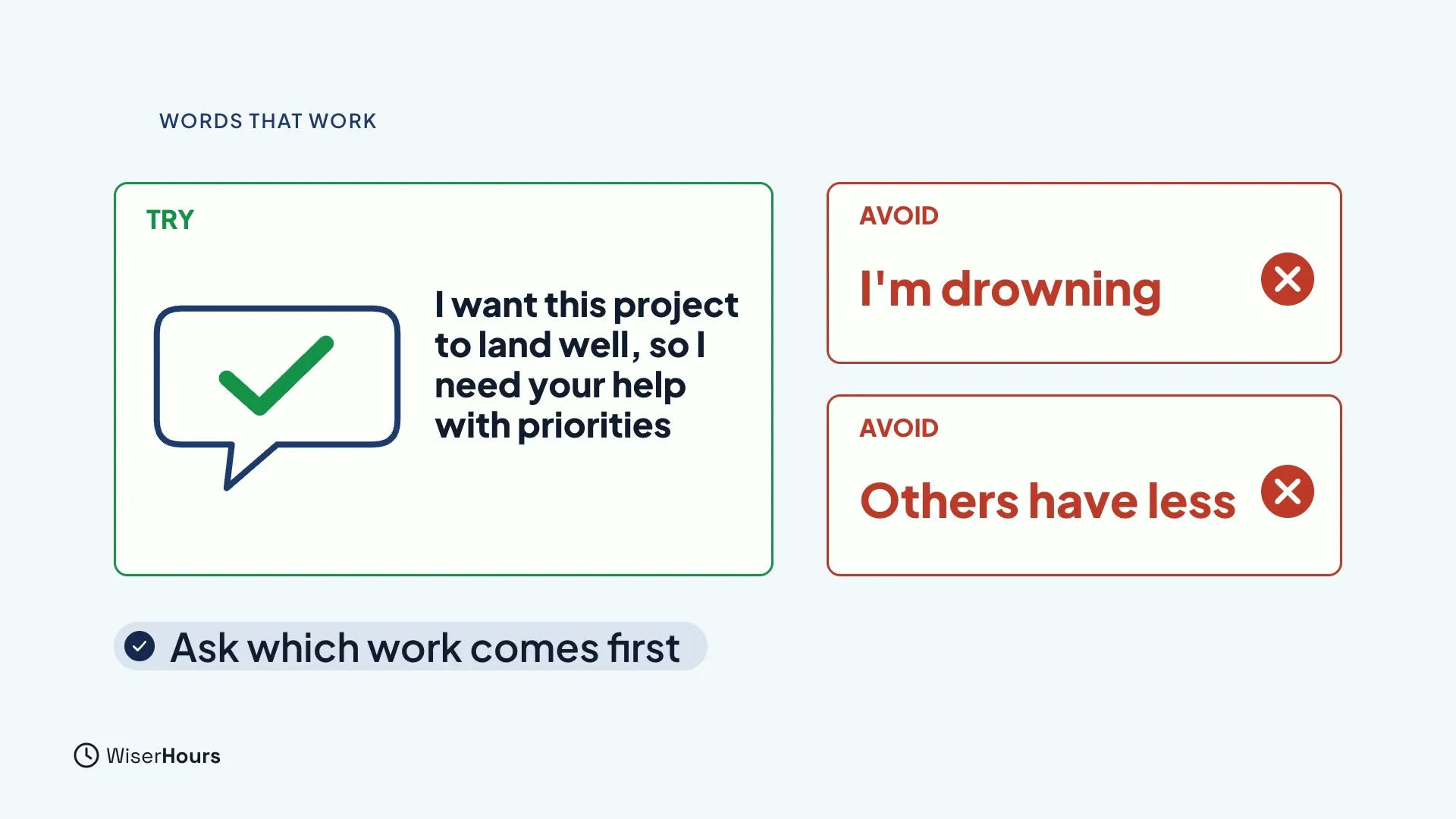
Choose your words with care. Try: “I want this project to land well, so I need your help with priorities.” Avoid “I’m drowning”, or “other people have far less to do”. You do not need your manager to agree that you are overloaded. You need them to say which work comes first.
 (opens the full-size picture)
Confirm by email
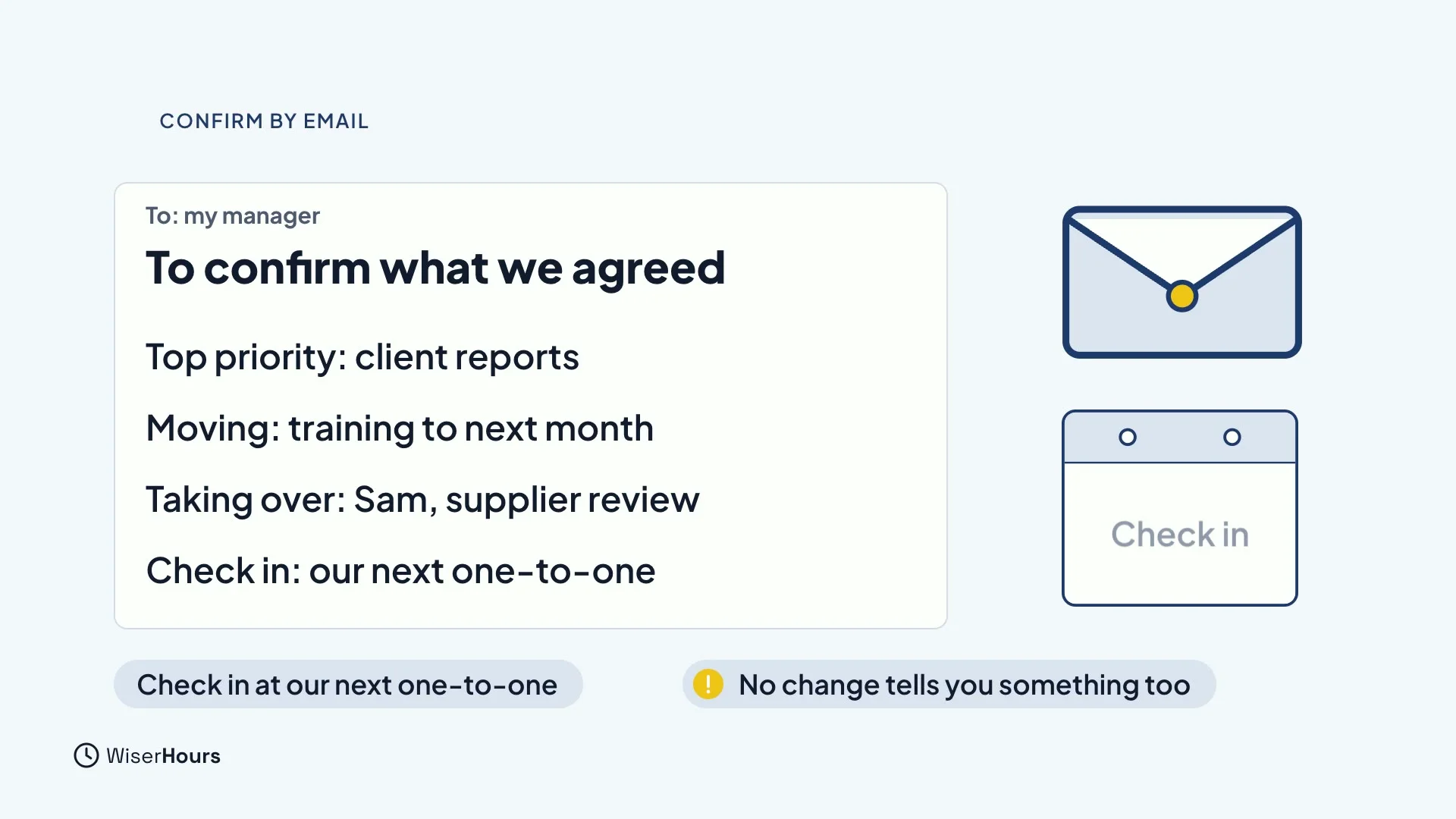
Finally, confirm the plan by email the same day: what stays top priority, what moves, who takes what, and when you will check in. Keep it short and friendly. If nothing changes after you have raised it clearly, that tells you something too.
 (opens the full-size picture)
YOUR TURN
Read more
- How to Negotiate Your Workload With Your Manager: the five steps in full, with an email you can adapt.
- How to Set Boundaries With Your Boss Without Hurting Your Career: setting limits on hours and reachability, and what to do if the answer is no.
Read the full lesson script
In this lesson, you'll learn how to talk to your manager about too much work, in a calm way that leads to real changes.
Here's a helpful way to see it. Managers often hand out work without knowing how long it takes. So when you raise your workload, you're giving them information, not confessing that you can't cope. An unmanageable workload is one of the things most linked to burnout.
First, list your tasks, and roughly how many hours each takes, based on the last two weeks. Include meetings and small requests. Hours are more convincing than adjectives: the client reports take about a day a week.
Next, show what each new request would push aside: I can take on the supplier review, but then the training materials move to next month. Then ask your manager to rank the work: which of these matters most this month?
For every task that doesn't fit, bring options: drop it, delay it, hand it to someone else, or get temporary help. A monthly report might become quarterly, for example.
Choose your words with care. Try: I want this project to land well, so I need your help with priorities. Avoid: I'm drowning, or other people have far less to do. You don't need your manager to agree you're overloaded. You need them to say which work comes first.
Finally, confirm the plan by email the same day: what stays top priority, what moves, who takes what, and when you'll check in. Keep it short and friendly. If nothing changes after you've raised it clearly, that tells you something too.
So remember: raising workload is giving information. List your tasks with hours, and ask your manager to rank them. And confirm the plan by email the same day. Before the next lesson, write your task list with rough hours for a normal week. Next, you'll learn how to reshape your job.
MAKE IT A SMALL WIN
Finished this lesson?
Mark it complete to save your progress on this device.