Understand burnout · Lesson 7 of 12
What Causes Burnout: Six Job Mismatches to Check
Learn the six areas where a job can drain you, answer six quick questions, and name the one mismatch that needs to change.
 Video coming soon
Burnout is not only about working too many hours. It tends to grow when your job and you are out of step in some lasting way. In this lesson you learn a simple model of six areas, and how to find the one that is draining you most. This is general information, and the questions are not a test or a diagnosis.
Six areas of mismatch
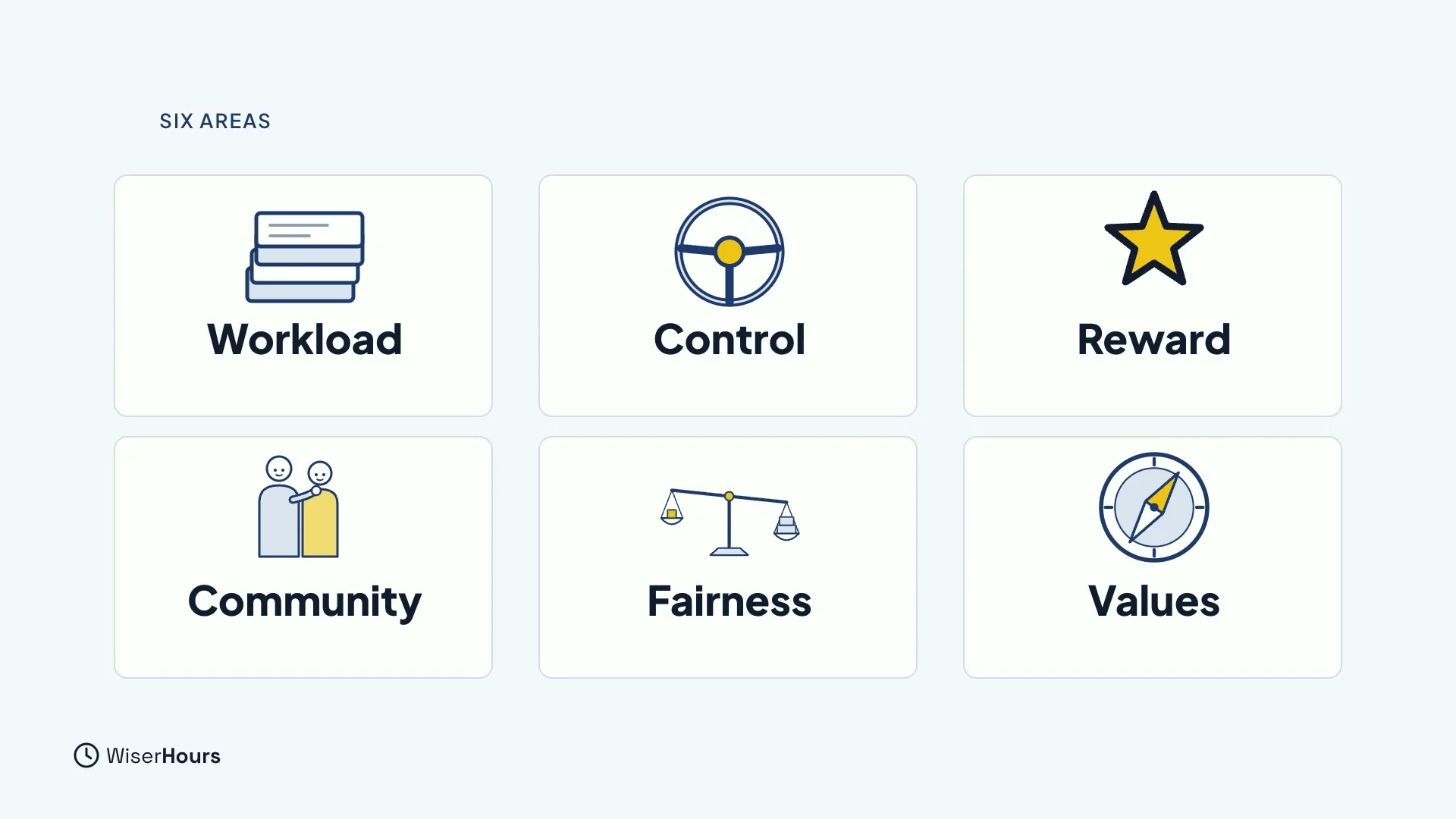
Burnout grows from a lasting mismatch between you and your job in six areas: workload, control, reward, community, fairness and values. The better the match, the more likely you are to feel engaged instead.
 (opens the full-size picture)
How each one hurts
Each area does its damage in a different way:
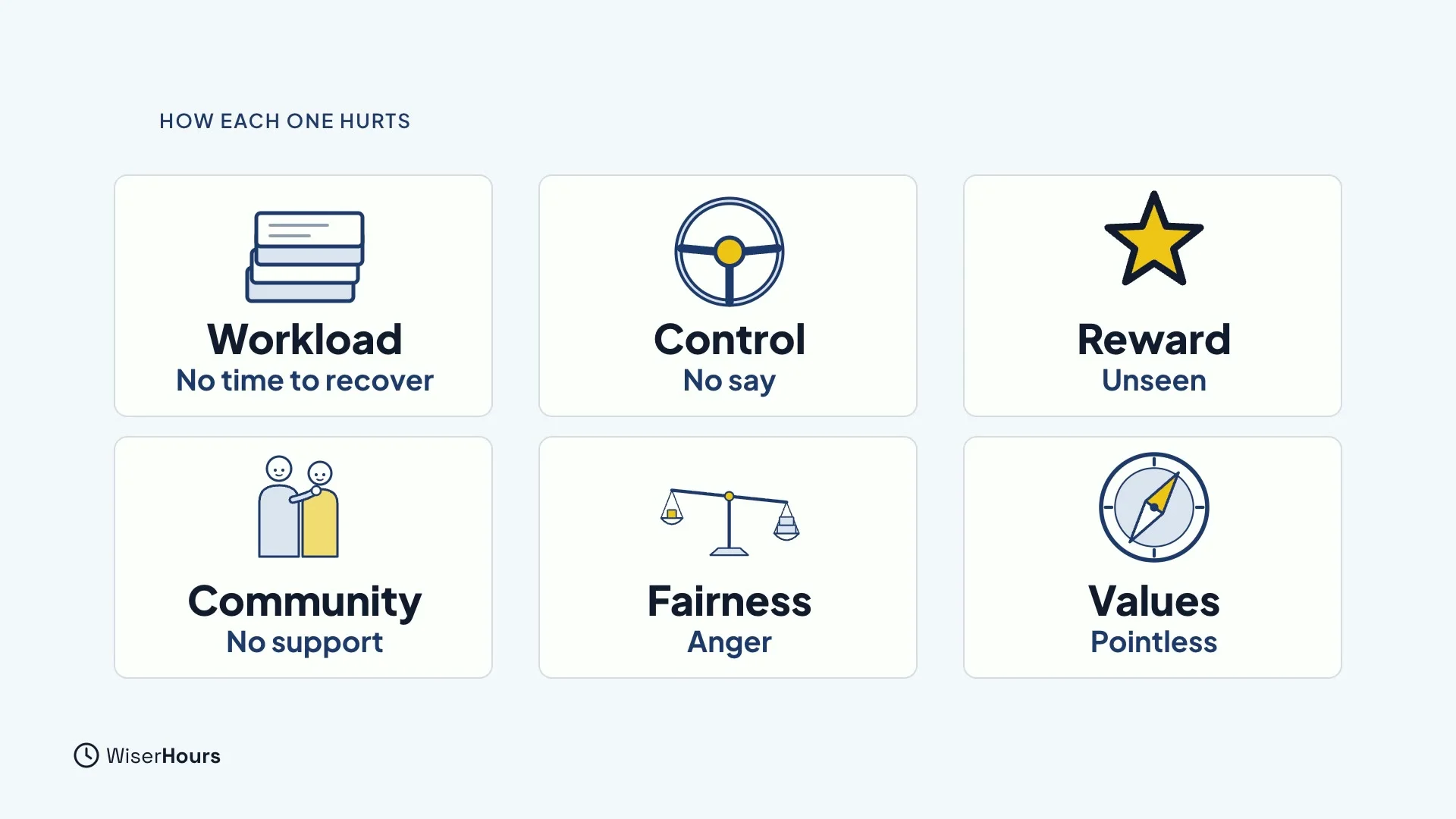
- Too much work leaves no time to recover.
- Little control means you have no say in decisions.
- Thin recognition makes the work feel unseen.
- A broken team means you have no support.
- Unfairness breeds anger and cynicism.
- A values gap means doing things you think are wrong or pointless.
 (opens the full-size picture)
Demands and resources
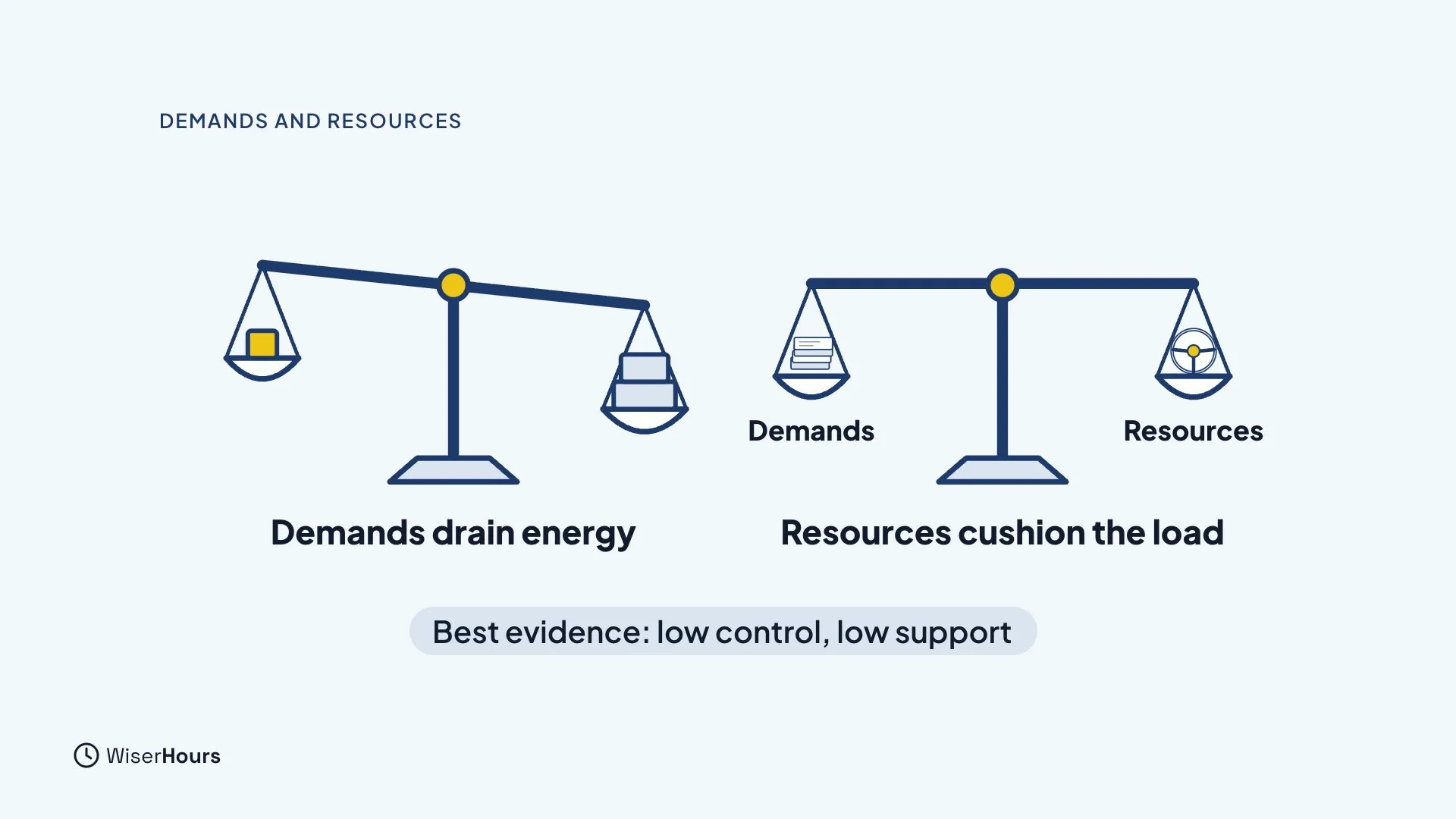
Here is another way to see it. Demands, such as heavy work and tight time, drain your energy. Missing resources, such as support and a say in your work, drain your engagement. Resources cushion heavy demands, so the same busy stretch feels different when you have both.
In long-term studies, which follow the same people over time, low control and low support had the best evidence for leading to later exhaustion. Hours matter, but they are not the whole story. A long week you shaped yourself, with a team that notices, is not the same as one handed to you.
 (opens the full-size picture)
Six quick questions
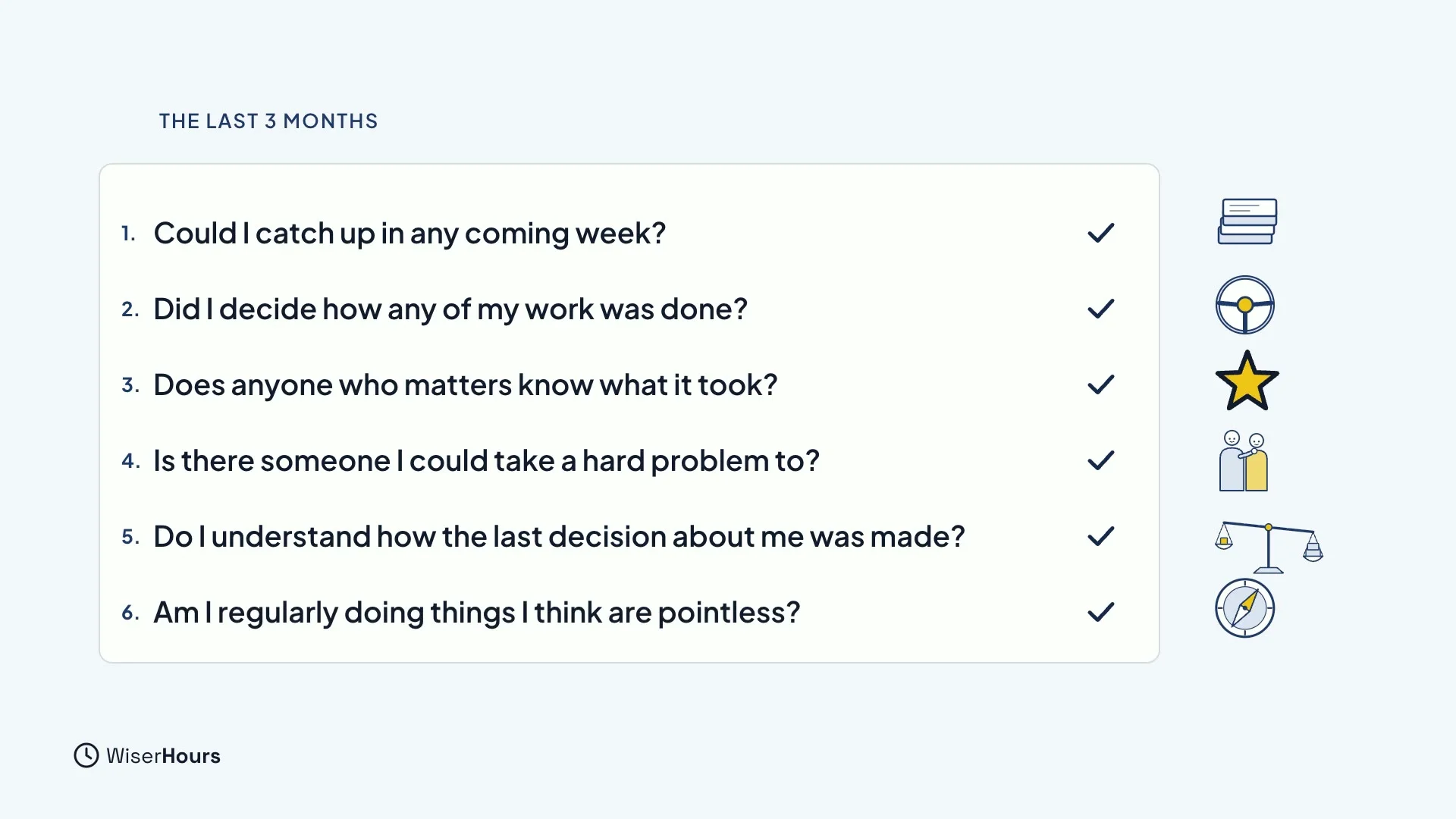
Answer these about the last three months, not just this week:
- Could I catch up in any week coming up?
- Did I decide how any part of my work was done?
- Does anyone who matters know what my work took?
- Is there someone here I could take a hard problem to?
- Do I understand how the last decision about me was made?
- Am I regularly doing things I think are pointless?
Each question matches one of the six areas, in the same order: workload, control, reward, community, fairness and values.
 (opens the full-size picture)
Read your answers
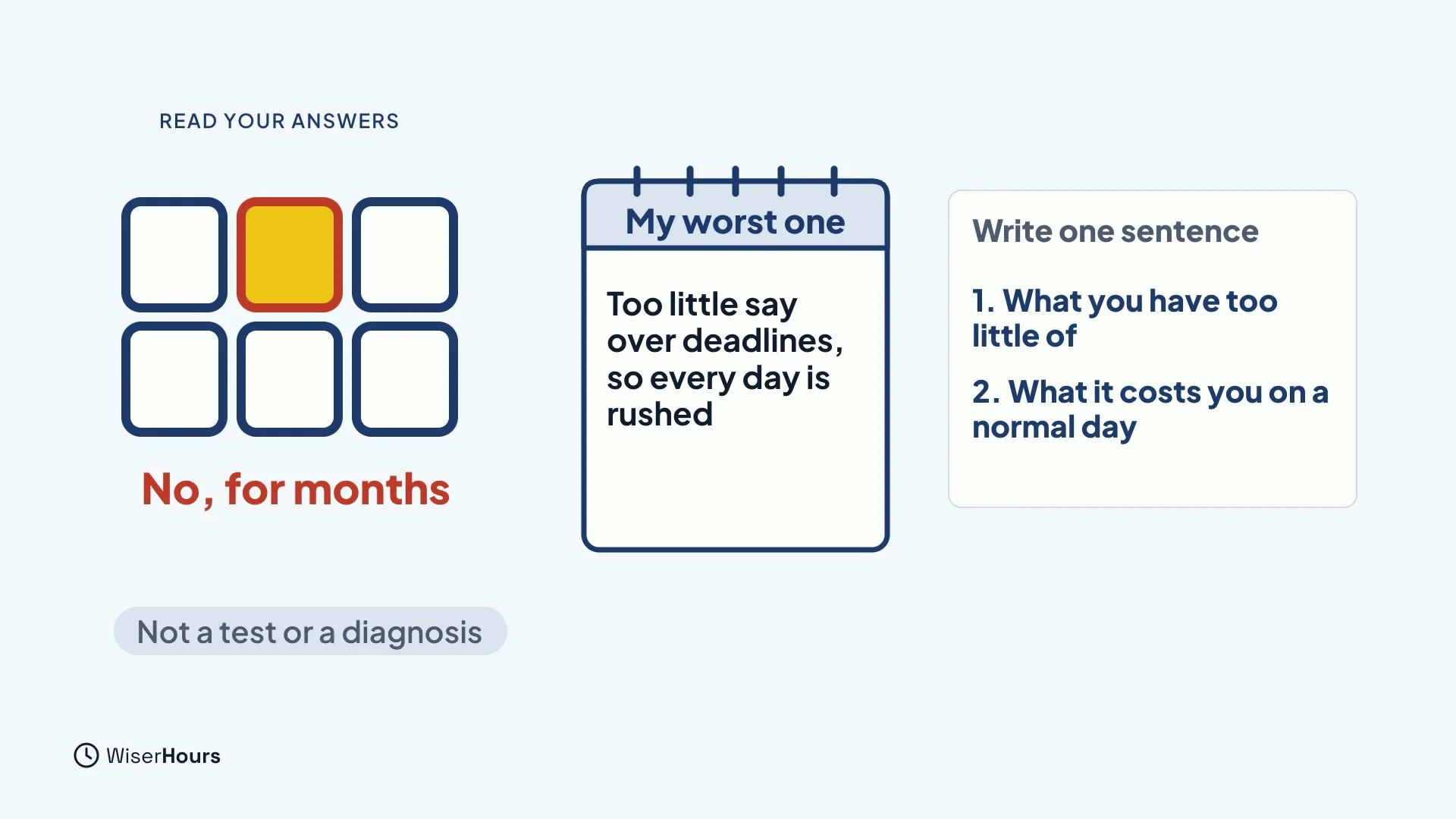
A no on one question is ordinary. A no that has lasted for months points to a mismatch. Write the worst one as a single sentence: what you have too little of, and what it costs you on a normal day. For example, “Too little say over deadlines, so every day is rushed.” One sentence is something you can take to a manager, a colleague or a doctor. This is not a screening test or a diagnosis. It is a way to see what needs to change.
 (opens the full-size picture)
Who can move it
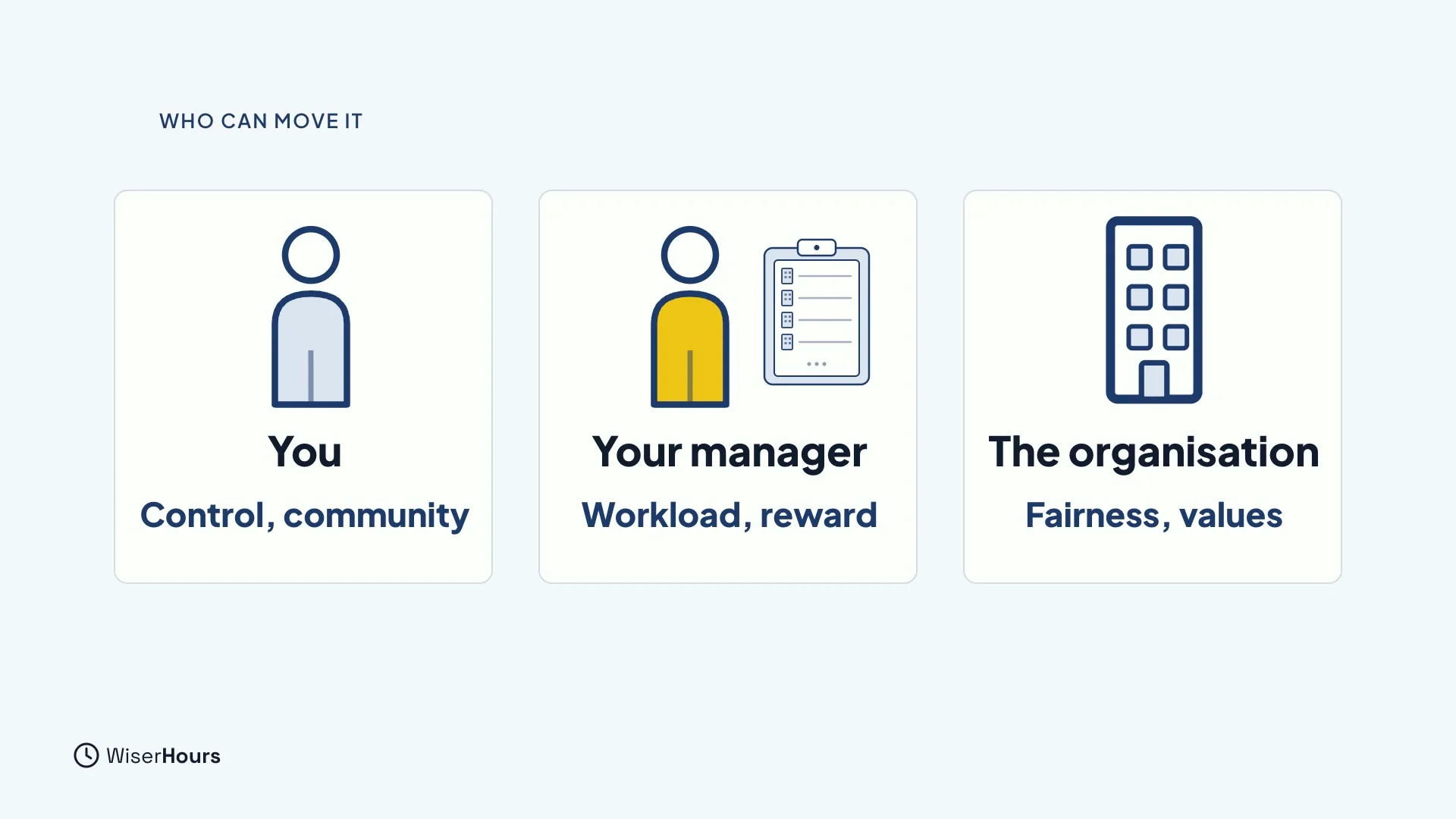
Different areas sit with different people. Control and community are often closest to your own reach. Workload and reward usually need your manager. Fairness and values often sit with the wider organisation. Sorting your sentence this way keeps your effort where it can land, and it stops a problem in the job from feeling like a personal failure.
 (opens the full-size picture)
YOUR TURN
Read more
- What Causes Burnout? The Six Areas of Work-Life Mismatch: the six areas in depth, which ones the long-term evidence backs, and who can move each one.
- Work Stress: Common Causes and What You Can Control: the common causes of stress at work and what you can control.
Read the full lesson script
In this lesson, you'll learn what causes burnout at work, using a simple model of six areas, and how to find the one that's draining you most.
Burnout grows from a lasting mismatch between you and your job in six areas: workload, control, reward, community, fairness, and values. The better the match, the more likely you are to feel engaged instead.
Too much work leaves no time to recover. Little control means no say in decisions. Thin recognition makes the work feel unseen. A broken team means no support. Unfairness breeds anger and cynicism. And a values gap means doing things you think are wrong or pointless.
Another way to see it: demands drain your energy, and missing resources drain your engagement. Resources, like support and a say in your work, cushion heavy demands. In long-term studies, low control and low support had the best evidence for leading to exhaustion.
Here are six quick questions about the last three months, not just this week. Could I catch up in any week coming up? Did I decide how any part of my work was done? Does anyone who matters know what my work took? Is there someone here I could take a hard problem to? Do I understand how the last decision about me was made? And am I regularly doing things I think are pointless?
A no that has lasted for months points to a mismatch. Write the worst one as a single sentence: what you have too little of, and what it costs you on a normal day. This isn't a screening test or a diagnosis. It's a way to see what needs to change.
Different areas sit with different people. Control and community are often closest to your own reach. Workload and reward usually need your manager. Fairness and values often sit with the wider organisation.
So remember: burnout grows from mismatches in six areas. Low control and low support have the strongest evidence. And a no that lasts for months shows you what to change. Before the next lesson, answer the six questions, and write the worst one as a single sentence. Next, you'll learn how recovery starts with real rest.
MAKE IT A SMALL WIN
Finished this lesson?
Mark it complete to save your progress on this device.