Calm the stress · Lesson 2 of 12
Calm Down in a Few Minutes: Simple Breathing and Grounding
Learn slow breathing, box breathing, the cyclic sigh and grounding, so you can settle enough to think clearly when stress hits.
 Video coming soon
Some moments need a quick way to settle down: a sharp email, a hard conversation, a meeting that starts in ten minutes. In this lesson you learn a few simple ways to calm down using your breath and your senses. This course is general information, not medical advice.
The real goal
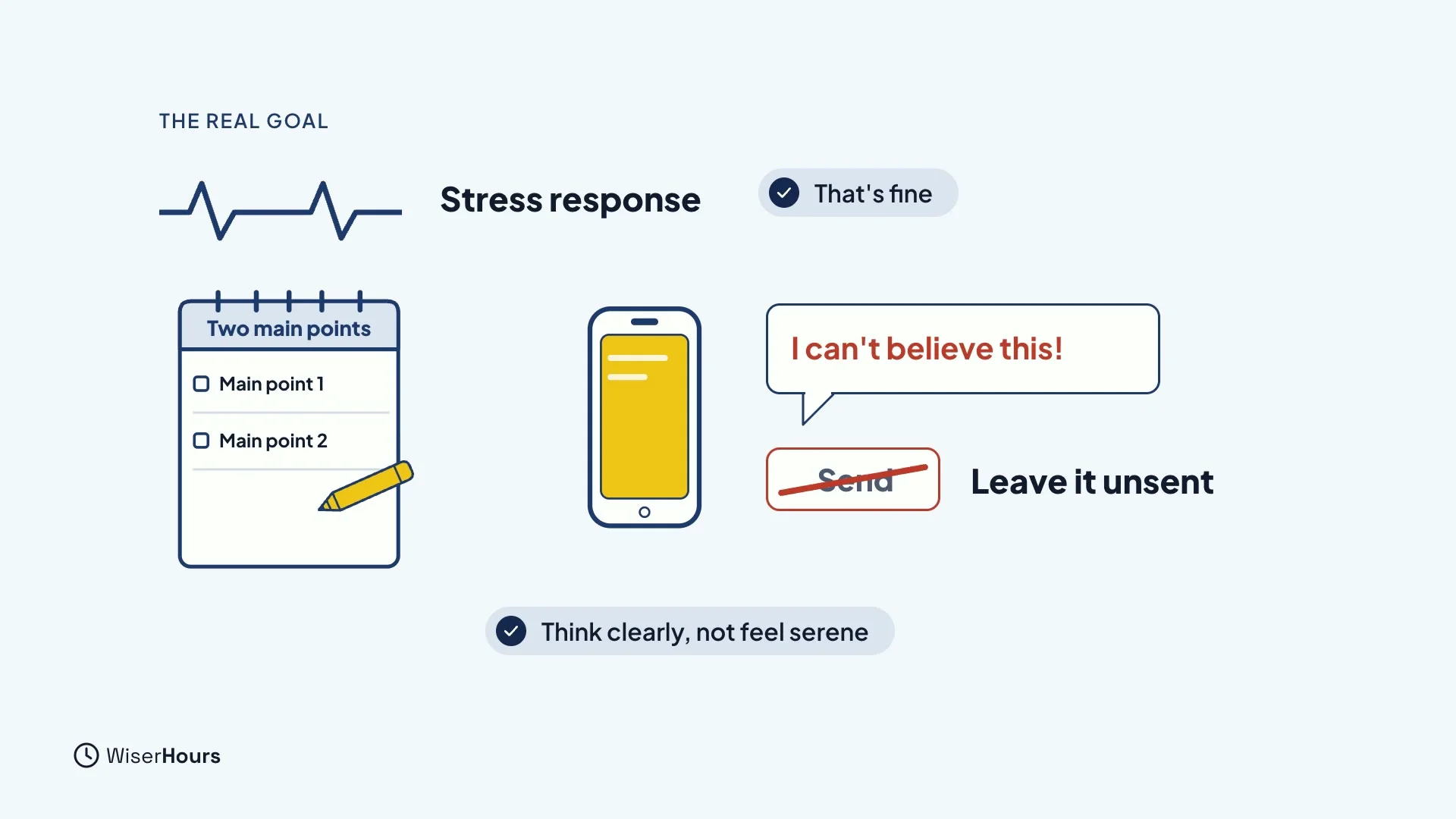
A few minutes will not switch off the whole stress responsestress response: The body's reaction to a demand or threat: a fast alarm through the nervous system that raises heart rate and alertness, followed by a slower wave of hormones that includes cortisol. It is useful in short bursts; the concern is when it stays switched on.Full entry in the glossary, and that is fine. The goal is to settle enough to act well: to write down your two main points, or to leave an angry message unsent. Your body may stay a little shaky for a while, and that does not mean the technique did not work.
 (opens the full-size picture)
Slow breathing
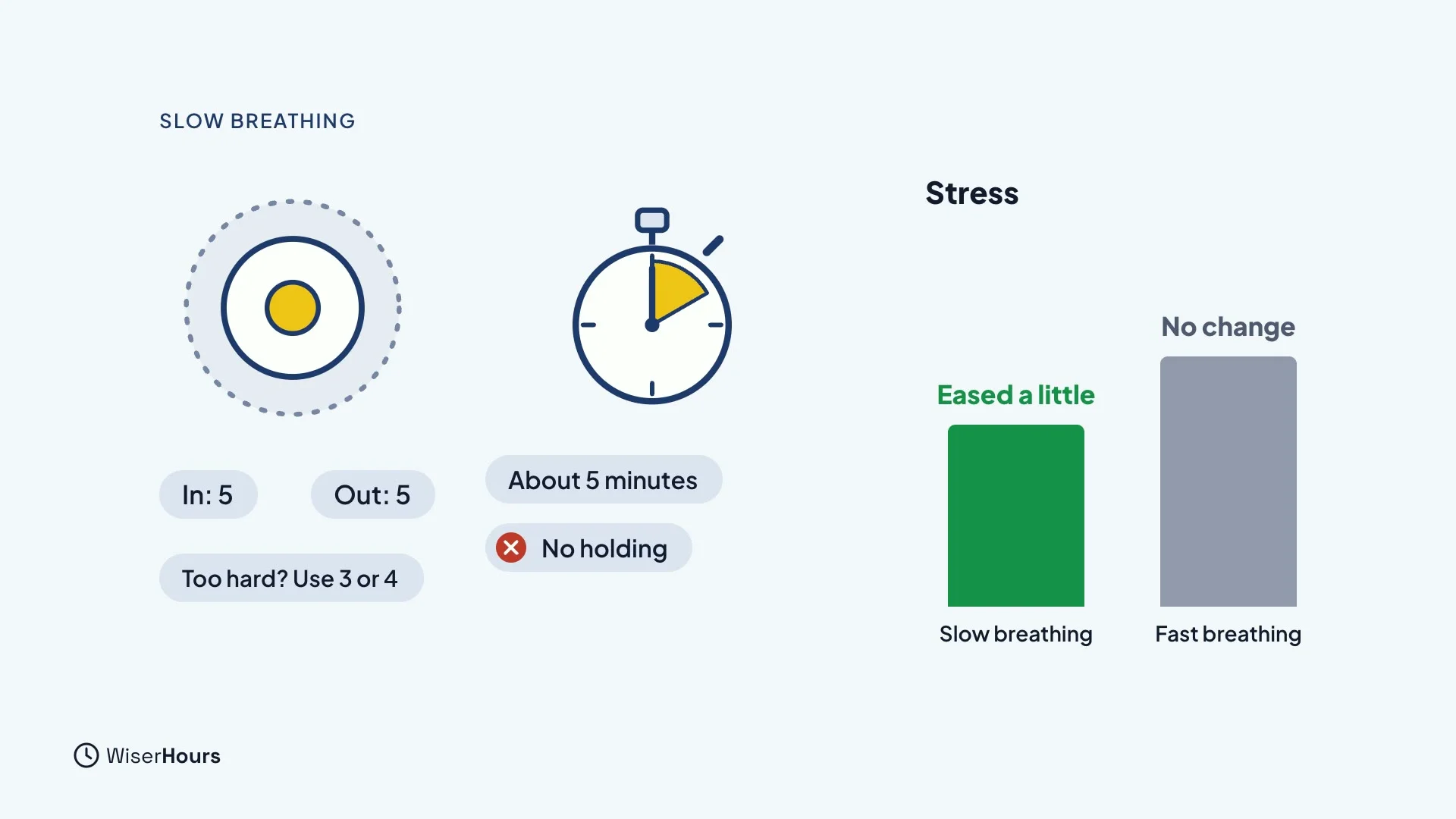
The best-tested tool is slow breathing. Breathe in gently, counting to five, then breathe out gently to the same count. Keep going for about five minutes, with no holding. If five feels like a strain, use three or four.
In a review of trials, slow breathing eased stress a little, while fast breathing techniques did not.
 (opens the full-size picture)
Box breathing
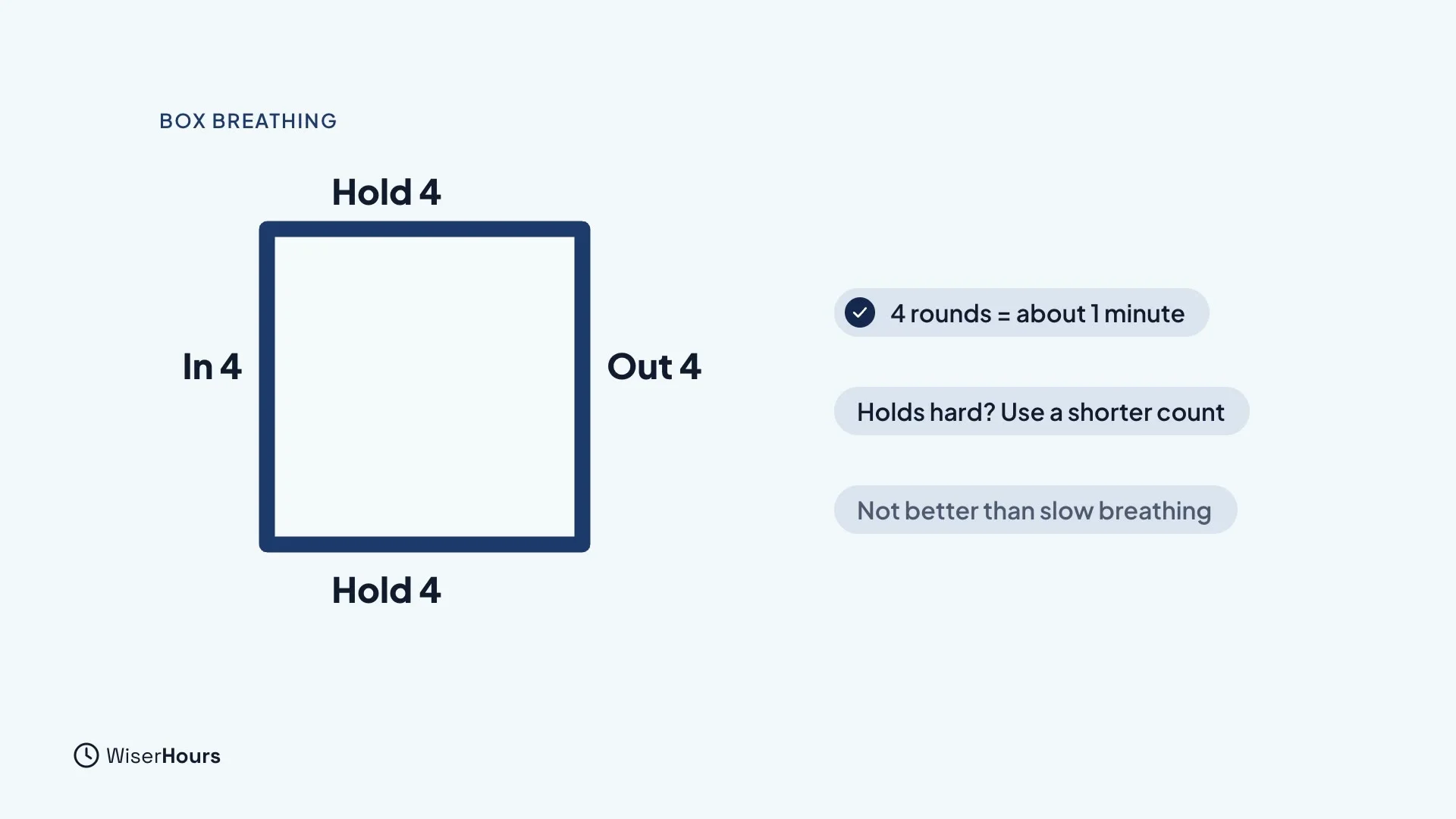
Box breathing is one form of slow breathing. Breathe in for four, hold for four, breathe out for four, and hold again for four. Four rounds take about a minute. Keep the breaths gentle, and if the holds feel strained, use a shorter count. No trial shows it beats plain slow breathing, so pick the one you like.
 (opens the full-size picture)
The cyclic sigh
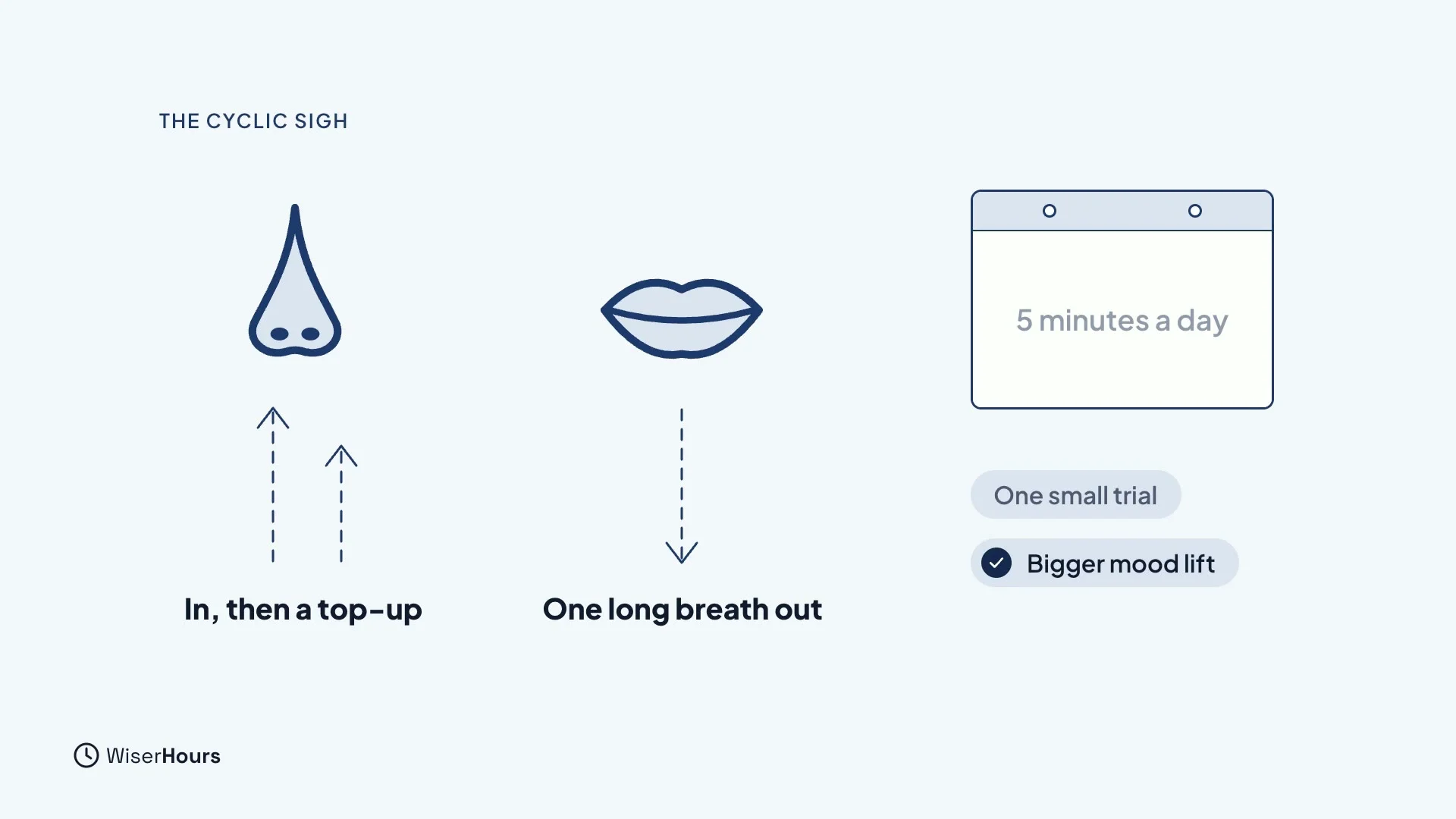
Another option is the cyclic sigh. Take two breaths in through your nose, the second a short top-up, then let out one long, slow breath through your mouth. In one small trial, mostly with students, people who did this for five minutes a day for a month had a bigger lift in mood than people who practised mindfulness. It is one small trial, so treat it as an option to try, not a promise.
 (opens the full-size picture)
Grounding
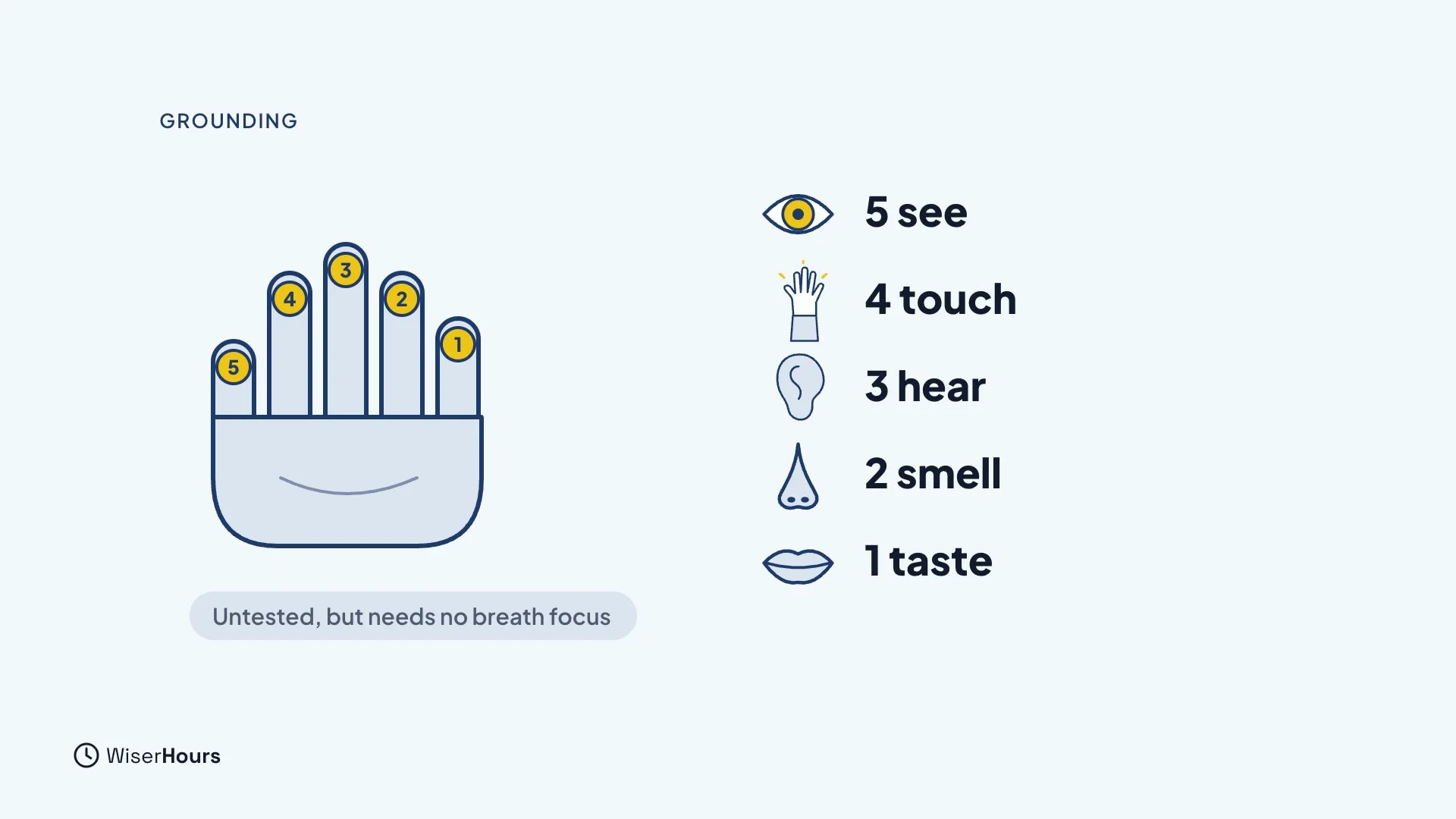
If focusing on your breath makes you more anxious, try grounding instead. Name five things you can see, four you can touch, three you can hear, two you can smell and one you can taste. It has not been tested in trials, but it asks nothing of your breathing.
 (opens the full-size picture)
Stay safe, and practise early
Before you start
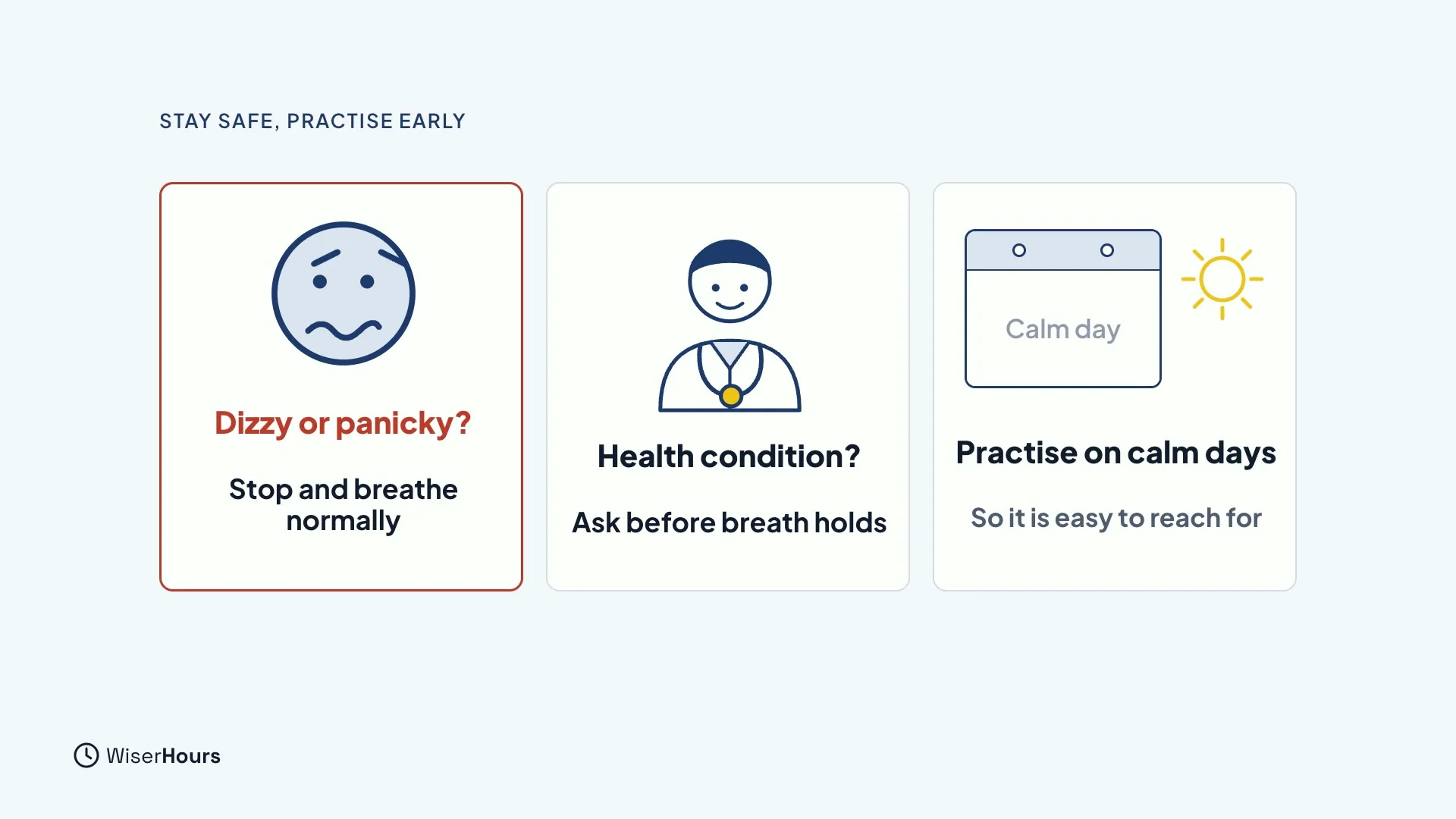
Stop if you feel dizzy or panicky, and just breathe normally. If you are pregnant, or have a heart, lung or seizure condition, glaucoma or panic disorder, ask a doctor before trying breath holds. Chest pain that could be a heart attack, or thoughts of harming yourself, are emergencies: call your local emergency number first.
Also practise on calm days, so the skill is easy to reach for when you need it.
 (opens the full-size picture)
YOUR TURN
Read more
- How to Calm Down Quickly: Short Techniques and the Evidence Behind Them: all five techniques, ranked by how well each is tested.
- Box Breathing: How to Do It and When It Helps: the full steps, a pacer and who should take care.
Read the full lesson script
In this lesson, you'll learn a few simple ways to calm down in a stressful moment, using your breath and your senses. The aim isn't to feel perfectly relaxed. It's to think clearly enough to take the next step.
A few minutes won't switch off the whole stress response, and that's fine. The goal is to settle enough to act well: to write down your two main points, or to leave an angry message unsent. Your body may stay a little shaky for a while, and that doesn't mean it didn't work.
The best-tested tool is slow breathing. Breathe in gently, counting to five, then breathe out gently to the same count. Keep going for about five minutes, with no holding. If five feels like a strain, use three or four. In a review of trials, slow breathing eased stress a little, while fast breathing techniques did not.
Box breathing is one form of slow breathing. Breathe in for four, hold for four, breathe out for four, and hold again for four. Four rounds take about a minute. Keep the breaths gentle, and if the holds feel strained, use a shorter count. No trial shows it beats plain slow breathing, so pick the one you like.
Another option is the cyclic sigh. Take two breaths in through your nose, the second a short top-up, then let out one long, slow breath through your mouth. In one small trial, people who did this for five minutes a day for a month had a bigger lift in mood than people who practised mindfulness.
If focusing on your breath makes you more anxious, try grounding instead. Name five things you can see, four you can touch, three you can hear, two you can smell, and one you can taste. It hasn't been tested in trials, but it asks nothing of your breathing.
A few cautions. Stop if you feel dizzy or panicky, and just breathe normally. If you're pregnant, or have a heart, lung or seizure condition, glaucoma, or panic disorder, ask a doctor before trying breath holds. And practise on calm days, so the skill is easy to reach for when you need it.
So remember: the aim is to think clearly, not to feel perfectly calm. Slow breathing is the best-tested tool. And grounding helps if breath focus doesn't suit you. Before the next lesson, practise slow breathing for five minutes today, while you're calm. Next, you'll learn to tense and release your muscles.
MAKE IT A SMALL WIN
Finished this lesson?
Mark it complete to save your progress on this device.