Calm the stress · Lesson 1 of 12
How Stress Works: Your Body's Response to Pressure
Learn the three parts of stress, how your body responds at two speeds, and why stress that lasts for weeks is the problem.
 Video coming soon
Stress is not just a feeling, and it is not always bad. In this lesson you see what stress actually is, how your body responds to it, and why short bursts are normal while long-running stress is the real problem. This course is general information, not medical advice.
Stress has three parts
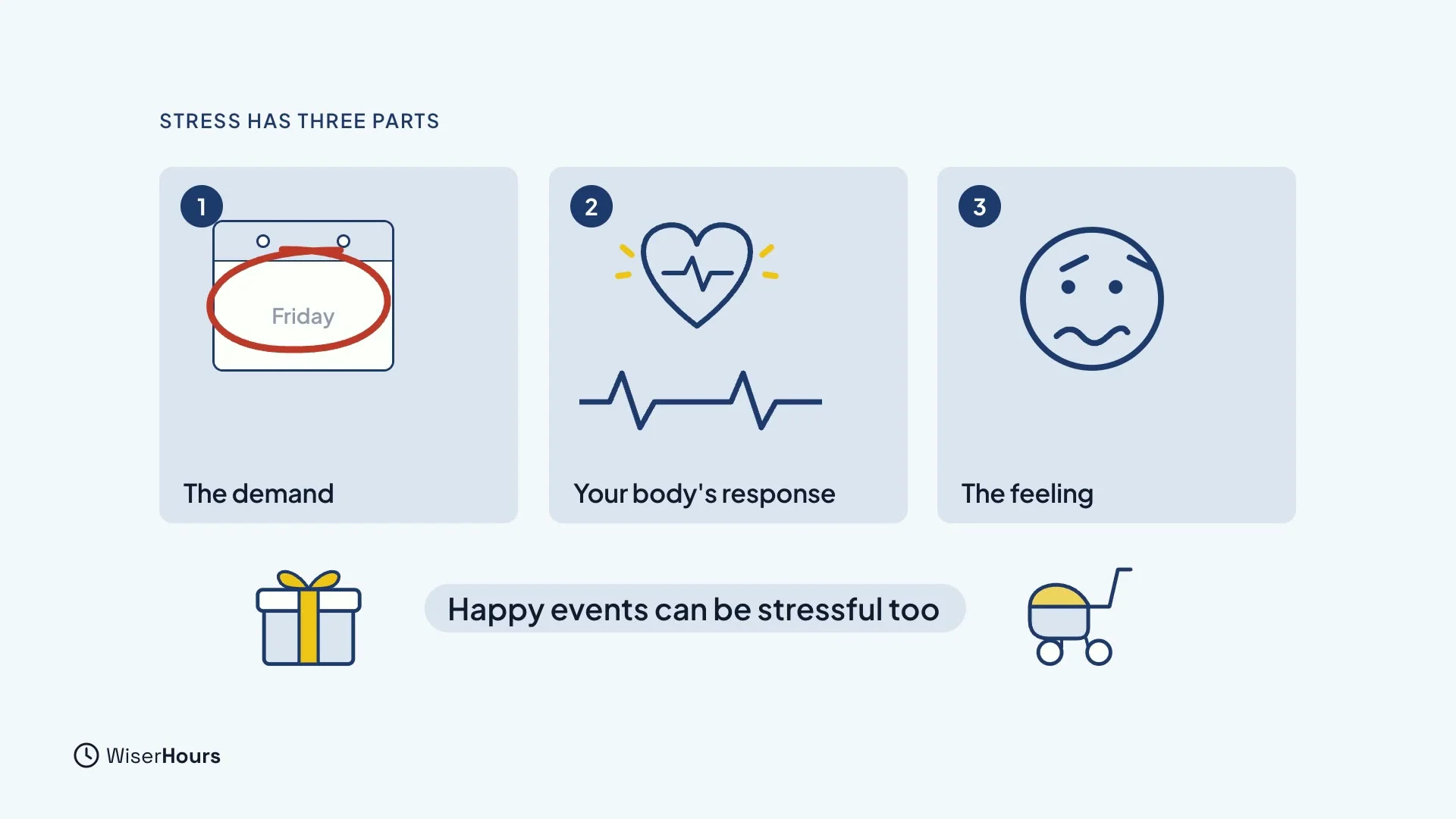
When people say “I’m stressed”, they usually mean three linked things at once. There is the demand, such as a deadline or a difficult conversation. There is your body’s response to that demand. And there is the feeling of being under pressure.
The demand does not have to be bad news. Even happy events, like a new job or a new baby, can be stressful.
 (opens the full-size picture)
Two speeds in your body
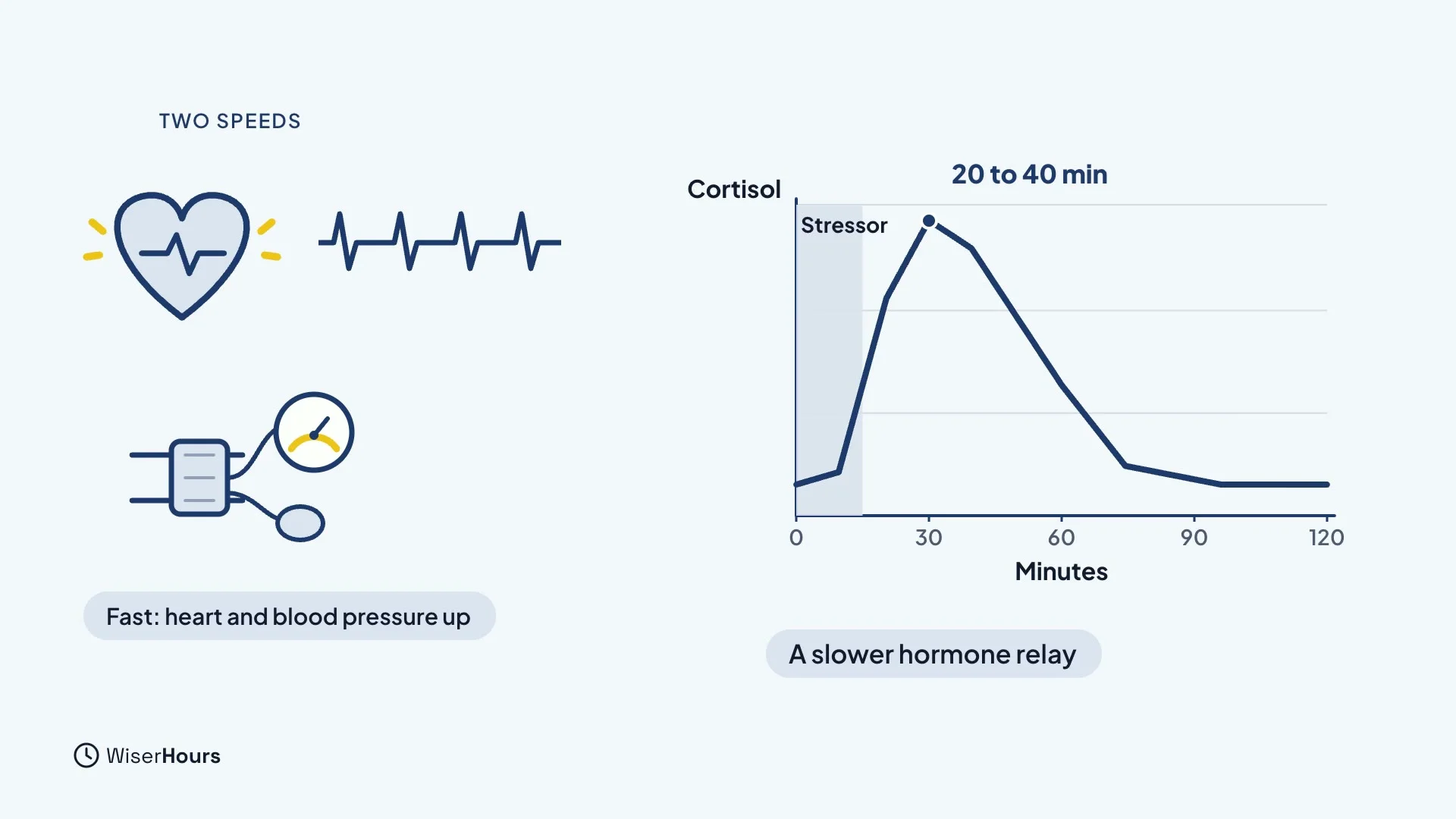
Your body answers a demand at two speeds. The fast one works in seconds: your heart beats faster and your blood pressure rises, so you are ready for action. The slower one is a relay of hormones. cortisolcortisol: A hormone made by the adrenal glands that helps regulate energy, blood pressure and the body's response to stress. Its level follows a daily rhythm, high on waking and low at night, so a single reading says little on its own.Full entry in the glossary, a stress hormone, peaks about 20 to 40 minutes after the stress starts, and settles back within about an hour after it ends.
Together, these two speeds make up your stress responsestress response: The body's reaction to a demand or threat: a fast alarm through the nervous system that raises heart rate and alertness, followed by a slower wave of hormones that includes cortisol. It is useful in short bursts; the concern is when it stays switched on.Full entry in the glossary.
 (opens the full-size picture)
What hits hardest
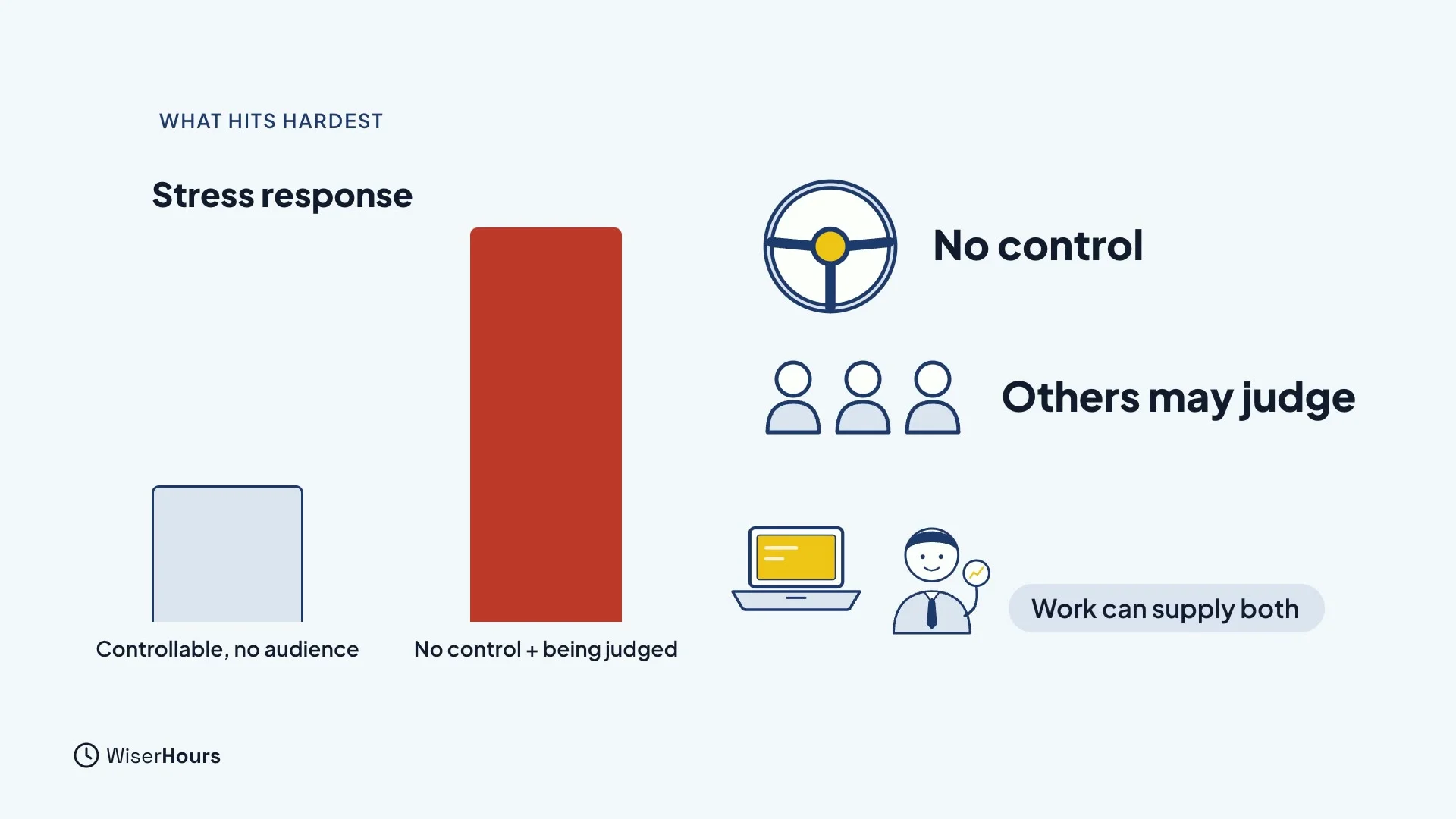
Some situations hit harder than others. In a large review of 208 lab studies, the biggest and longest stress responses came from tasks that people could not control and where others might judge them. These were short tasks done by healthy adults in a lab, so they show a pattern, not what any one person will feel.
Work can supply both ingredients at once: little say over how things are done, and a manager or colleagues who may judge the result.
 (opens the full-size picture)
Short bursts versus long stress
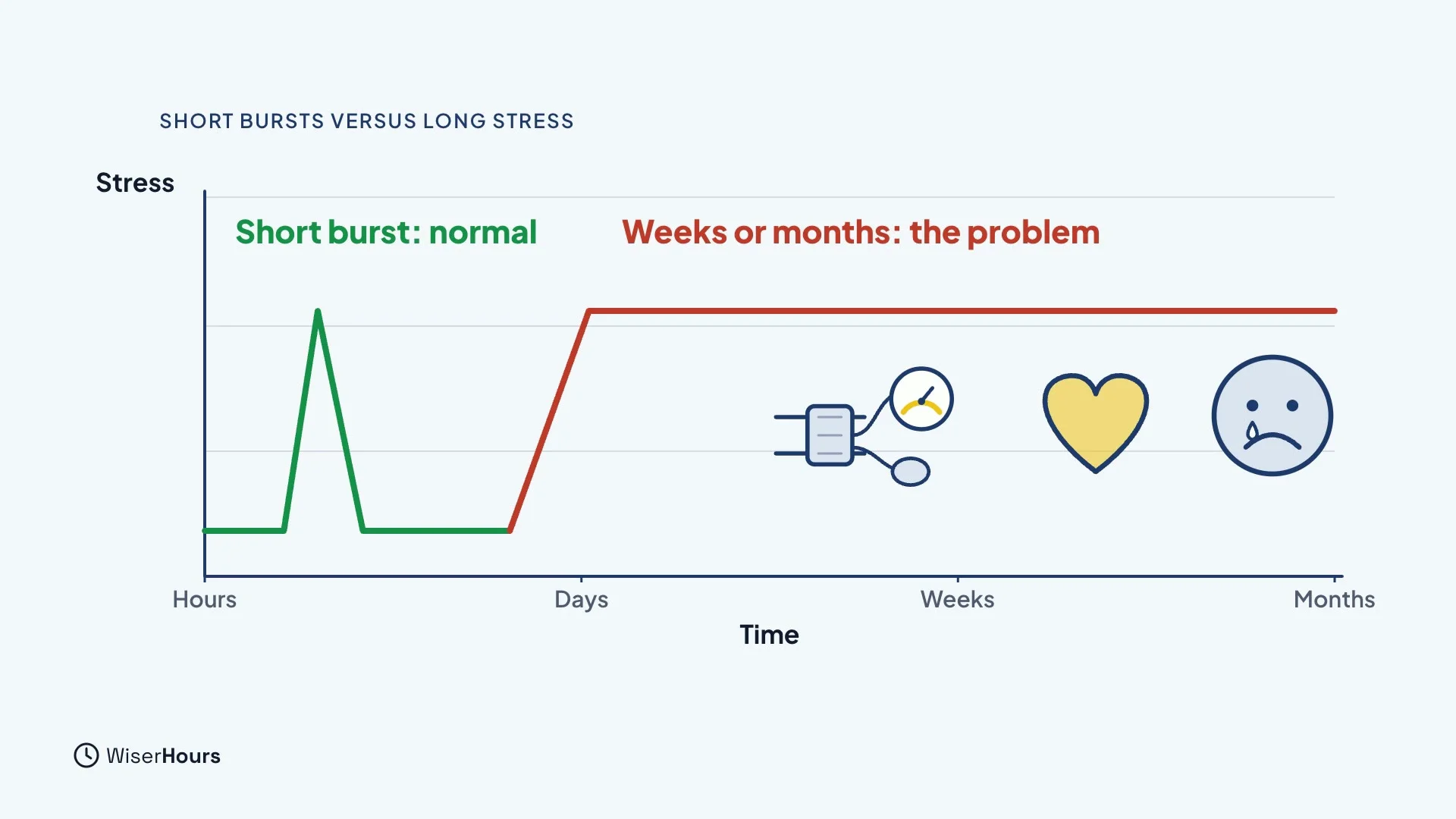
A short burst of stress is normal, and it can even help you rise to a challenge. The problem is stress that lasts for weeks or months. Then your body stays on alert even though there is no real danger. That wear and tear is linked to high blood pressure, heart disease, diabetes, depression and anxiety.
 (opens the full-size picture)
How long-running stress shows up
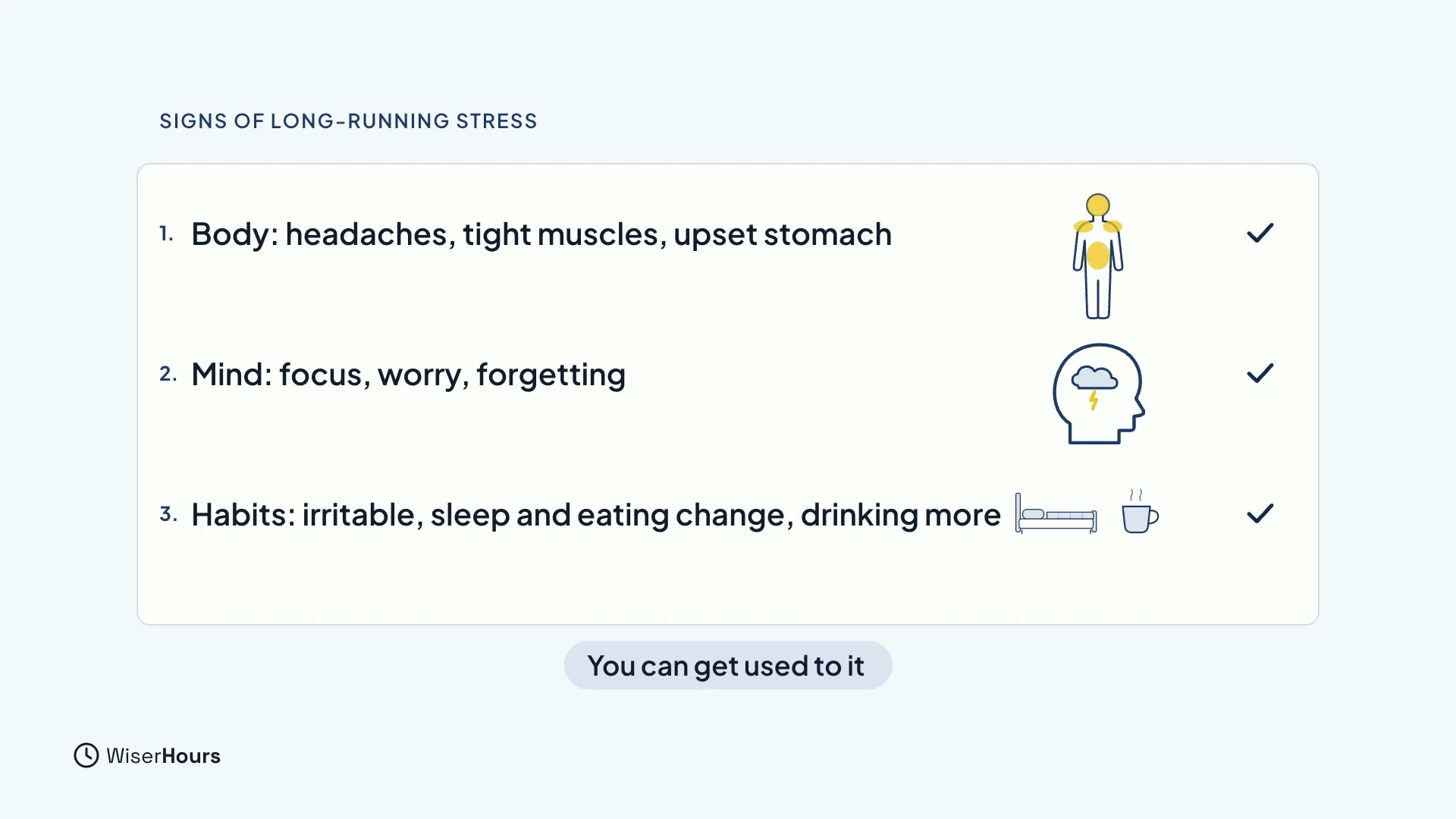
Long-running stress shows up in three places. In your body: headaches, tight muscles and an upset stomach. In your mind: trouble concentrating, constant worry and forgetfulness. In what you do: irritability, sleeping or eating too much or too little, or drinking more.
And here is the catch: people can get so used to stress that they stop noticing it. That is why this lesson ends with a short note-taking task instead of asking how you feel.
 (opens the full-size picture)
When to get help
If stress feels overwhelming, or stops you working or managing at home, see a doctor. If you ever think about harming yourself, call your local emergency number or a crisis line right away.
YOUR TURN
Read more
- What Is Stress? How the Stress Response Works in Plain English: the two speeds, the lab findings and the signs in more depth.
- Work Stress: Common Causes and What You Can Control: why much work stress comes from how a job is designed.
Read the full lesson script
Welcome to Manage Stress and Recover from Burnout. In this first lesson, you'll see what stress actually is, how your body responds to it, and why short bursts are normal, but long-running stress is the problem. This course is general information, not medical advice.
Stress has three parts. There's the demand, like a deadline or a difficult conversation. There's your body's response. And there's the feeling of being under pressure. Even happy events, like a new job or a new baby, can be stressful.
Your body responds at two speeds. The fast one works in seconds: your heart beats faster and your blood pressure rises, ready for action. The slower one is a hormone relay. Cortisol, a stress hormone, peaks about twenty to forty minutes after the stress starts, and settles within about an hour after it ends.
Some situations hit harder than others. In a large review of lab studies, the biggest and longest stress responses came from tasks people couldn't control, where others might judge them. Work can supply both at once.
Short bursts of stress are normal, and can even help you rise to a challenge. The problem is stress that lasts for weeks or months. Then your body stays on alert with no real danger. That wear and tear is linked to high blood pressure, heart disease, diabetes, depression and anxiety.
Long-running stress shows up in your body, your mind and what you do. Headaches, tight muscles and an upset stomach. Trouble concentrating, constant worry and forgetfulness. Irritability, sleeping or eating too much or too little, or drinking more. And here's the catch: people can get so used to stress that they stop noticing it.
Here's the course. First, you'll learn quick ways to calm down, and a full-body relaxation. Then you'll learn what burnout is, its early signs, how it differs from depression, and what causes it. After that, you'll rest for real, switch off after work, and talk to your manager about workload. Finally, you'll reshape your job, learn when to get help, and make your plan.
So remember: stress is a demand, your body's response, and the feeling. Short bursts are normal, but long-running stress wears you down. And you can get so used to it that you stop noticing. Before the next lesson, for two days, note when you feel stressed and what happened just before. Next, you'll learn how to calm down in a few minutes.
MAKE IT A SMALL WIN
Finished this lesson?
Mark it complete to save your progress on this device.