Recover and change · Lesson 8 of 12
Burnout Recovery Starts With Real Rest, Not Only Time Off
Learn the two tracks of burnout recovery, what to do first, and why a holiday buys time but does not fix the job.
 Video coming soon
When you are worn out, the obvious answer is rest. Rest is the right start, but on its own it often is not enough. In this lesson you learn how recovery from burnout really works, and what to do first. This is general information, not medical advice.
Two tracks
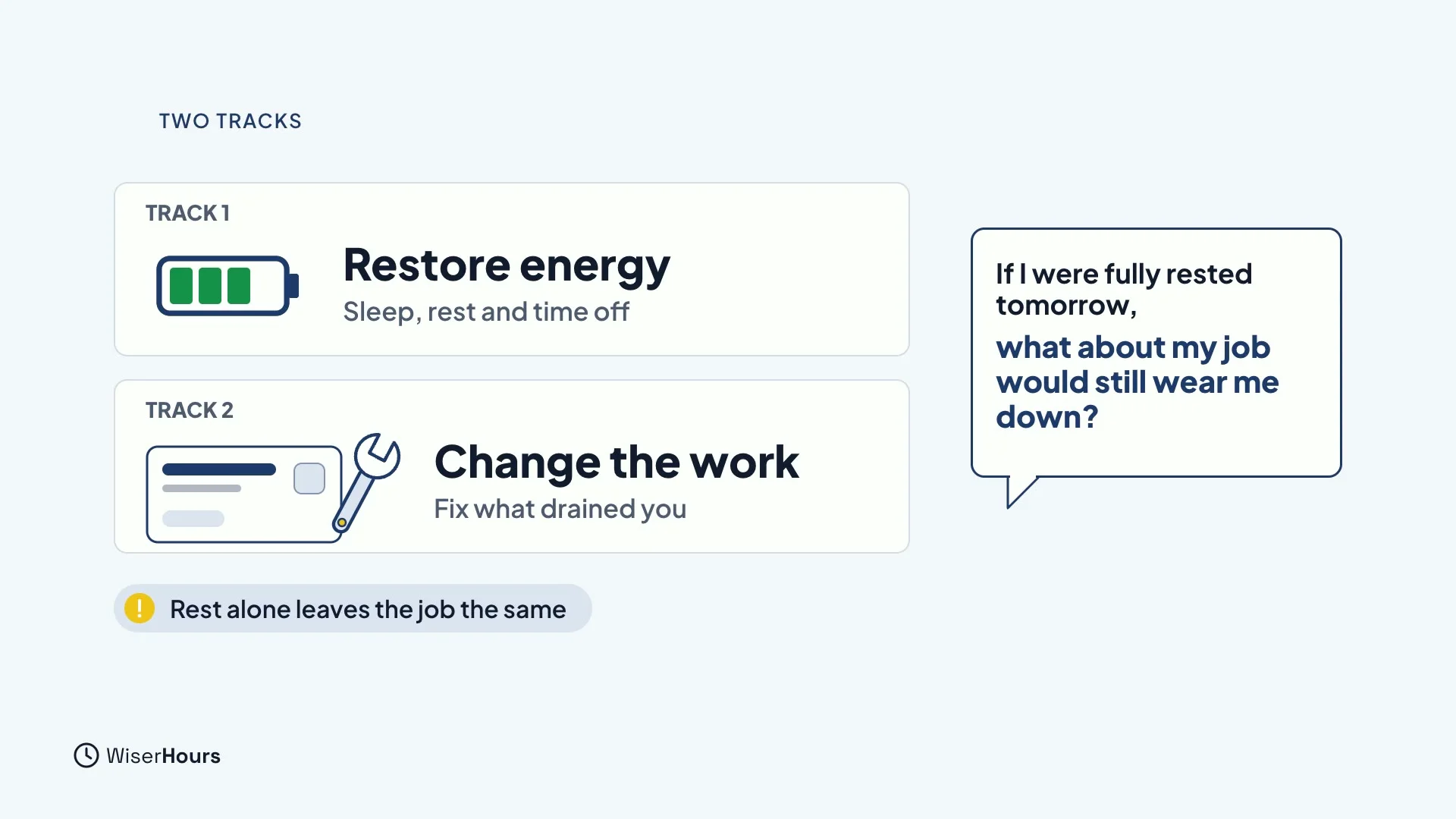
Recovery has two tracks: restoring your energy, and changing the work that drained you. Rest alone leaves the job the same. A useful question to ask is this: if I were fully rested tomorrow, what about my job would still wear me down? Write the answer down. It tells you what the second track has to change.
 (opens the full-size picture)
Get checked first
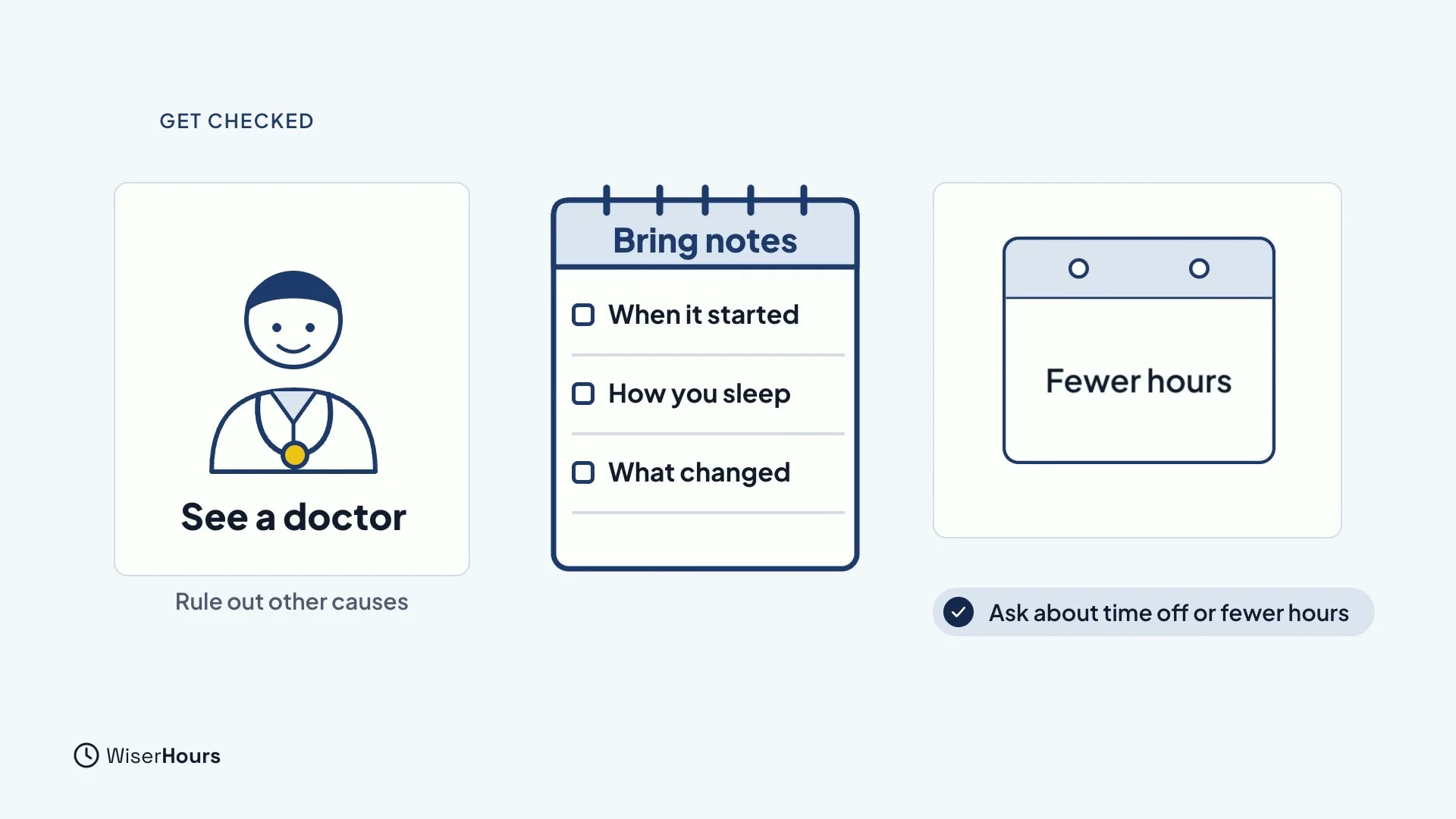
Start by seeing a doctor, to check for other causes of exhaustion. Ask about time off or reduced hours, since the rules differ from country to country. Bring notes on when it started, how you sleep, and what changed at work.
 (opens the full-size picture)
Take load off first
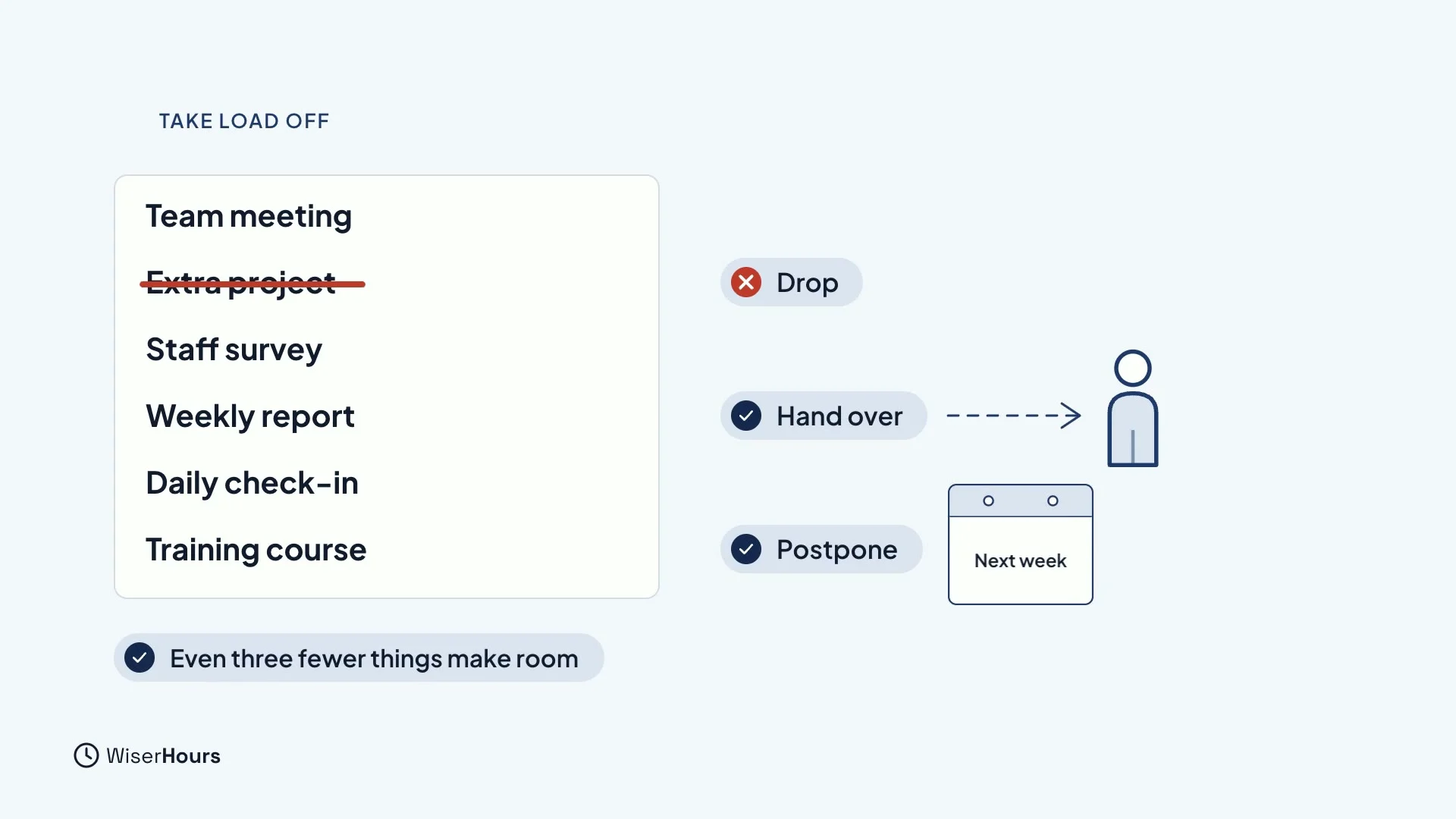
Next, take load off before you add anything new. A new routine on top of an unchanged week only adds to the pile. List this week’s commitments, and mark each one to drop, hand over or postpone. A meeting you only listen in on can go, and a side project can wait. Even three fewer things can make room to breathe.
 (opens the full-size picture)
Protect sleep and time away
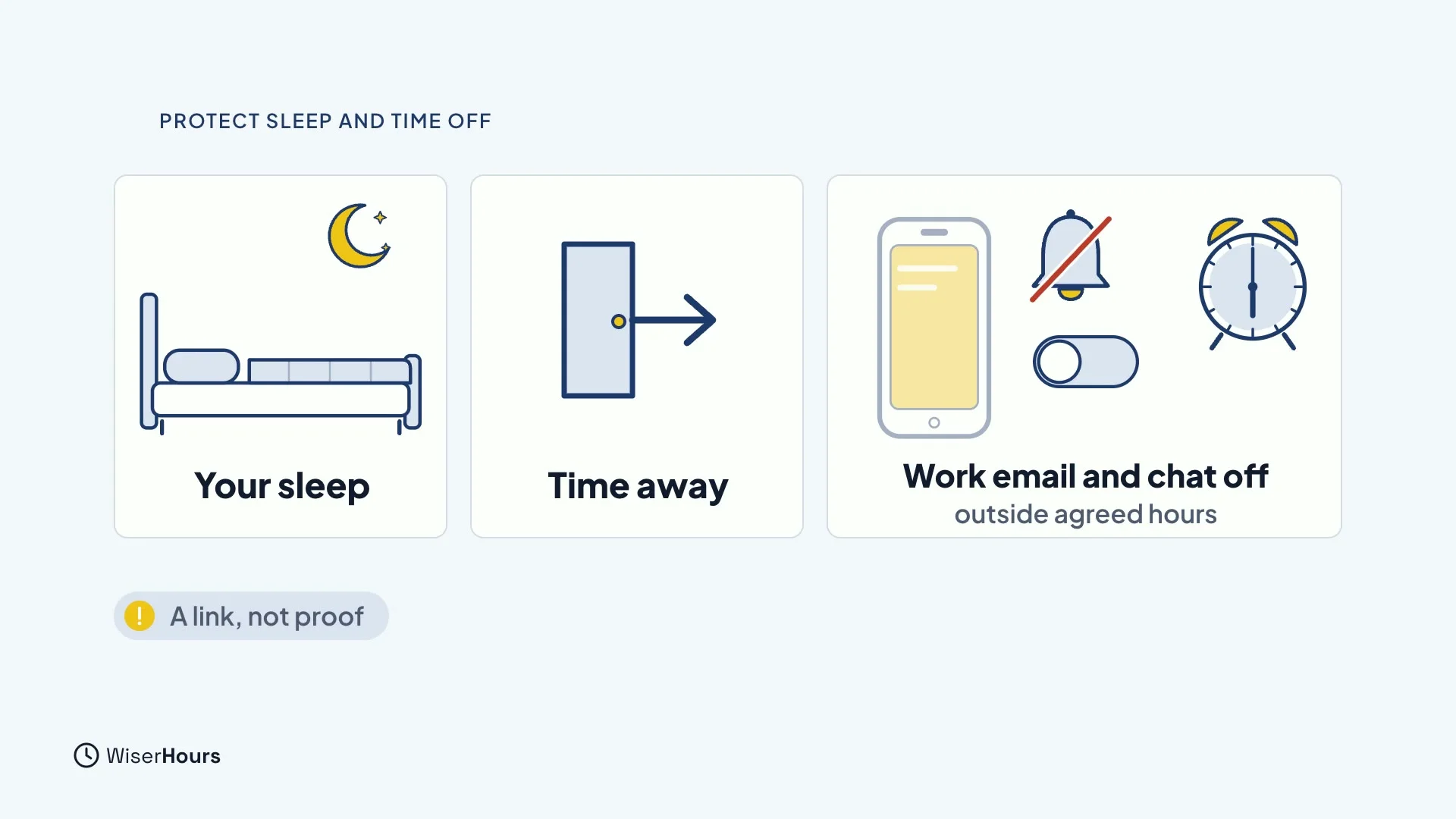
Then protect your sleep and your time away from work. Turn off work email and chat outside agreed hours. People who switch off more from work report less exhaustion, though these studies show a link, not proof.
 (opens the full-size picture)
A holiday helps, briefly
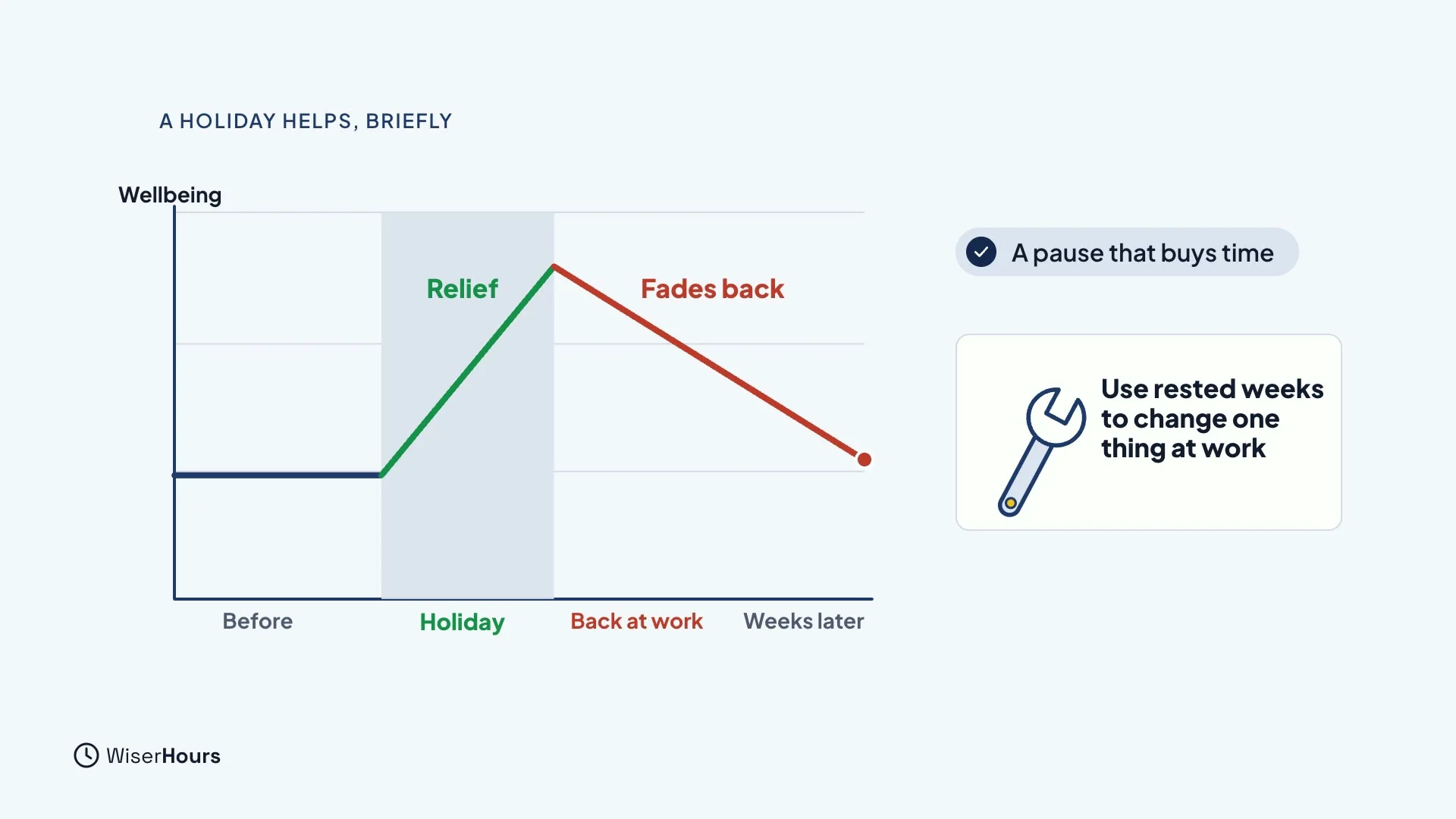
What about a holiday? It helps, but in studies the relief usually faded within days to a few weeks of returning to the same job. So treat a break as a pause that buys time for change, and use your rested weeks to change one thing at work. That might be one task to hand over or one boundary to set. You will learn how to do that later in the course.
 (opens the full-size picture)
Months, not weeks
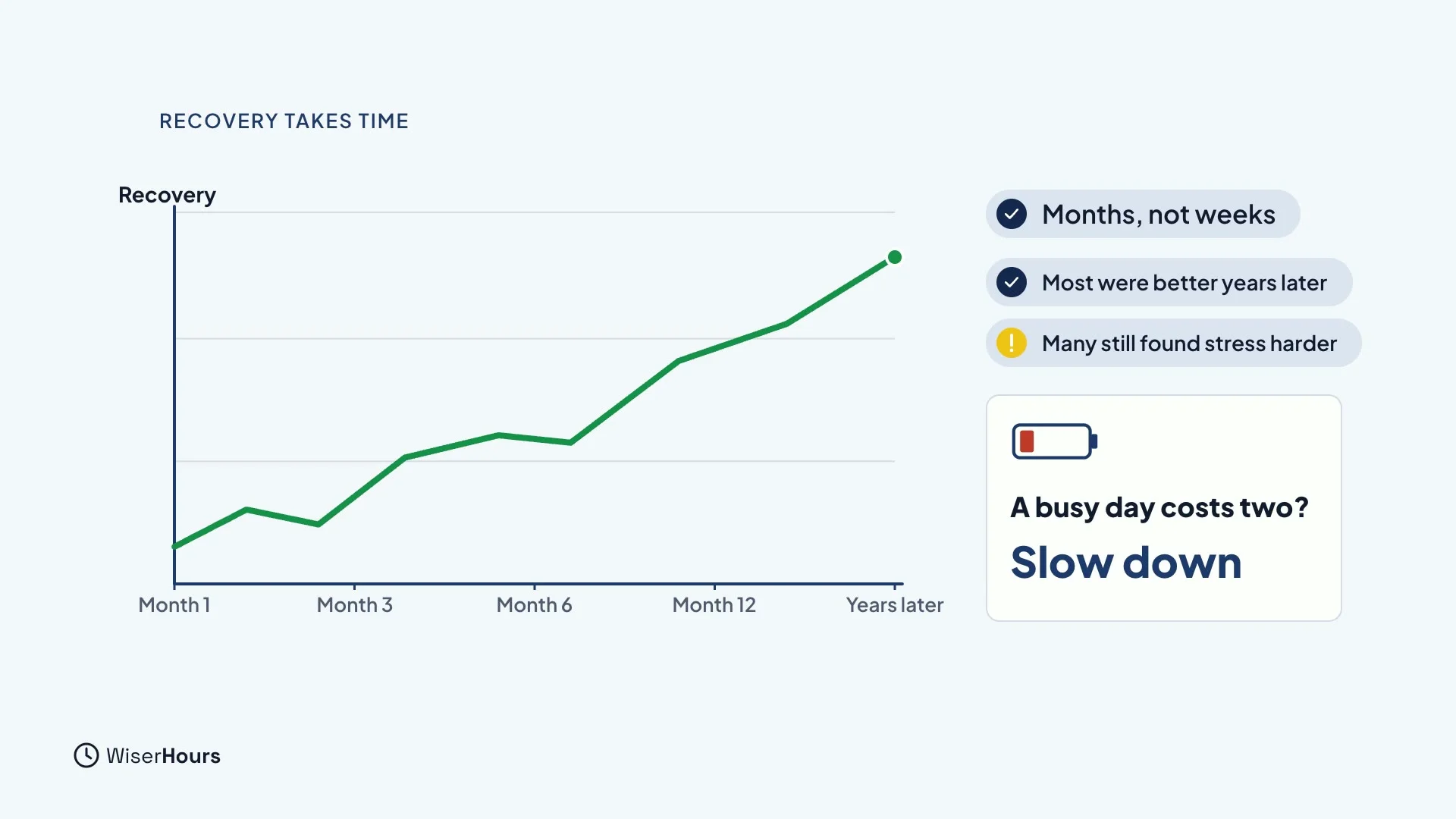
Recovery takes months, not weeks. In one long follow-up of people treated for exhaustion, most were better years later, but many still found stress harder to handle. So return gradually, and slow down if a busy day costs you the next two. How you handle a peak day tells you more than how you feel on an easy one.
 (opens the full-size picture)
YOUR TURN
Read more
- How to Recover From Burnout: A Realistic Step-by-Step Plan: all six steps in order, and what the evidence can and cannot promise.
- Will a Vacation Fix Burnout? What the Evidence Suggests: what studies found about time off, and how to plan the break and the return.
Read the full lesson script
In this lesson, you'll learn how recovery from burnout really works, and why rest is the start, but not the whole answer.
Recovery has two tracks: restoring your energy, and changing the work that drained you. Rest alone leaves the job the same. Ask yourself: if I were fully rested tomorrow, what about my job would still wear me down?
Start by seeing a doctor, to check for other causes of exhaustion. Ask about time off or reduced hours, and bring notes on when it started, how you sleep, and what changed at work.
Next, take load off before adding anything new. List this week's commitments, and mark each one to drop, hand over, or postpone. Even three fewer things can make room to breathe.
Then protect your sleep and your time away from work. Turn off work email and chat outside agreed hours. People who switch off more from work report less exhaustion, though these studies show a link, not proof.
What about a holiday? It helps, but in studies the relief usually faded within days to a few weeks of returning to the same job. So treat a break as a pause that buys time for change, and use your rested weeks to change one thing at work.
Recovery takes months, not weeks. In one long follow-up of people treated for exhaustion, most were better years later, but many still found stress harder to handle. So return gradually, and slow down if a busy day costs you the next two.
So remember: recovery has two tracks, energy and the work itself. See a doctor and take load off first. And a break buys time for change, it doesn't replace it. Before the next lesson, list this week's commitments, and mark three to drop, hand over, or postpone. Next, you'll learn how to switch off after work.
MAKE IT A SMALL WIN
Finished this lesson?
Mark it complete to save your progress on this device.