Understand burnout · Lesson 5 of 12
Early Signs of Burnout: A Pattern, Not a Rough Week
Learn the early warning signs of burnout and a simple way to tell a rough week from a pattern that deserves attention.
 Video coming soon
Burnout rarely arrives in one day. It shows up as small changes that build over weeks, and they are easy to explain away. In this lesson you learn the early warning signs, and a simple way to tell a rough week from a pattern that needs attention. This course is general information, not medical advice.
The core signs
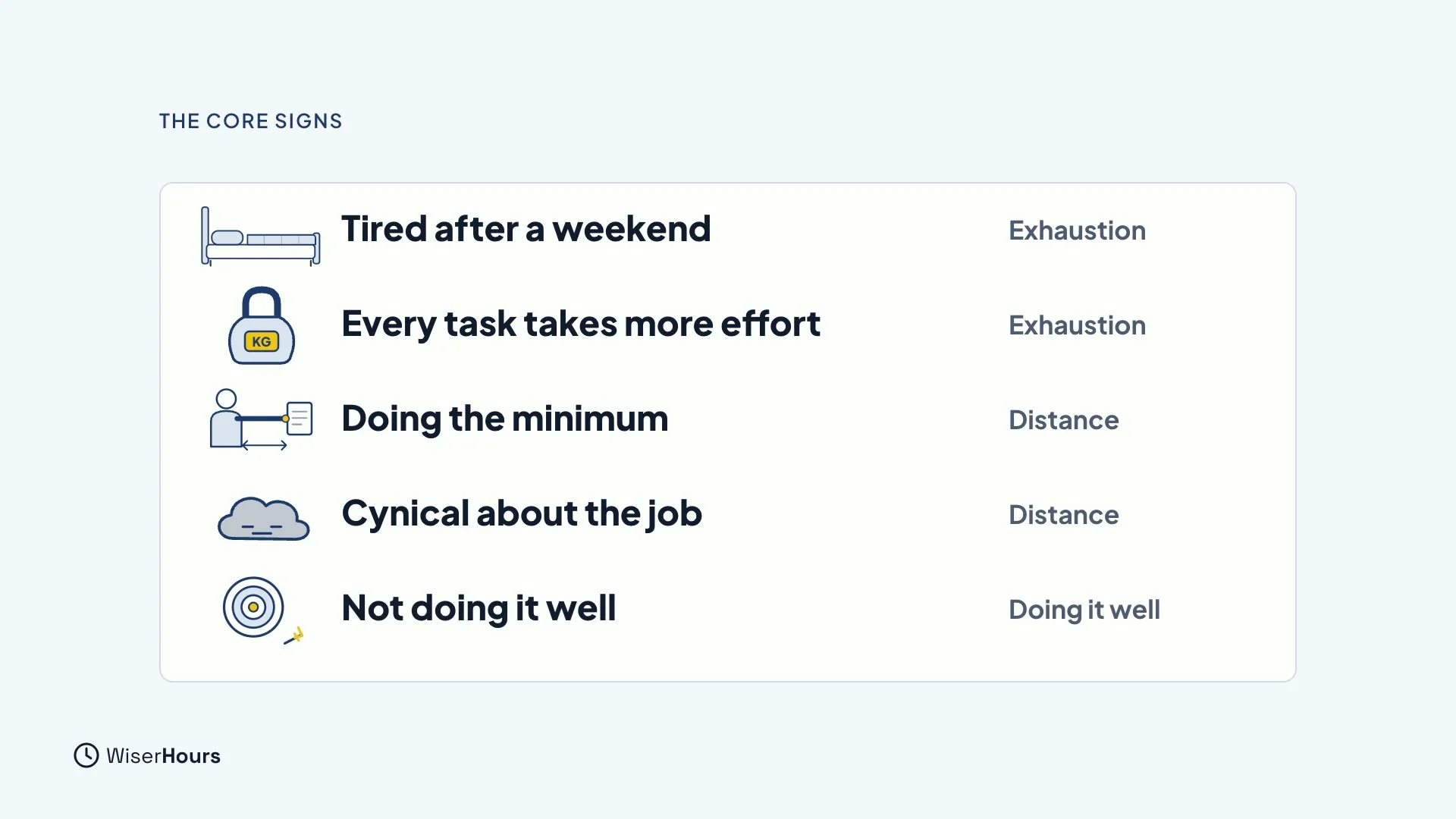
The best-measured signs match the three parts of burnout from the last lesson. Five are worth knowing:
- Tiredness that a weekend does not fix.
- Every task taking more effort than it used to.
- Doing the minimum, and keeping work at arm’s length.
- Feeling cynical about the job, or about the people it serves.
- Feeling you no longer do the job well.
The first two belong to exhaustion, the next two to mental distance, and the last to feeling you are not doing the job well. The first is emotional exhaustionemotional exhaustion: Feeling drained and used up by work, with little energy left. It is the exhaustion dimension of burnout, one of three, and on its own it is not a diagnosis; persistent exhaustion is worth raising with a doctor.Full entry in the glossary: you rest, and the tank does not refill.
 (opens the full-size picture)
Other signs that often come with them
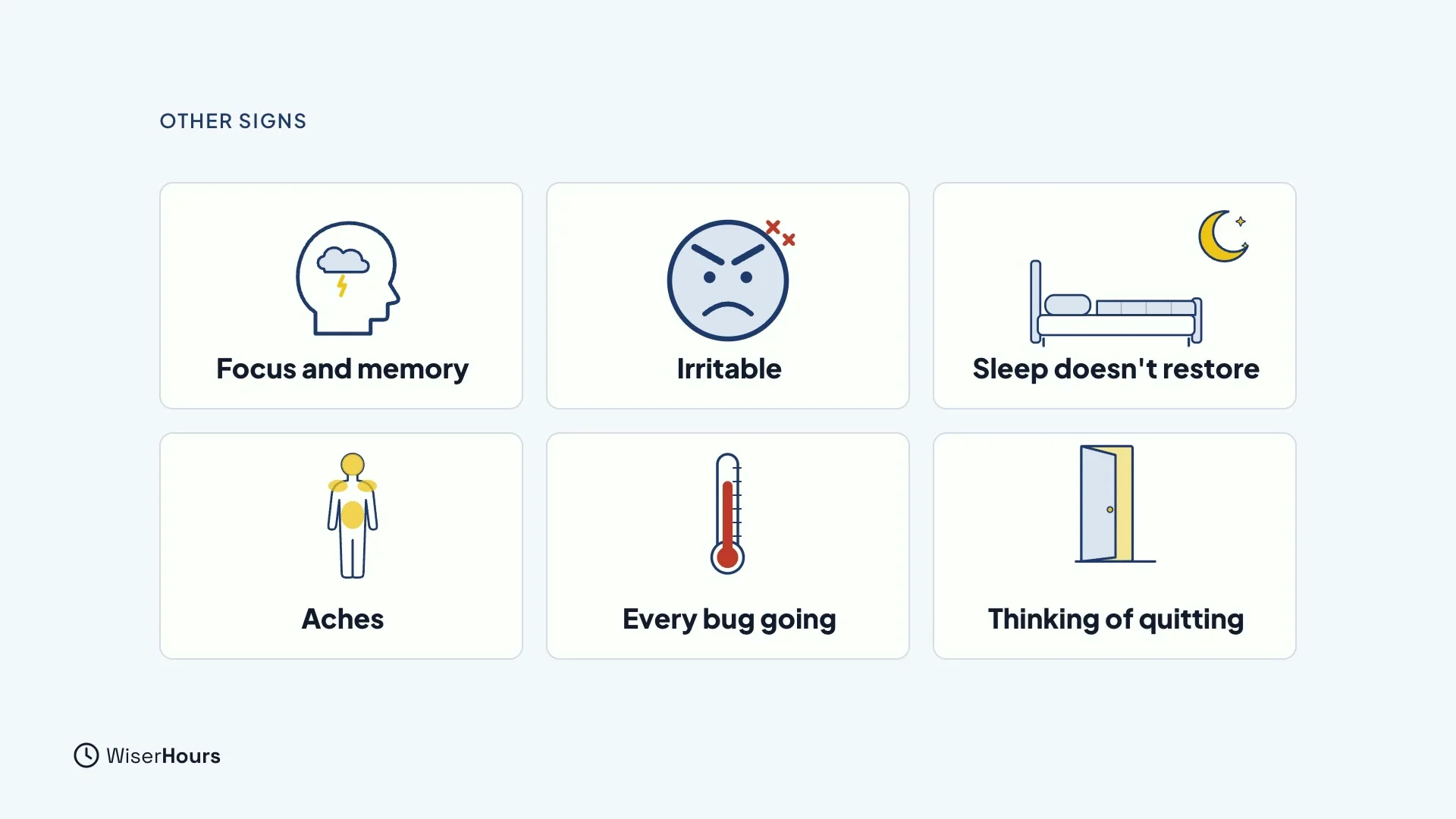
Other signs often travel alongside the core five. You may have trouble concentrating and remembering. You may be irritable, or react more strongly than usual. Sleep may stop restoring you. You may get headaches, aching muscles or an upset stomach. You may catch every bug going, take more sick days, or find yourself daydreaming about quitting.
None of these proves burnout on its own, and most of them have other possible causes. They are clues that something has changed, not a verdict.
 (opens the full-size picture)
What tends to come first
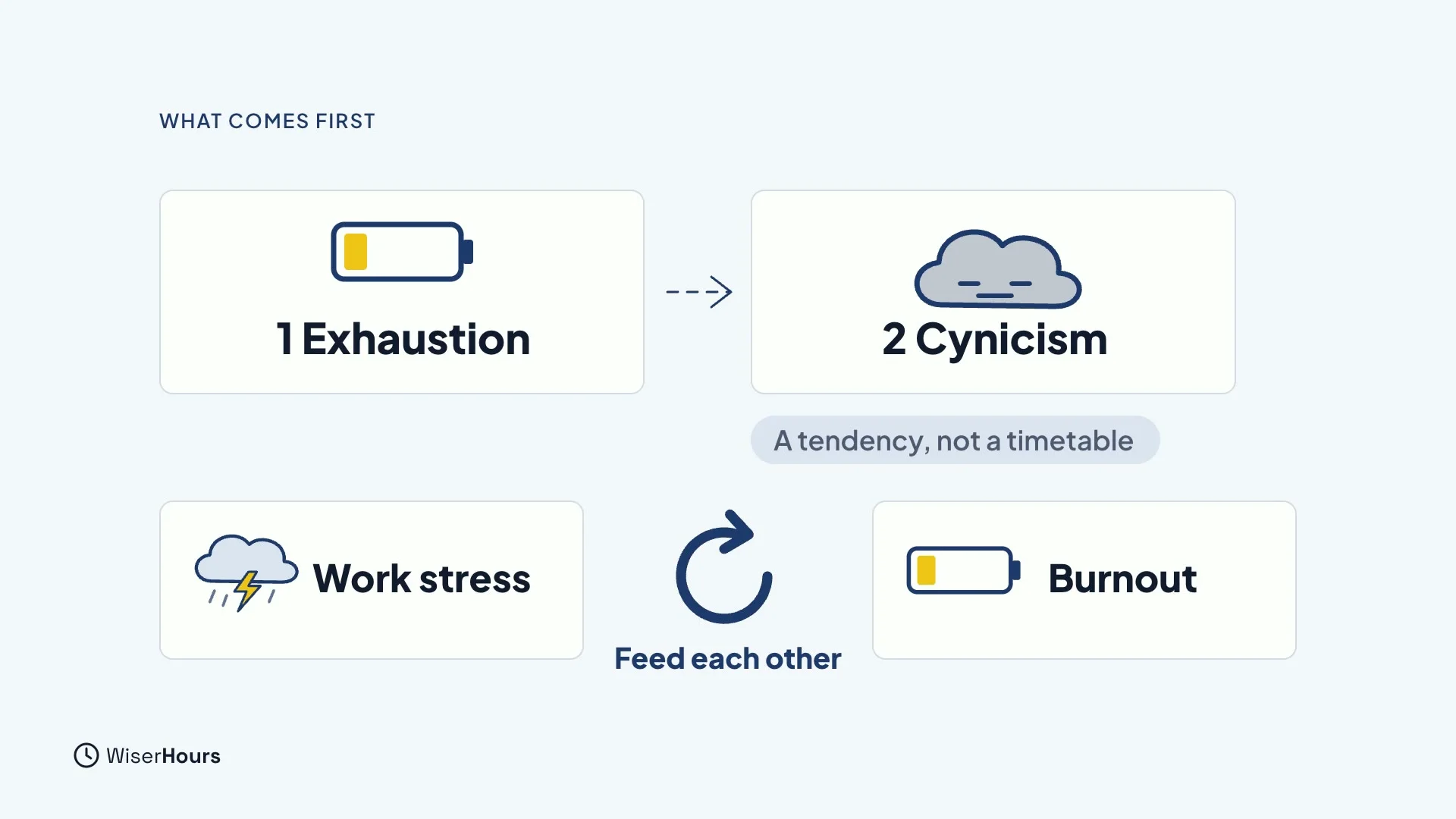
Exhaustion tends to come first, and cynicism tends to follow. Treat that as a tendency, not a timetable: your own order may differ. Stress and burnout can also feed each other. Stress at work predicts later burnout, and burnout makes the same work feel even more stressful, so a worn-out person finds the same job harder than before.
 (opens the full-size picture)
A pattern, not a week
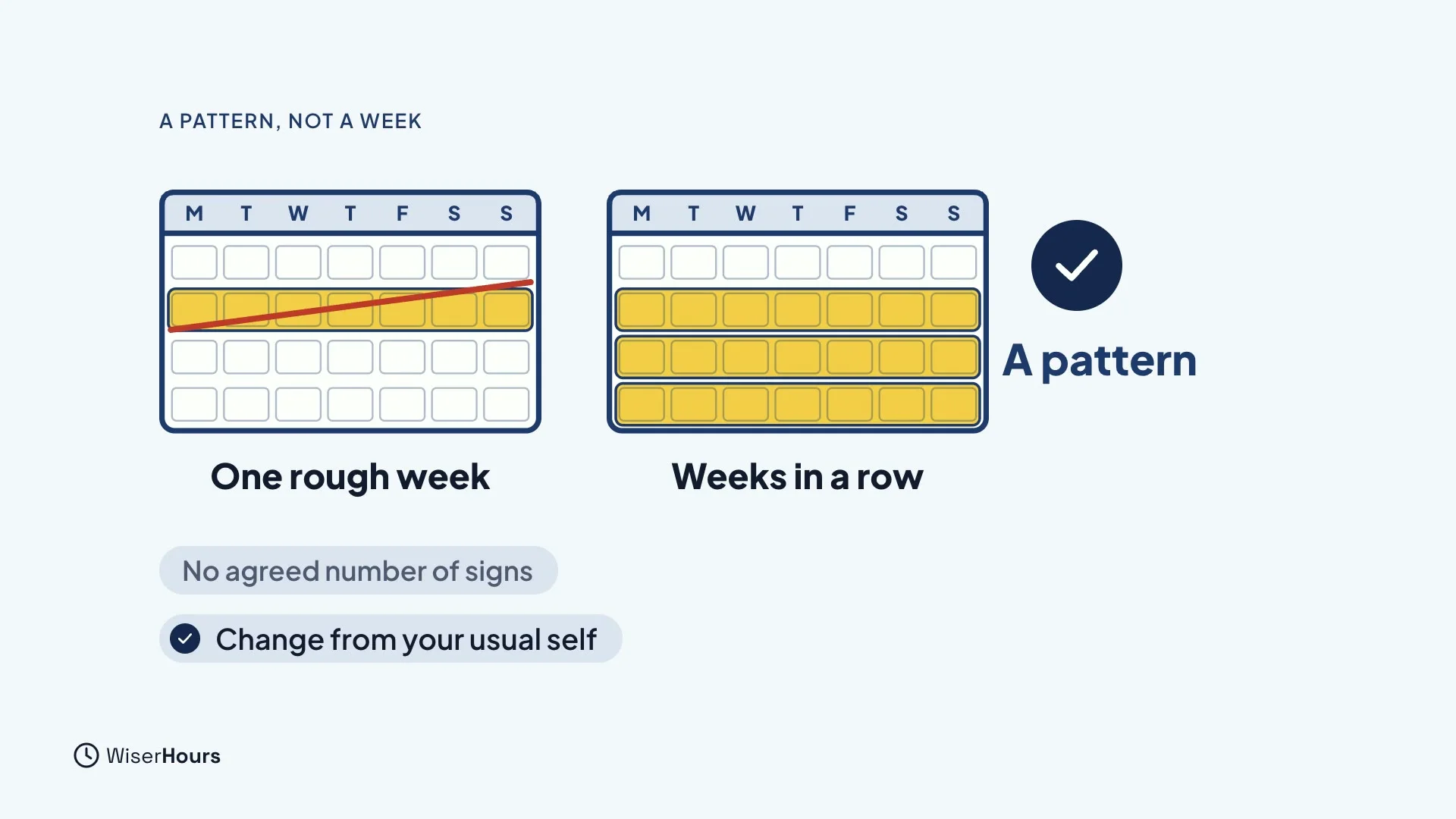
Everyone has a rough week. What matters is the pattern. Look for signs that are new compared with six months ago, and that have lasted for several weeks. There is no agreed number of signs that “counts”. A change from your usual self matters more than the sign itself: someone who has always been blunt is not showing a new sign, but someone who has always been patient and is now snapping may be.
 (opens the full-size picture)
The weekend check
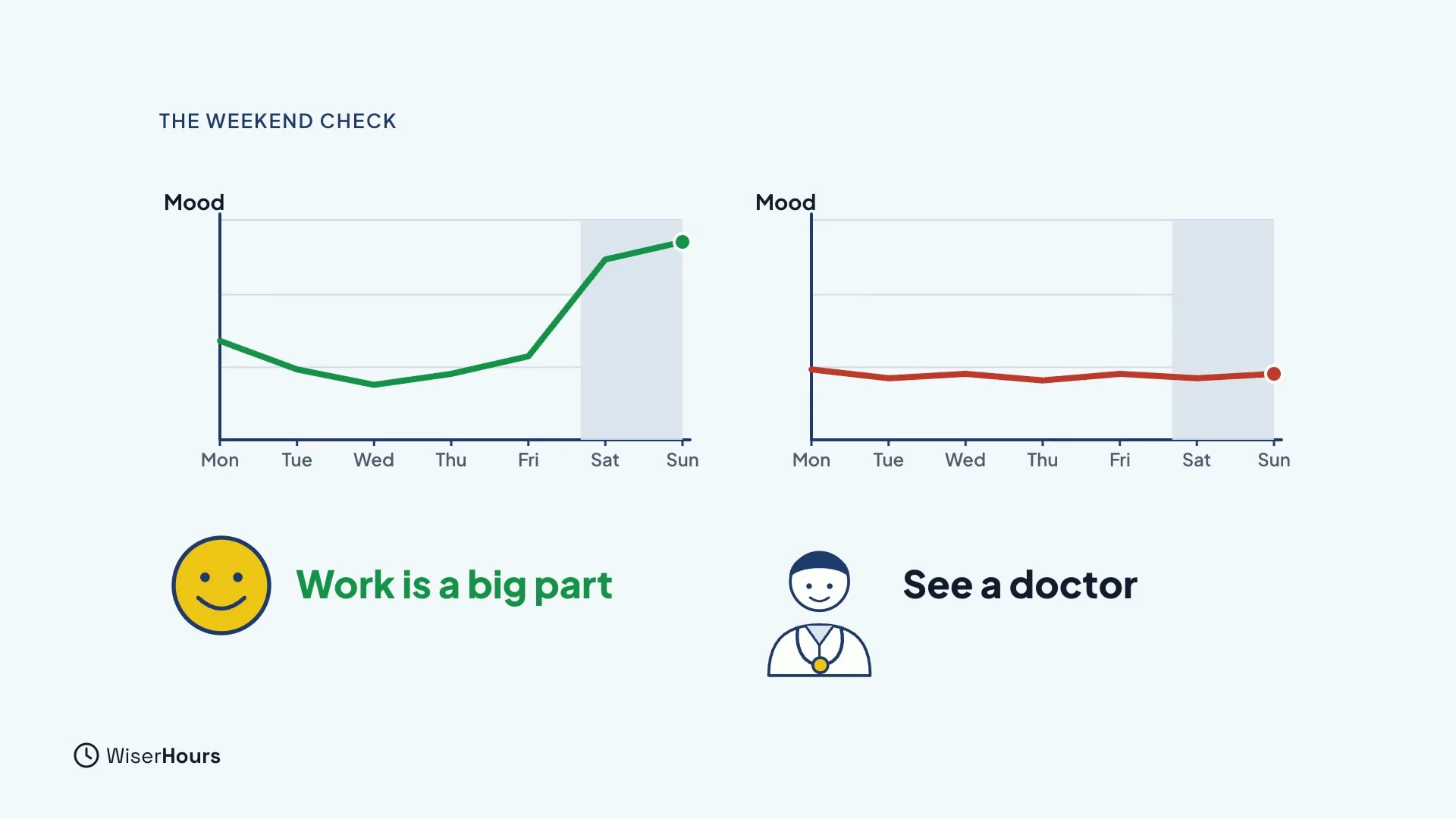
Here is a simple check. Notice whether your mood lifts on a free day. If it does, work may be a big part of the problem. If it stays flat through weekends and longer breaks, see a doctor, whatever the right name turns out to be.
 (opens the full-size picture)
Check the body first
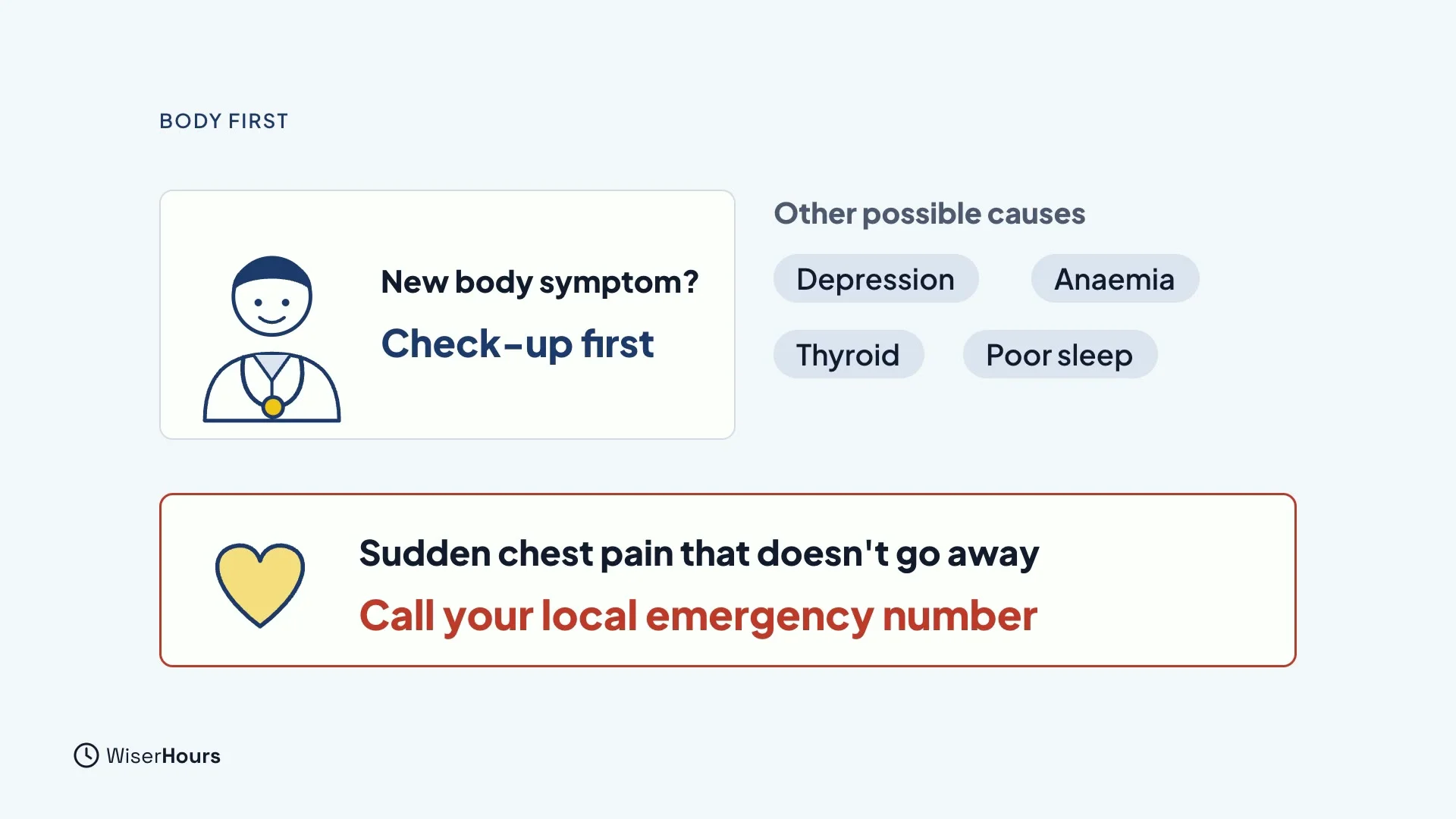
Many of these signs also come from other problems, such as depression, anaemia, a thyroid problem or poor sleep. So treat a new physical symptom as a reason for a check-up first, and as a possible burnout sign only after that.
 (opens the full-size picture)
Sudden chest pain is an emergency
Sudden chest pain that does not go away is an emergency. Call your local emergency number. It is never a burnout sign to wait out.
YOUR TURN
Read more
- 12 Early Warning Signs of Burnout You Shouldn’t Ignore: all twelve signs, how much weight each can bear, and how quickly to act.
Read the full lesson script
In this lesson, you'll learn the early warning signs of burnout, and a simple way to tell a rough week from a pattern that needs attention.
The best-measured signs match the three parts of burnout. Tiredness that a weekend doesn't fix. Every task taking more effort. Doing the minimum, and keeping work at arm's length. Feeling cynical about the job, or the people it serves. And feeling you no longer do the job well.
Other signs often come with them. Trouble concentrating and remembering. Being irritable, or reacting more strongly than usual. Sleep that stops restoring you. Headaches, aching muscles, or an upset stomach. Catching every bug going, taking more sick days, or daydreaming about quitting.
Exhaustion tends to come first, then cynicism. Treat that as a tendency, not a timetable. And stress and burnout can feed each other: stress at work predicts later burnout, and burnout makes work feel even more stressful.
What matters is the pattern, not one rough week. Look for signs that are new compared with six months ago, and that have lasted for several weeks. There's no agreed number of signs. A change from your usual self counts more than the sign itself.
Here's a simple check. If your mood lifts on a free day, work may be a big part of the problem. If it stays flat through weekends and longer breaks, see a doctor.
Many of these signs also come from other problems, like depression, anaemia, a thyroid problem, or poor sleep. So treat a new physical symptom as a reason for a check-up first. And sudden chest pain that doesn't go away is an emergency: call your local emergency number. It's never a burnout sign to wait out.
So remember: tiredness that a weekend doesn't fix is a key early sign. Look for a pattern over weeks, not one rough week. And a new body symptom needs a check-up. Before the next lesson, mark which signs are new compared with six months ago, and for how many weeks. Next, you'll learn how burnout differs from stress and depression.
MAKE IT A SMALL WIN
Finished this lesson?
Mark it complete to save your progress on this device.