Recover and change · Lesson 11 of 12
Reshape Your Job: Change the Work, Not Only Yourself
Learn to trim a demand and add a resource, set one boundary with a trial, and decide what to do if nothing changes.
 Video coming soon
Healthy habits help, but they cannot remove what is draining you. In this lesson you learn how to reshape your job so it drains you less, how to set one boundary, and how to think about what comes next.
Change the work, not only yourself
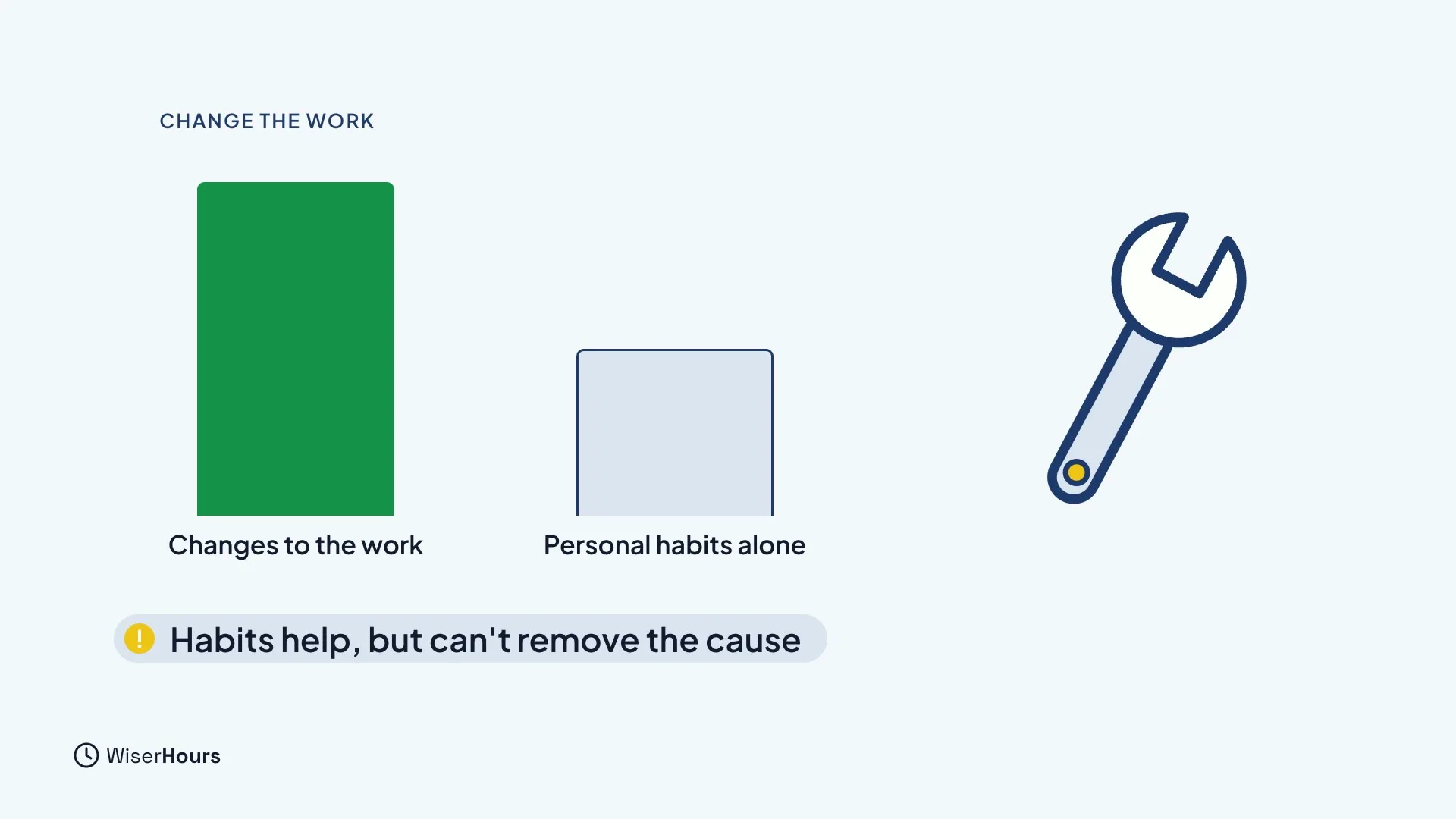
Changes to the work itself have stronger evidence than personal habits alone. Sleep, breaks and breathing all help, but they cannot remove the cause. So aim to change something about the job, not only yourself. The change can be small. It only has to touch the work.
 (opens the full-size picture)
Trim one, add one
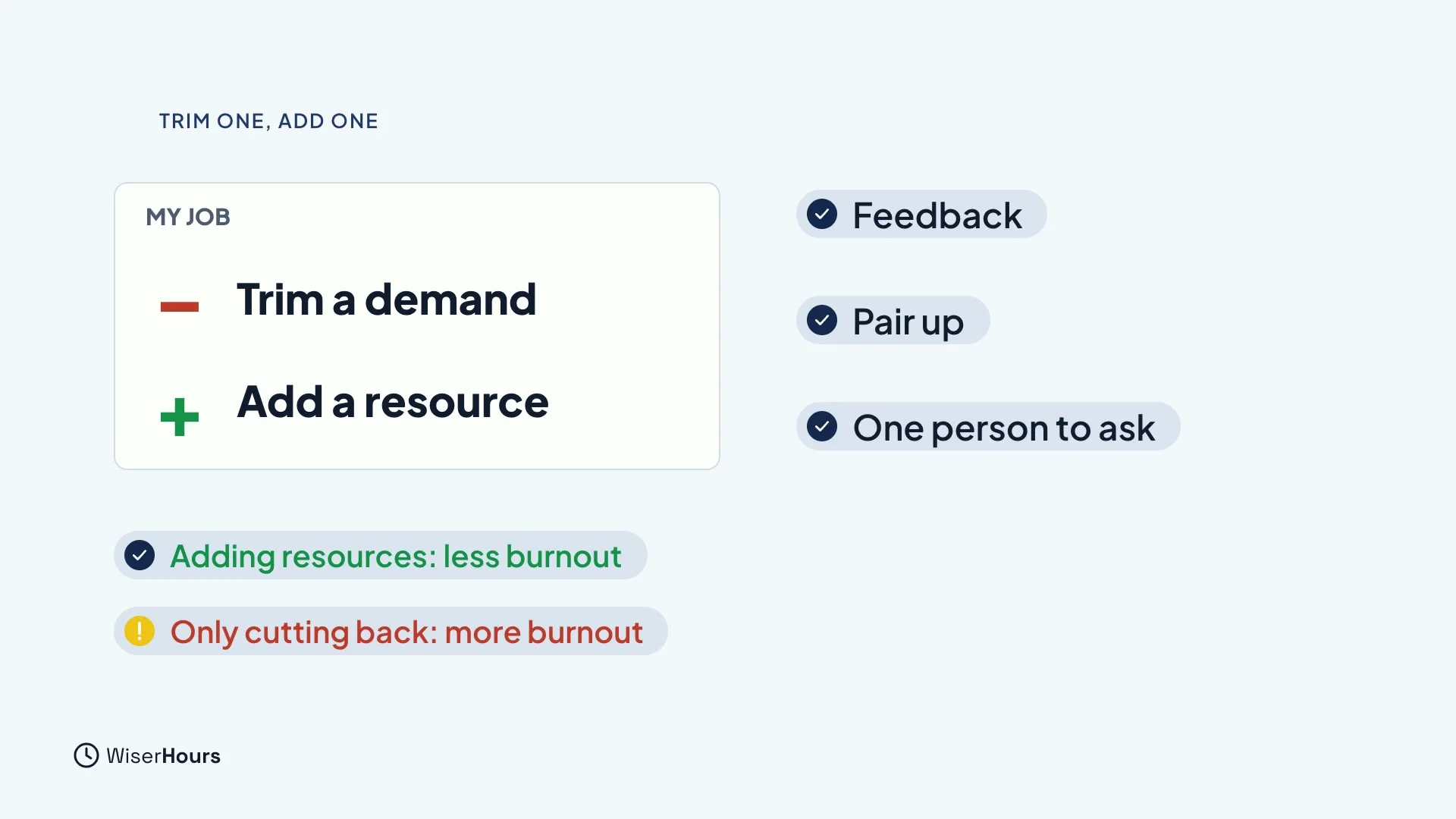
When people reshape their jobs, adding resources and good challenges was linked to less burnout. Only cutting back was linked to more. So when you trim a demand, add a resource too. A resource is something that helps you do the work. You could ask for feedback, pair up with someone on a hard project, or keep one person you can take problems to.
 (opens the full-size picture)
Set one boundary
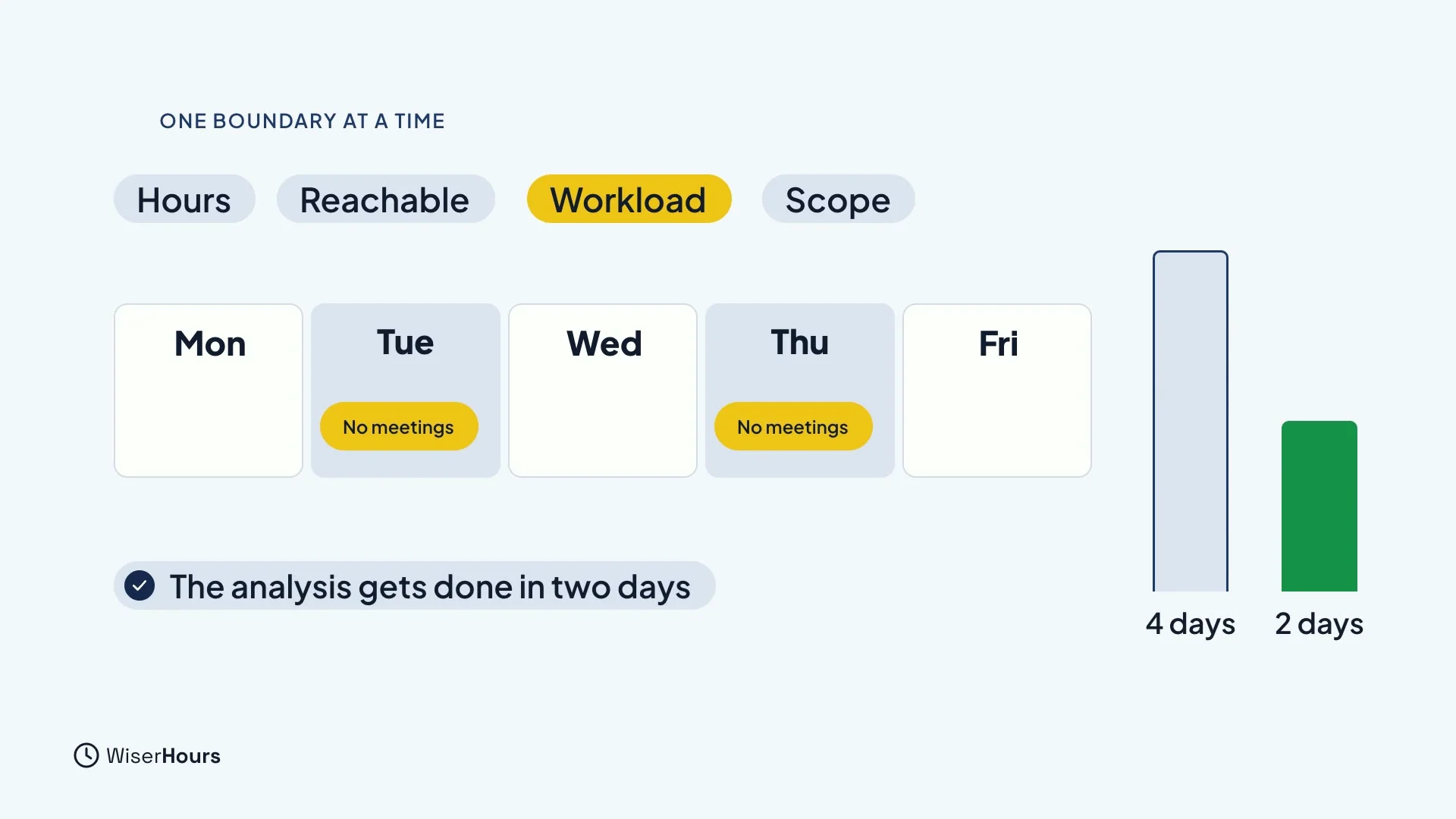
Pick one boundary at a time: your hours, when you are reachable, your workload, or your scope. Frame it around the work, not around how you feel. For example: “If I keep Tuesday and Thursday mornings free of meetings, the analysis gets done in two days instead of four.” That gives your manager a reason to say yes.
 (opens the full-size picture)
Offer a trial and send a recap
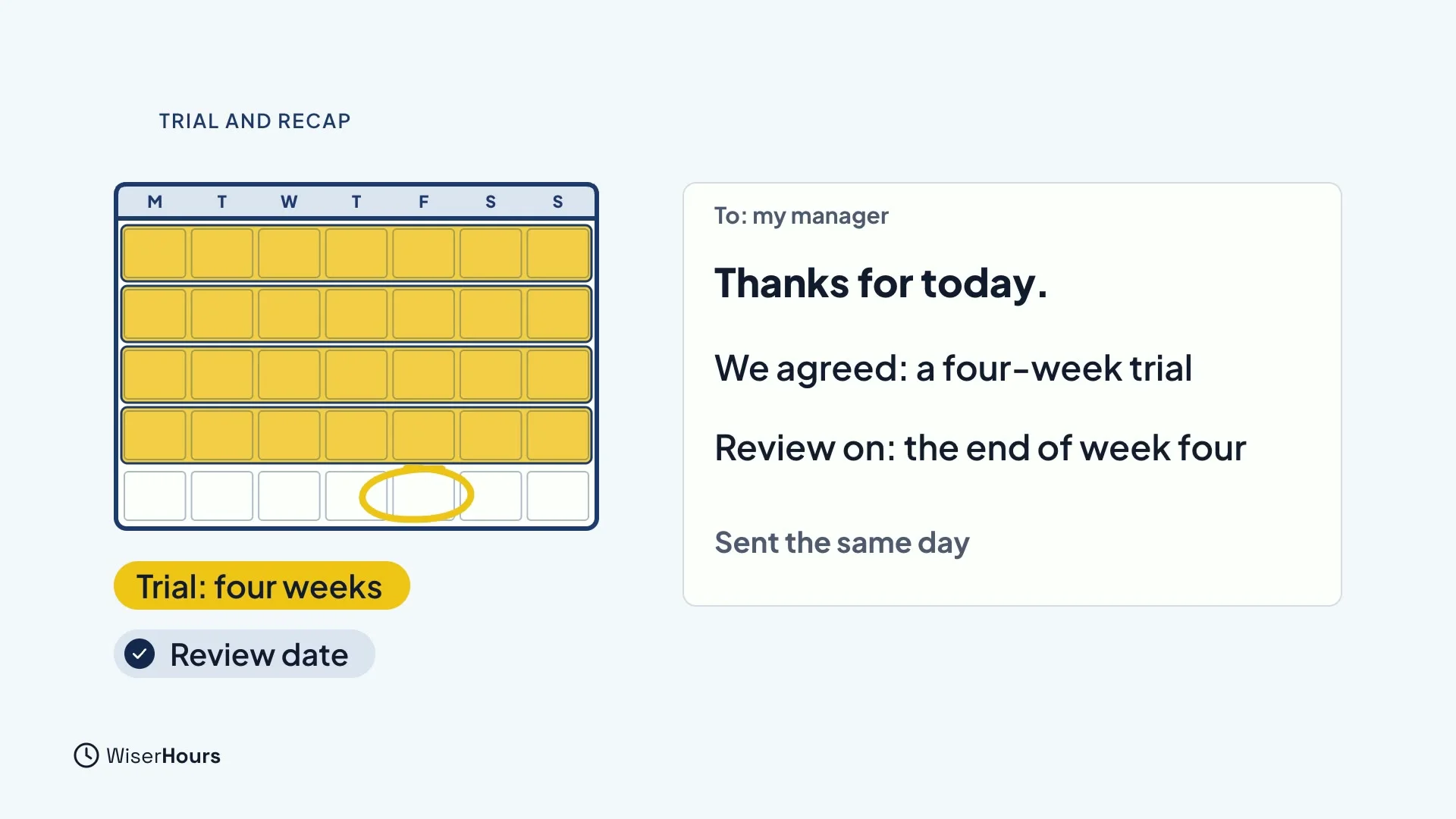
Offer a trade-off and a trial: “Let’s try it for four weeks, then review.” A trial feels safer to agree to than a permanent change. Afterwards, send a short recap the same day, with what you agreed and the review date.
 (opens the full-size picture)
If the answer is no
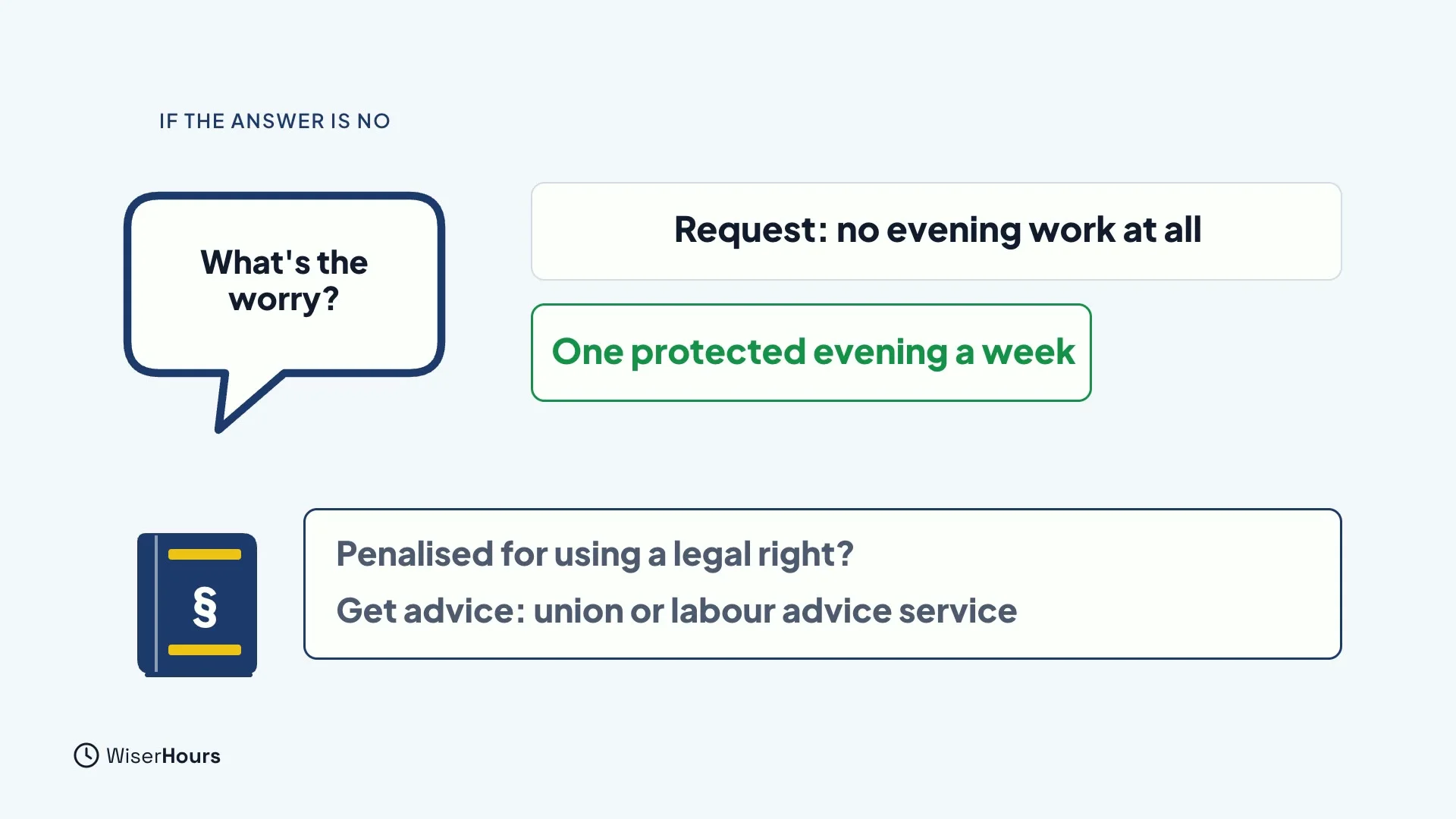
A first no is information. Ask what the worry is, then narrow your request. For example, instead of no evening work at all, ask for one protected evening a week. And if you are ever penalised for using a legal right, get advice from a union or an official labour advice service. Rules differ from country to country.
 (opens the full-size picture)
Decide what is next
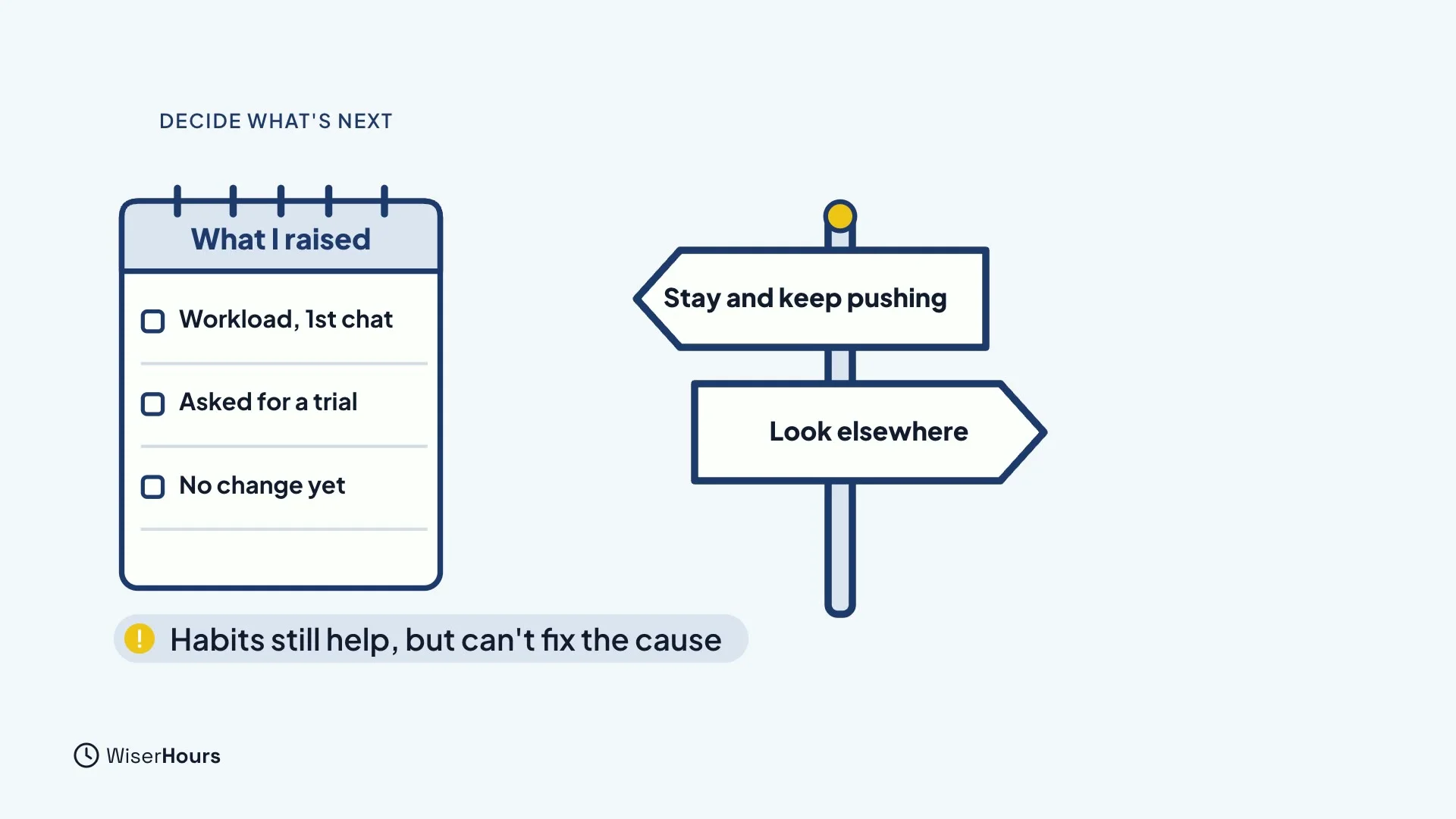
If you have raised the problem clearly and nothing changes, your habits still help, but they cannot fix the cause. Keep a note of what you raised, and when. At that point, looking for a different role or job becomes a fair question. You are not giving up. You are using what you learned from trying.
 (opens the full-size picture)
YOUR TURN
Read more
- How to Prevent Burnout: What You Can Do and What Needs to Change at Work: which changes at work have the firmest evidence.
- How to Set Boundaries With Your Boss Without Hurting Your Career: wording, trials and what to do after a no.
Read the full lesson script
In this lesson, you'll learn how to reshape your job so it drains you less, how to set one boundary, and how to think about what's next.
Changes to the work itself have stronger evidence than personal habits alone. Healthy habits help, but they can't remove the cause. So aim to change something about the job, not only yourself.
When people reshape their jobs, adding resources and good challenges was linked to less burnout. Only cutting back was linked to more. So when you trim a demand, add a resource too: ask for feedback, pair up with someone on a hard project, or keep one person you can take problems to.
Pick one boundary at a time: your hours, when you're reachable, your workload, or your scope. Frame it around the work: if I keep Tuesday and Thursday mornings free of meetings, the analysis gets done in two days instead of four.
Offer a trade-off and a trial: let's try it for four weeks, then review. Afterwards, send a short recap the same day, with what you agreed and the review date.
A first no is information. Ask what the worry is, then narrow your request, for example to one protected evening a week. And if you're ever penalised for using a legal right, get advice from a union or an official labour advice service.
If you've raised the problem clearly and nothing changes, your habits still help, but they can't fix the cause. Keep a note of what you raised. At that point, looking for a different role or job becomes a fair question.
So remember: change the work, not only yourself. When you trim a demand, add a resource. And set one boundary at a time, with a trial. Before the next lesson, pick one demand to trim and one resource to add. Next, in the last lesson, you'll learn when to get help, and make your plan.
MAKE IT A SMALL WIN
Finished this lesson?
Mark it complete to save your progress on this device.