Understand burnout · Lesson 6 of 12
Burnout, Stress or Depression? How to Tell Them Apart
Learn how burnout differs from everyday stress and from depression, why the lines blur, and why a doctor is often the first step.
 Video coming soon
Stress, burnout and depression can feel alike, and they can overlap. In this lesson you learn how burnout differs from everyday stress and from depression, and why a doctor is often the first step. This is general information, not medical advice, and you cannot reliably sort this out alone.
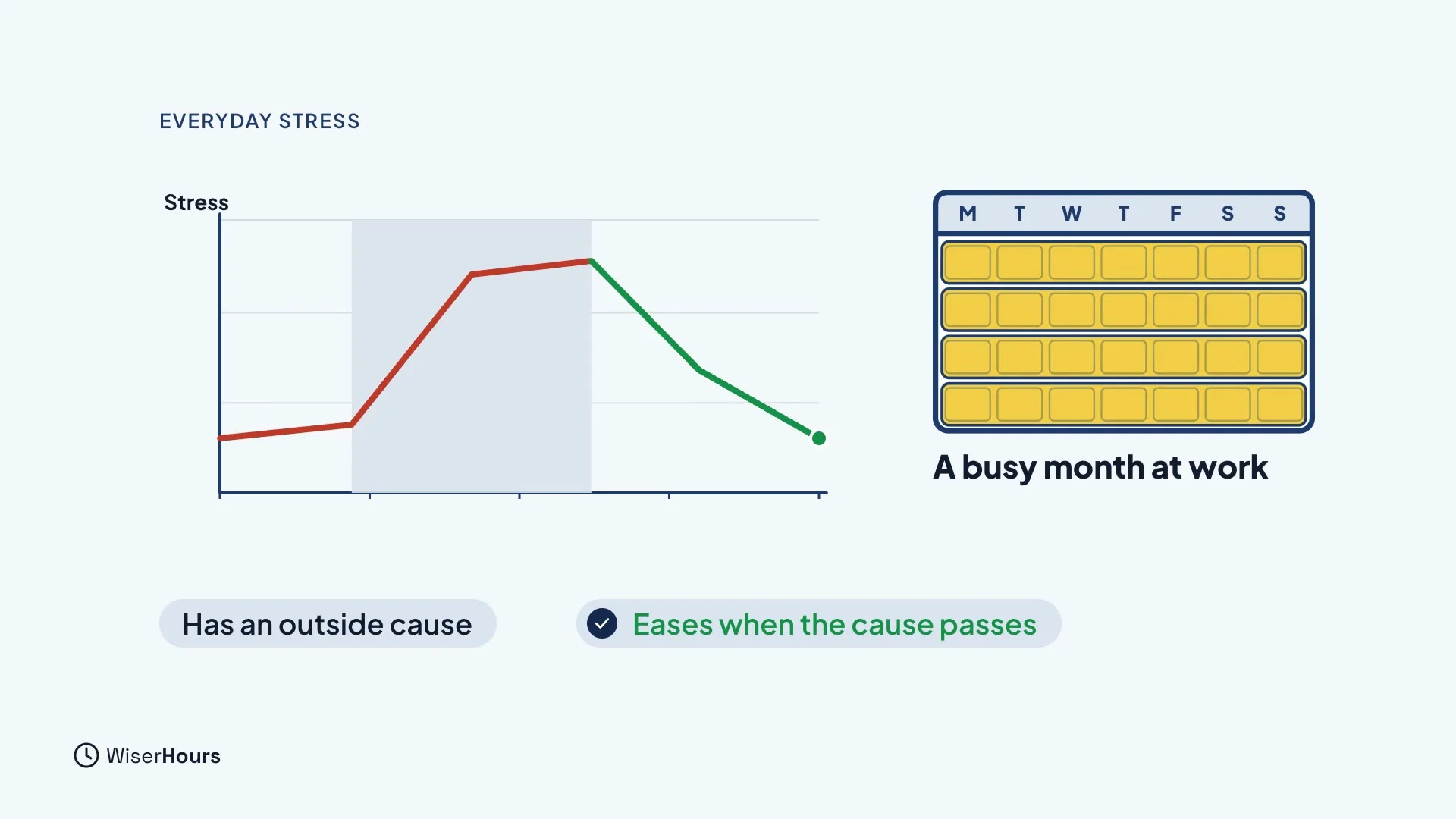
Stress: it eases when the cause passes
Stress usually has an outside cause, and it eases when that cause is resolved. A busy month at work is stressful, but once it passes, you recover.
 (opens the full-size picture)
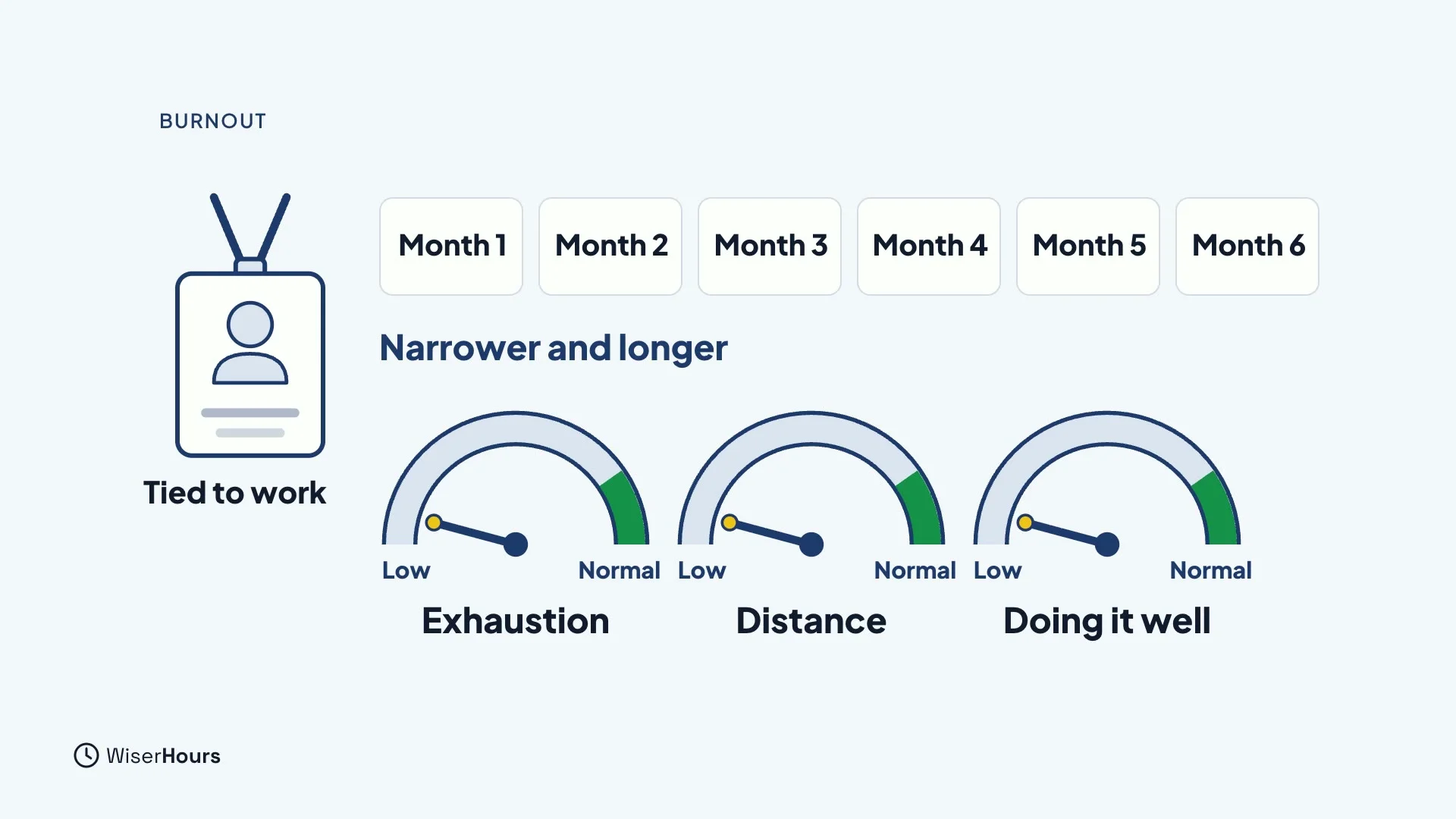
Burnout: narrower and longer
Burnout is narrower and longer. It is tied to work, it builds over months, and it brings three things: exhaustion, distance from the job, and a feeling that you are not doing it well. If you want to revisit the three parts, see what burnout is.
 (opens the full-size picture)
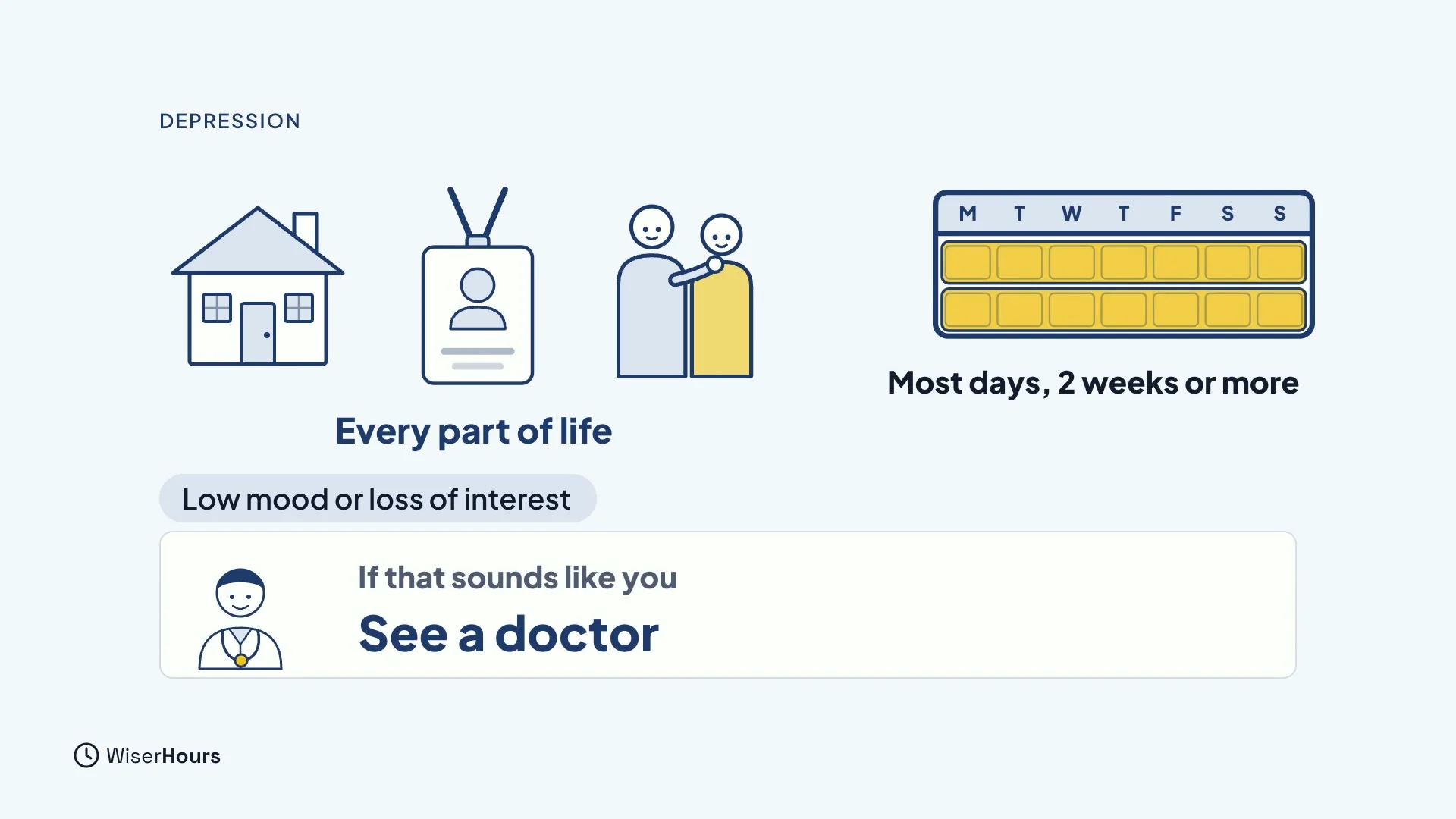
Depression: every part of life
Depression affects every part of life, not just work. A key sign is low mood or loss of interest most of the day, nearly every day, for two weeks or more. If that sounds like you, see a doctor.
 (opens the full-size picture)
If you are struggling
Low mood or loss of interest most of the day for two weeks or more is a reason to see a doctor. If you ever think about harming yourself, call your local emergency number or a crisis line right away.
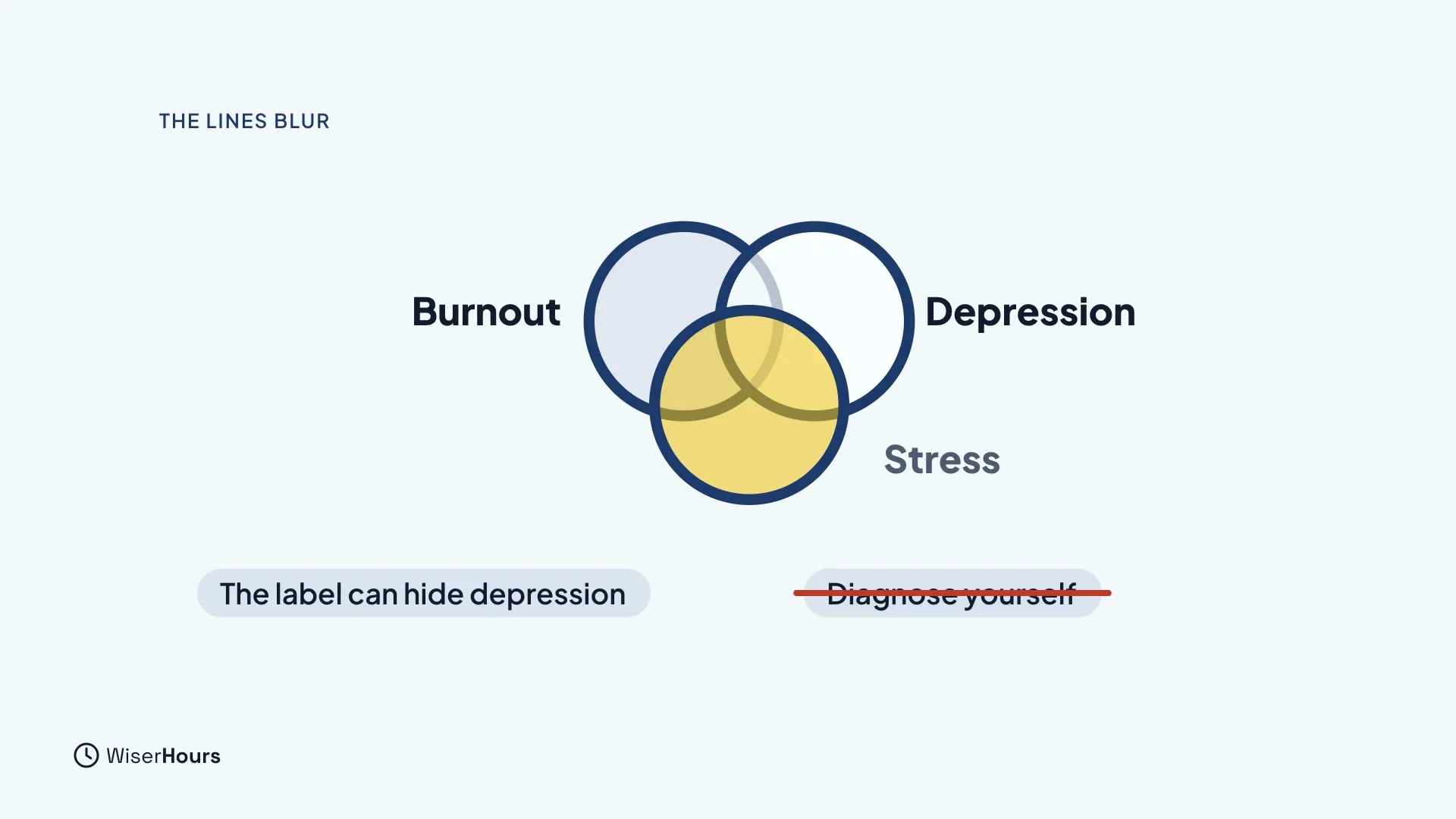
The lines blur
The lines between these are not sharp. Researchers still argue about how much burnout and depression overlap, and some warn that the burnout label can hide depression that has not been diagnosed. That is another reason not to diagnose yourself. You do not need to decide which word fits before you ask for help.
 (opens the full-size picture)
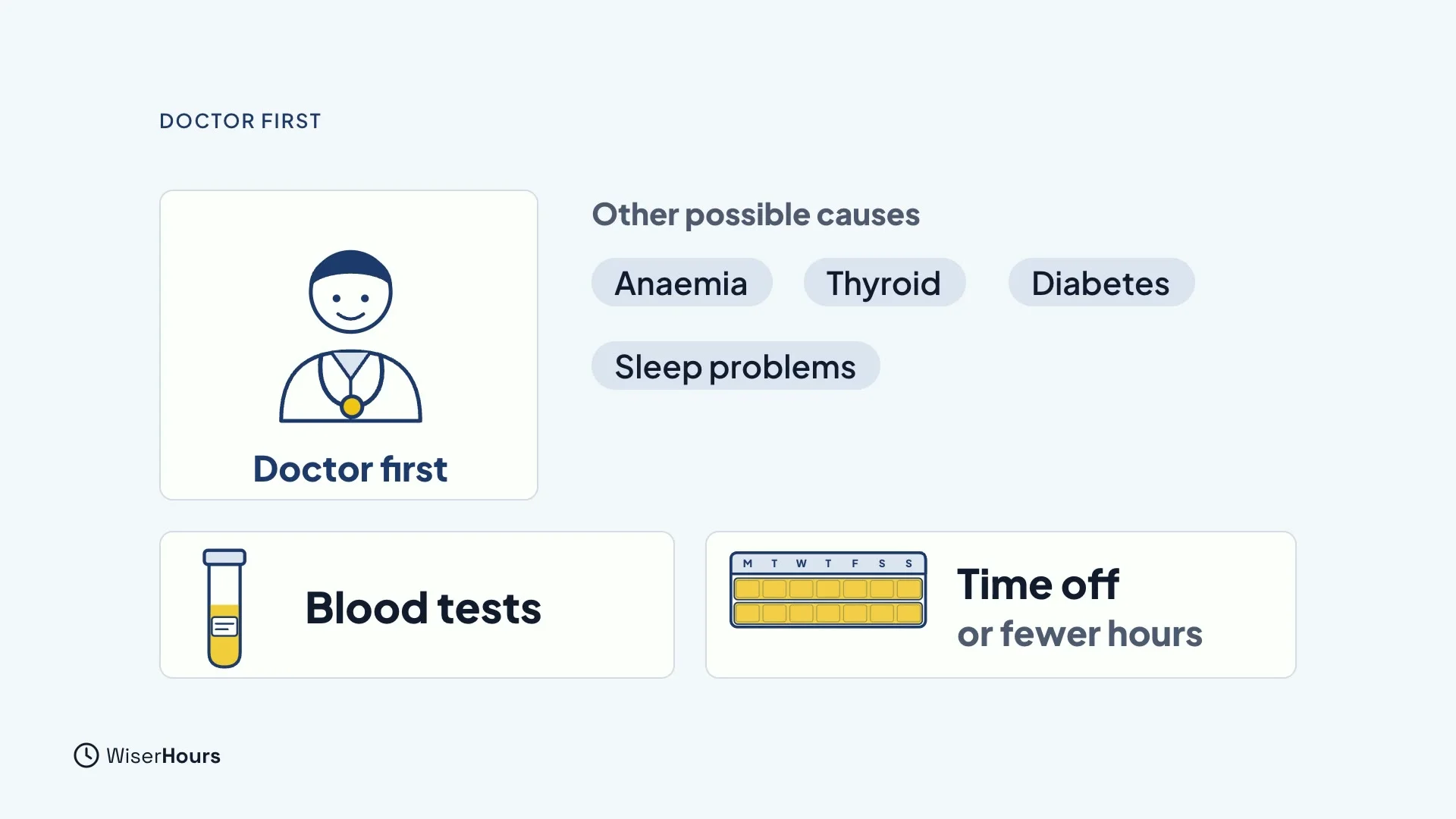
Doctor first
Many signs of burnout also come from other conditions, like anaemia, an overactive thyroid, diabetes or sleep problems. So a doctor usually comes first. They may suggest blood tests, and they can talk with you about time off or reduced hours. Rules about time off differ from country to country, so ask what applies where you live.
 (opens the full-size picture)
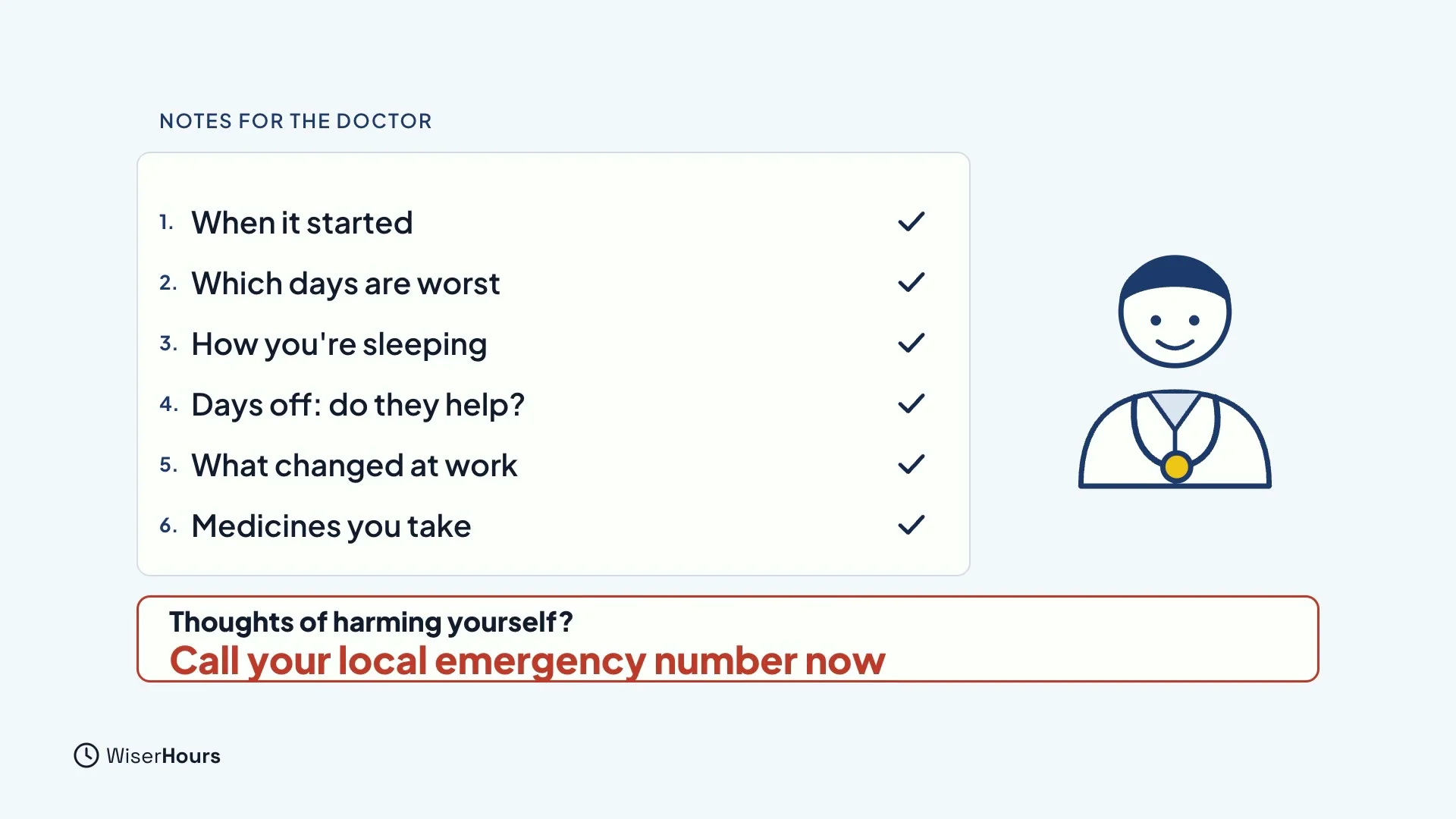
Bring notes to the visit
A few notes make the appointment more useful. Write down when it started, which days are worst, how you are sleeping, whether days off help, what changed at work, and any medicines you take. These answers help a doctor more than the word burnout does.
 (opens the full-size picture)
If you ever have thoughts of harming yourself, do not wait for an appointment. Call your local emergency number or a crisis line right away.
YOUR TURN
Read more
- What Is Burnout? The WHO Definition in Plain English: the definition, and why researchers still debate how burnout and depression overlap.
- What Is Stress? How the Stress Response Works in Plain English: how stress differs from burnout and anxiety.
- Therapy for Burnout: When to Seek Help and What It Involves: why a doctor is often the first appointment, and what to bring.
Read the full lesson script
In this lesson, you'll learn how burnout differs from everyday stress and from depression, and why a doctor is often the first step.
Stress usually has an outside cause, and eases when that cause is resolved. A busy month at work is stressful, but once it passes, you recover.
Burnout is narrower and longer. It's tied to work, it builds over months, and it brings exhaustion, distance from the job, and a feeling you're not doing it well.
Depression affects every part of life, not just work. A key sign is low mood or loss of interest most of the day, nearly every day, for two weeks or more. If that sounds like you, see a doctor.
The lines aren't sharp. Researchers still argue about how much burnout and depression overlap, and some warn that the burnout label can hide depression that hasn't been diagnosed. That's another reason not to diagnose yourself.
Many signs of burnout also come from other conditions, like anaemia, an overactive thyroid, diabetes, or sleep problems. So a doctor usually comes first. They may suggest blood tests, and can talk with you about time off or reduced hours.
Bring a few notes to the appointment: when it started, which days are worst, how you're sleeping, whether days off help, what changed at work, and any medicines you take. And if you ever have thoughts of harming yourself, call your local emergency number or a crisis line right away.
So remember: stress usually eases when its cause passes. Burnout is about work, and builds over months. And low mood most days for two weeks is a reason to see a doctor. Before the next lesson, write the notes you would bring to a doctor. Next, you'll learn what causes burnout.
MAKE IT A SMALL WIN
Finished this lesson?
Mark it complete to save your progress on this device.