Understand burnout · Lesson 4 of 12
What Burnout Is, and What It Isn't: The WHO Definition
Learn the World Health Organization definition of burnout, its three parts, why it is not a diagnosis, and how to check each part for yourself.
 Video coming soon
People use the word burnout for many kinds of tiredness. In this lesson you learn what it actually means, using the World Health Organization’s definition, and what it does not mean. This course is general information, not medical advice.
The definition
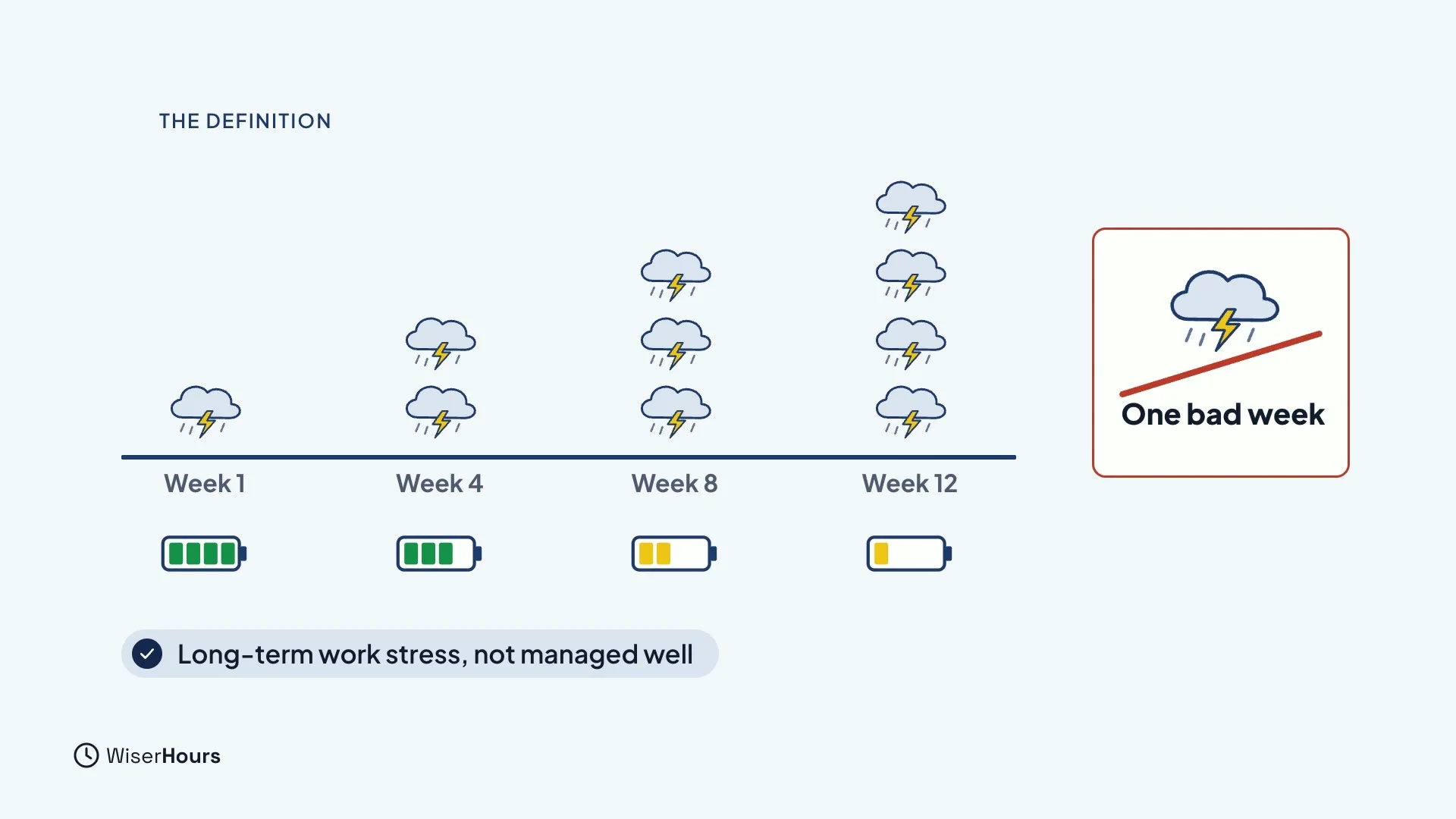
The World Health Organization describes burnout as the result of long-term stress at work that has not been managed well. It is not about one bad week. It builds up over time.
 (opens the full-size picture)
The three parts
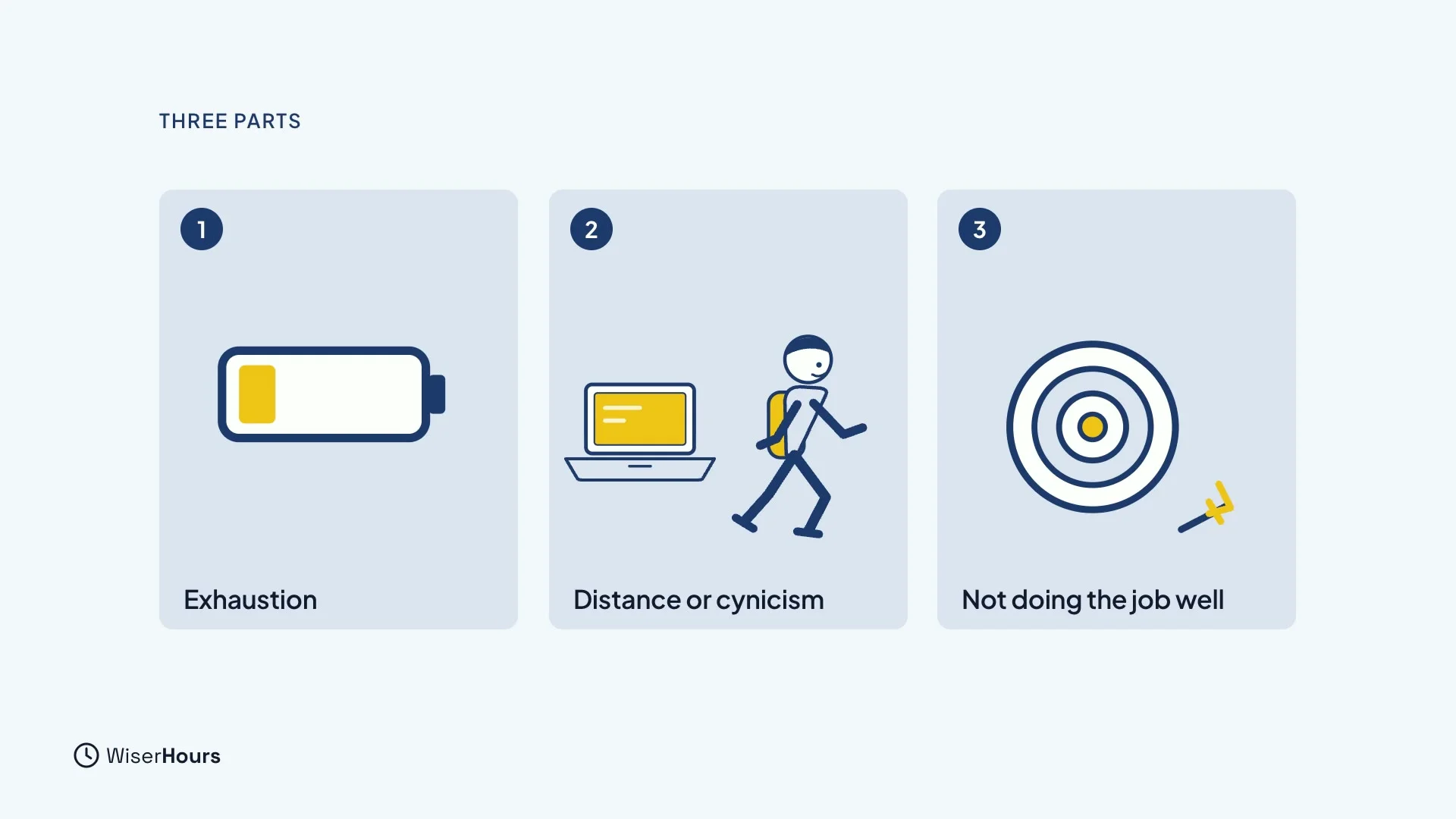
Burnout has three parts. The first is exhaustion: feeling drained of energy. The second is mental distance from your job, or feeling negative and cynical about it. The third is a sense that you are no longer doing the job well, or achieving much.
 (opens the full-size picture)
Work only
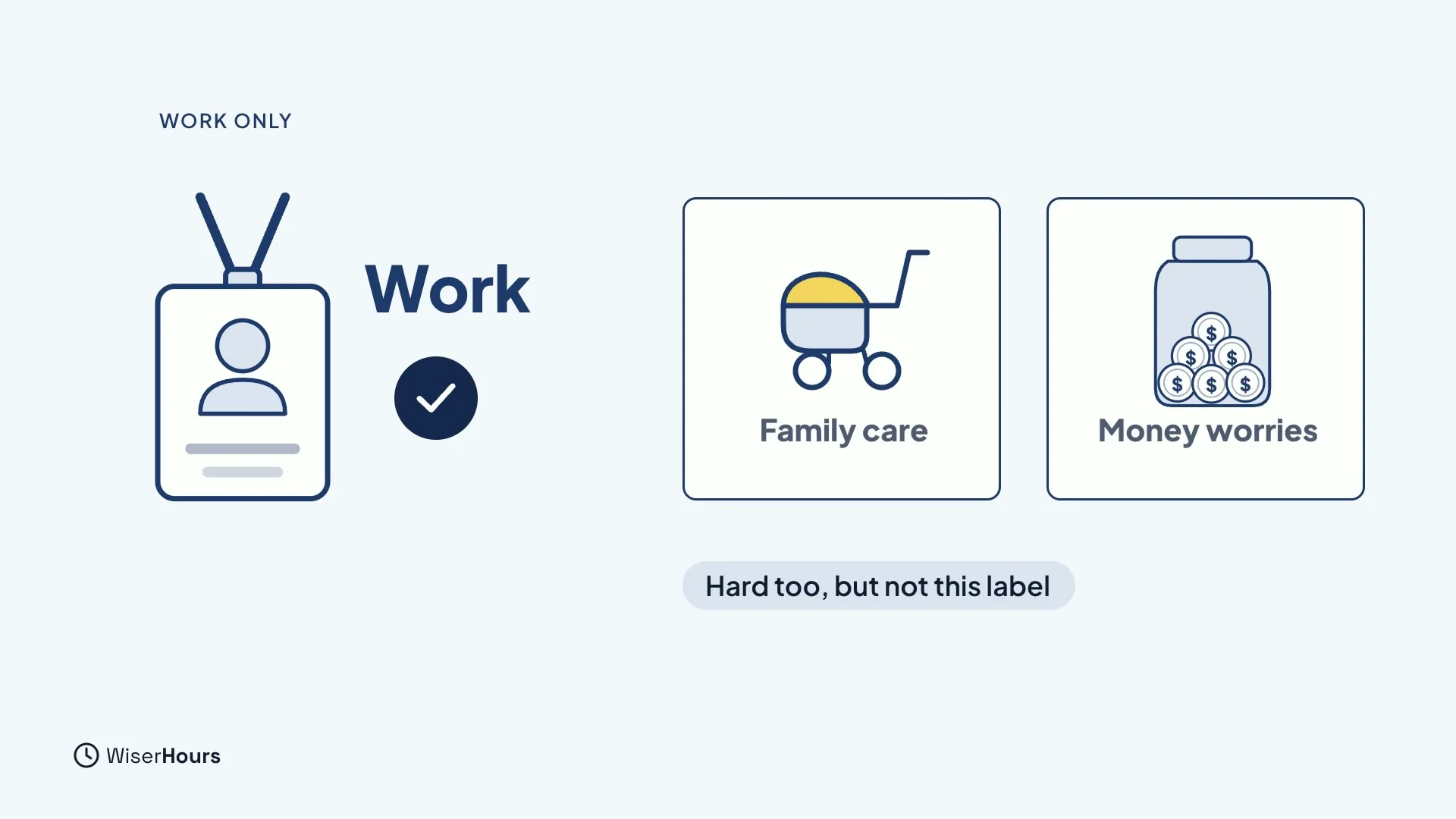
In this definition, burnout is about work only. It is not used for stress in other parts of life, like caring for family or money worries, even though those can be hard too.
 (opens the full-size picture)
Not a diagnosis
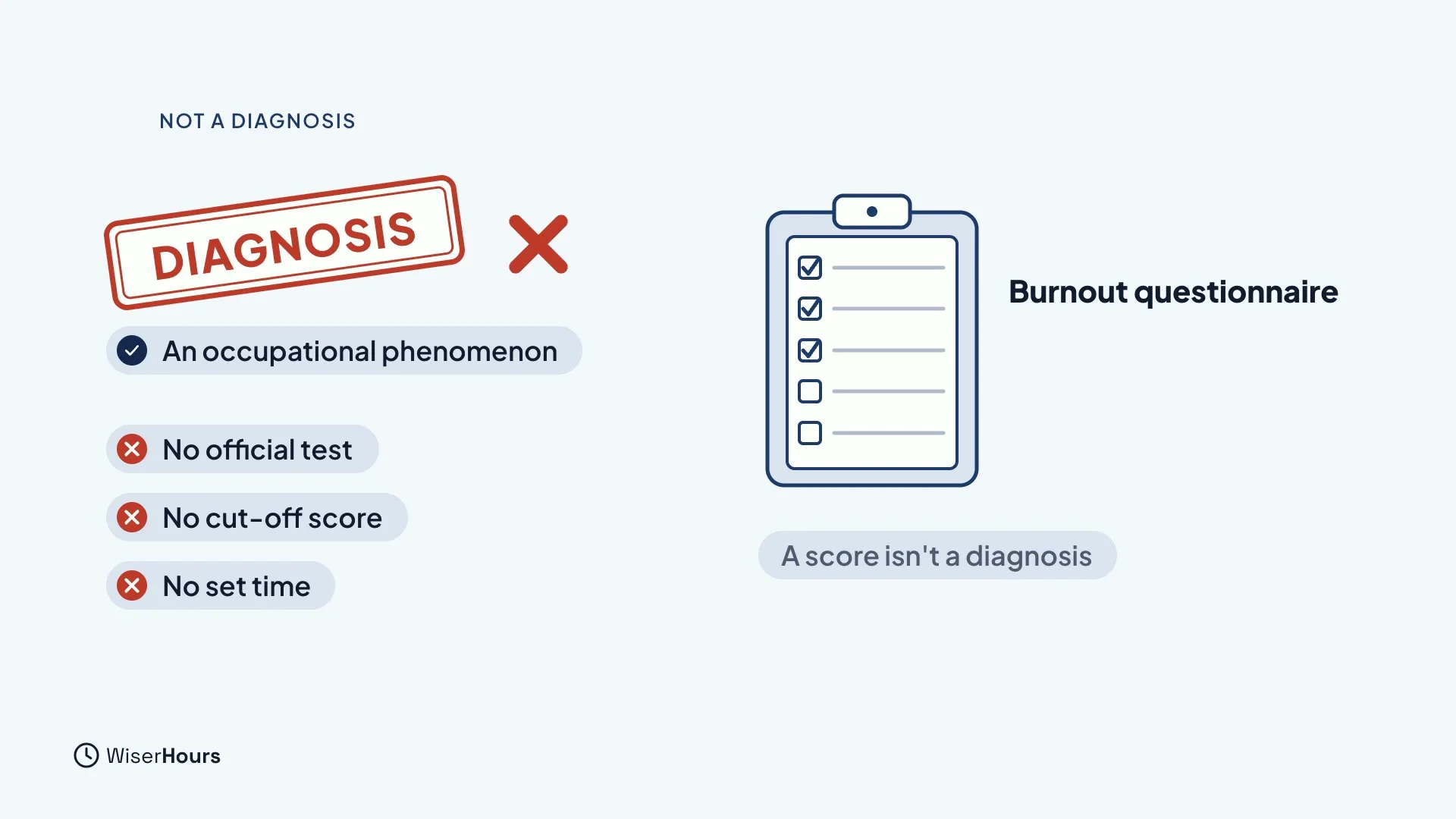
Burnout is also not a medical condition. The World Health Organization calls it an occupational phenomenonoccupational phenomenon: The WHO's label for burnout in its International Classification of Diseases: something that affects health and leads people to seek care, but that is not classified as a medical condition. The classification also limits the word to work.Full entry in the glossary. There is no official test, no cut-off score and no set length of time. Even the authors of the best-known burnout questionnaire say that no score on it is a diagnosis.
 (opens the full-size picture)
Why the label helps
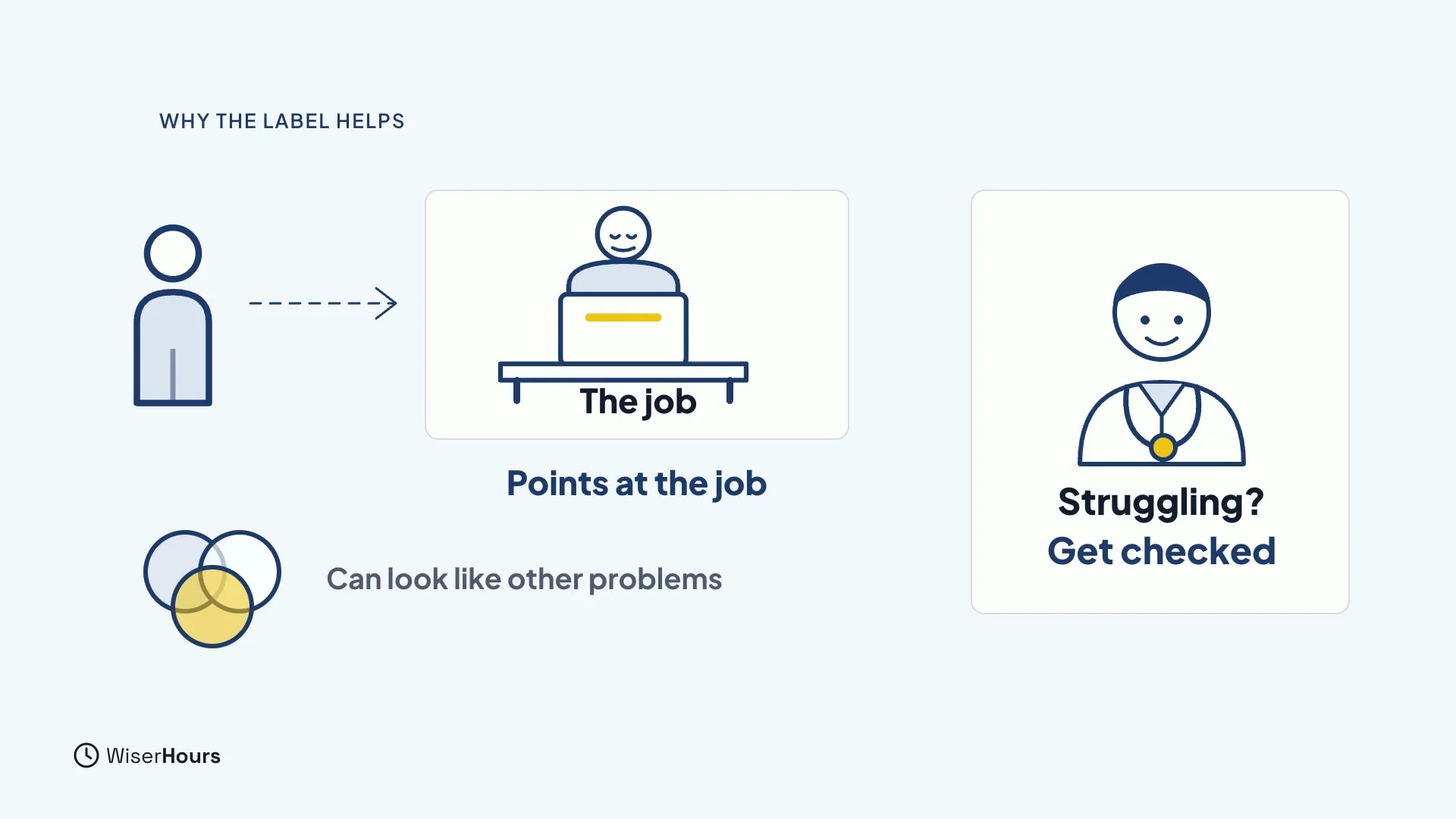
So why does the label matter? Because it points at the job, not at you. And because burnout can look like other problems, including depression, a doctor’s check matters if you are struggling. You will learn more about that later in the course.
 (opens the full-size picture)
If you are struggling
Low mood or loss of interest most of the day for two weeks or more, or tiredness for weeks without a clear reason, is a reason to see a doctor. If you ever think about harming yourself, call your local emergency number or a crisis line right away.
Look at each part
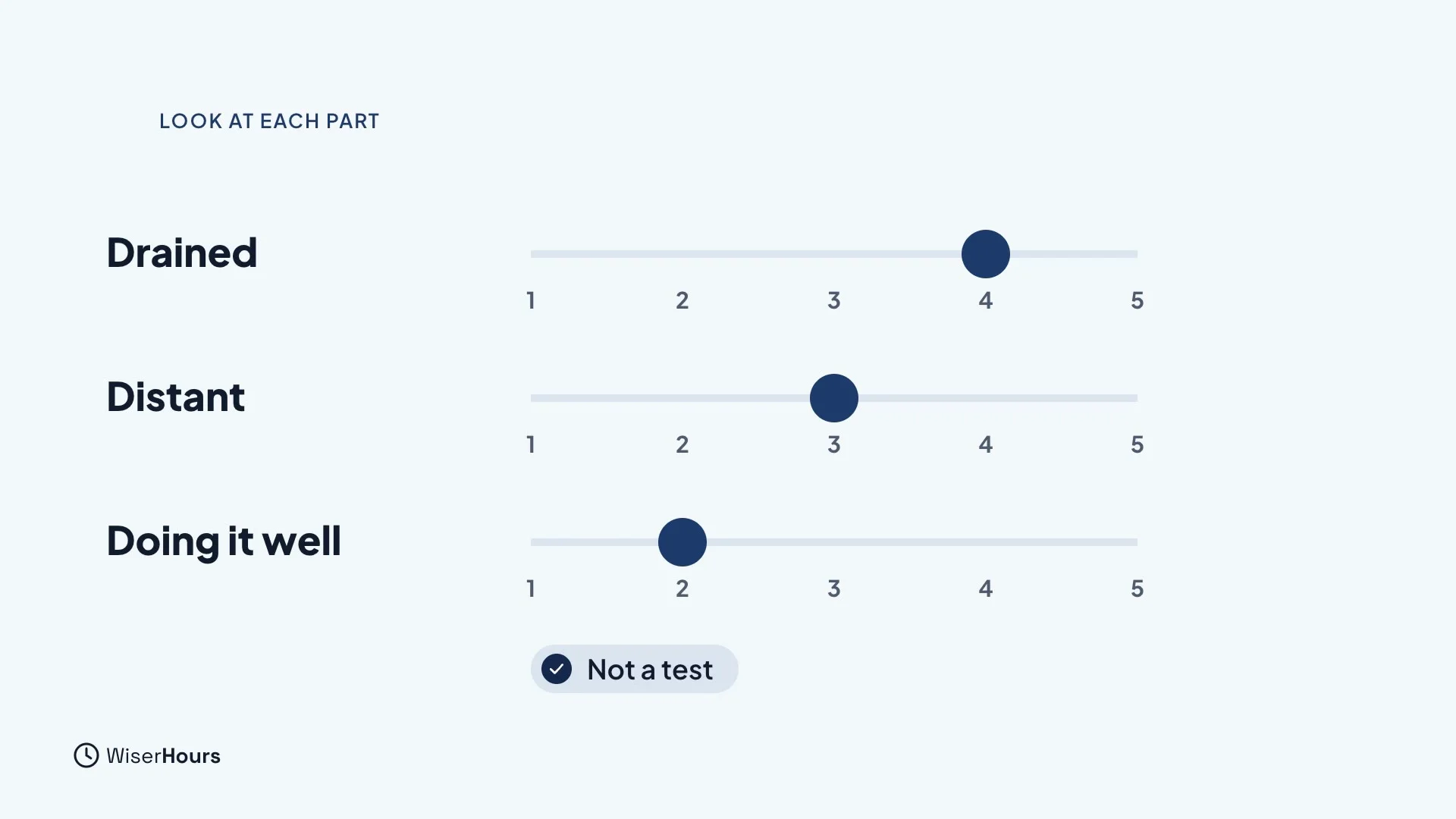
A simple way to start is to look at each part on its own. How drained have you felt this month? How distant or cynical about your work? And how well do you feel you are doing the job? This is not a test. It just helps you see which part is loudest.
 (opens the full-size picture)
YOUR TURN
Read more
- What Is Burnout? The WHO Definition in Plain English: the definition phrase by phrase, and why there is no agreed test.
Read the full lesson script
In this lesson, you'll learn what burnout actually is, using the World Health Organization's definition, and what it is not.
The World Health Organization describes burnout as the result of long-term stress at work that hasn't been managed well. It's not about one bad week. It builds up over time.
Burnout has three parts. The first is exhaustion: feeling drained of energy. The second is mental distance from your job, or feeling negative and cynical about it. The third is a sense that you're no longer doing the job well, or achieving much.
In this definition, burnout is about work only. It's not used for stress in other parts of life, like caring for family or money worries, even though those can be hard too.
It's also not a medical condition. The World Health Organization calls it an occupational phenomenon. There's no official test, no cut-off score, and no set length of time. Even the authors of the best-known burnout questionnaire say that no score on it is a diagnosis.
So why does the label matter? Because it points at the job, not at you. And because burnout can look like other problems, including depression, a doctor's check matters if you're struggling. You'll learn more about that later in the course.
A simple way to start is to look at each part on its own. How drained have you felt this month? How distant or cynical about your work? And how well do you feel you're doing the job? This isn't a test. It just helps you see which part is loudest.
So remember: burnout has three parts, exhaustion, distance, and feeling you're not doing the job well. It's about work. And it's not a diagnosis. Before the next lesson, rate each of the three parts from one to five for the last month. Next, you'll learn the early signs.
MAKE IT A SMALL WIN
Finished this lesson?
Mark it complete to save your progress on this device.