Calm the stress · Lesson 3 of 12
Progressive Muscle Relaxation: Tense, Release, Notice
Learn progressive muscle relaxation step by step: tense one area, release it, and notice the difference as you work through your body.
 Video coming soon
Progressive muscle relaxation is a simple way to notice tension in your body and let it go, one area at a time. In this lesson you learn the steps, the order to follow and how to shorten the routine as you get better at it. This course is general information, not medical advice.
The idea
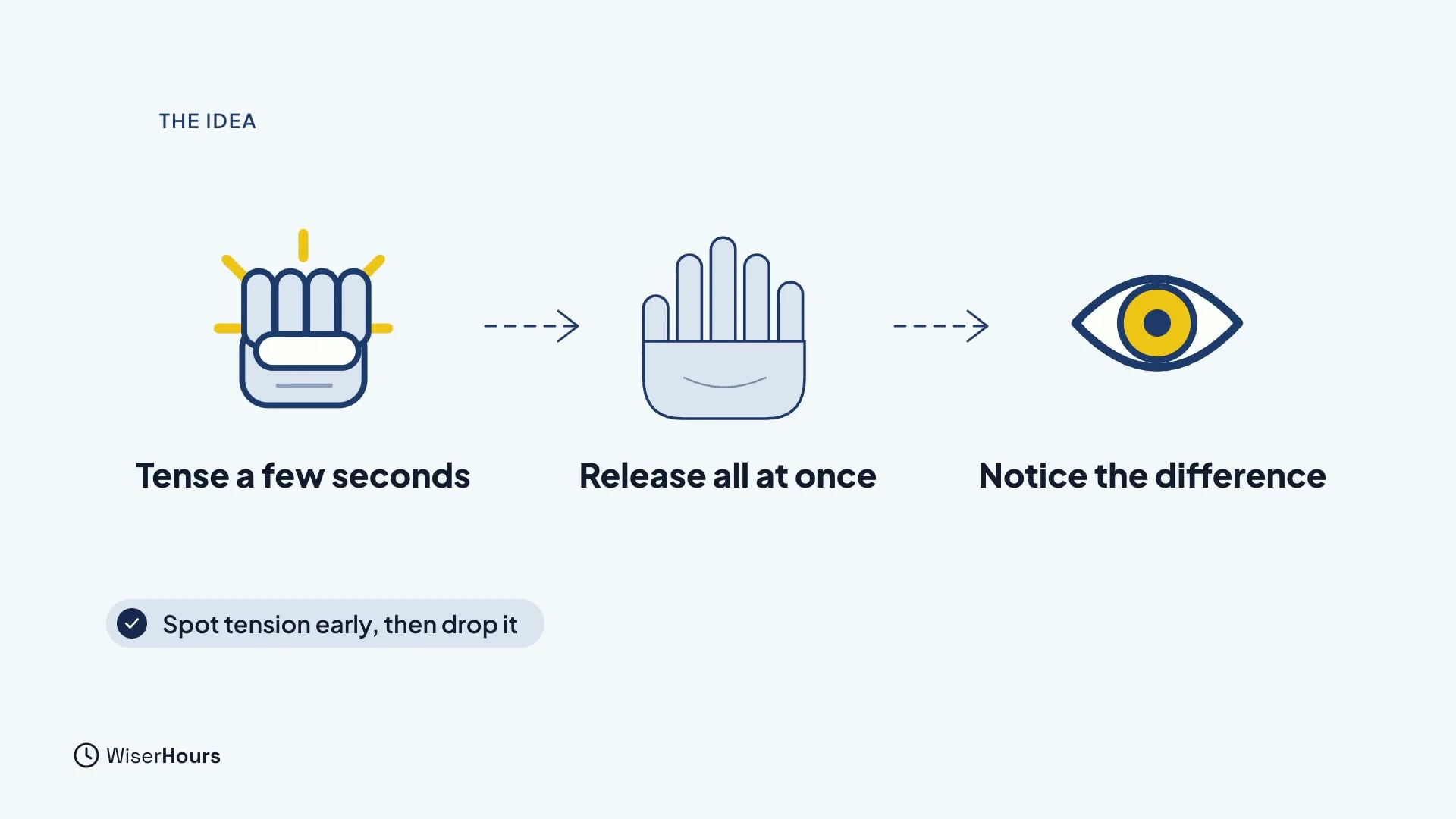
The idea is simple. You tense one group of muscles for a few seconds, then release it all at once, and notice the difference. Then you move on to the next area. Over time, the skill is spotting tension early and dropping it.
 (opens the full-size picture)
Get ready
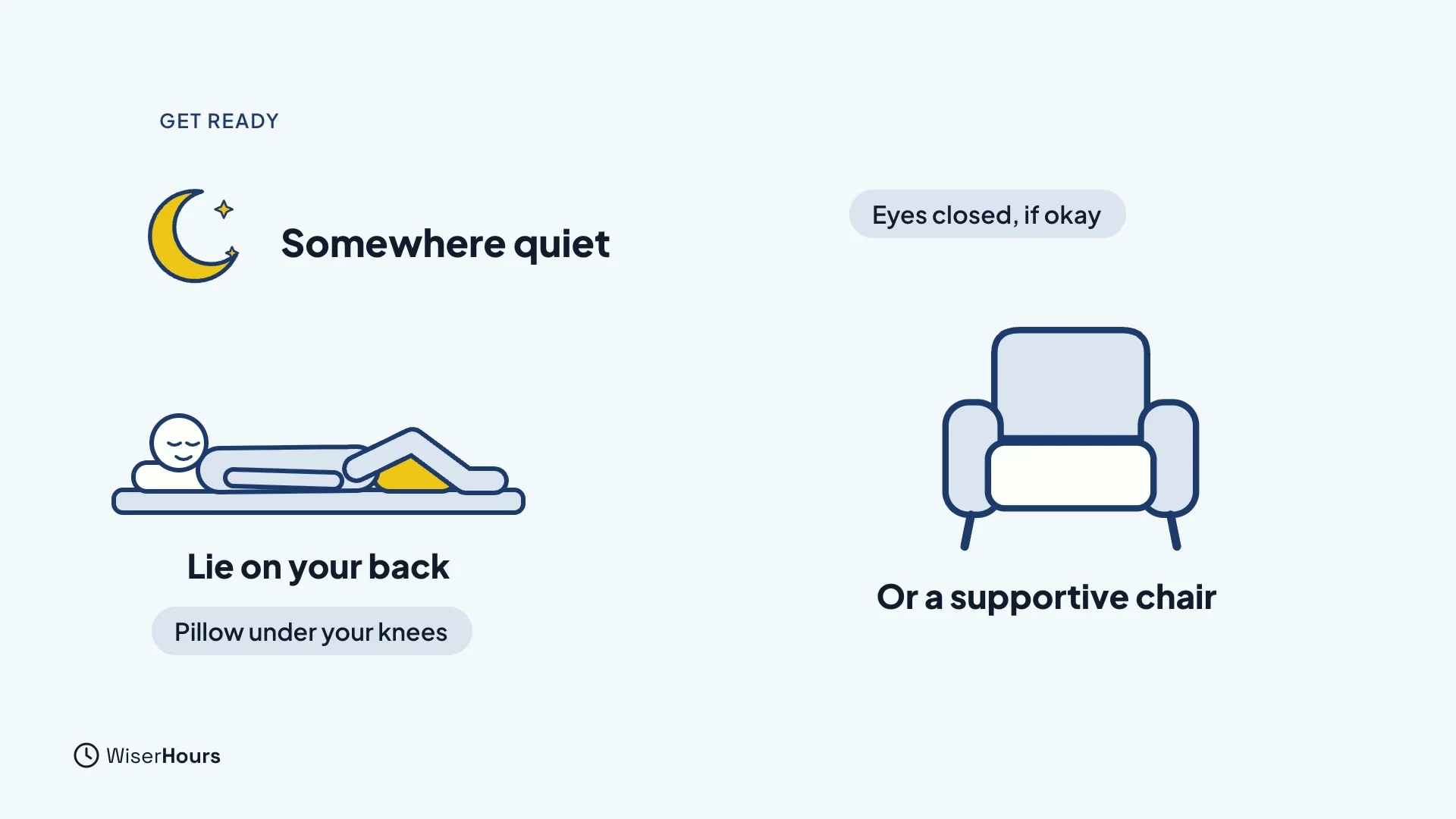
Find somewhere quiet and comfortable. Lie on your back, with a pillow under your knees if your lower back is sore, or sit in a supportive chair. Close your eyes if that feels okay.
 (opens the full-size picture)
Tense and release
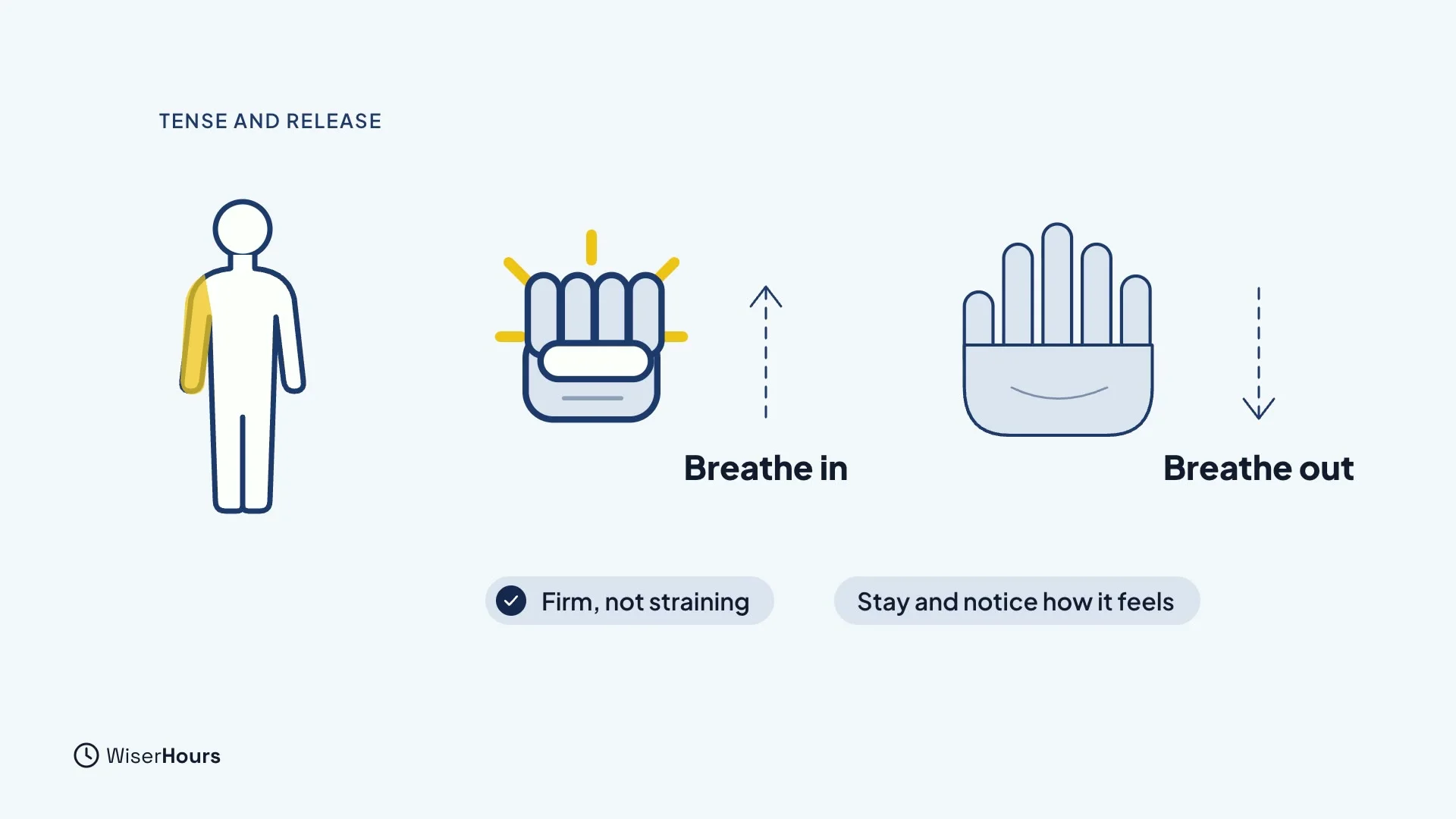
Start with your right hand and arm. As you breathe in, make a fist and brace your forearm, firmly but without strain, for a few seconds. As you breathe out, let it go all at once. Then stay with that area for a moment, and notice how it feels. That noticing is the point of the exercise.
 (opens the full-size picture)
Work through the body
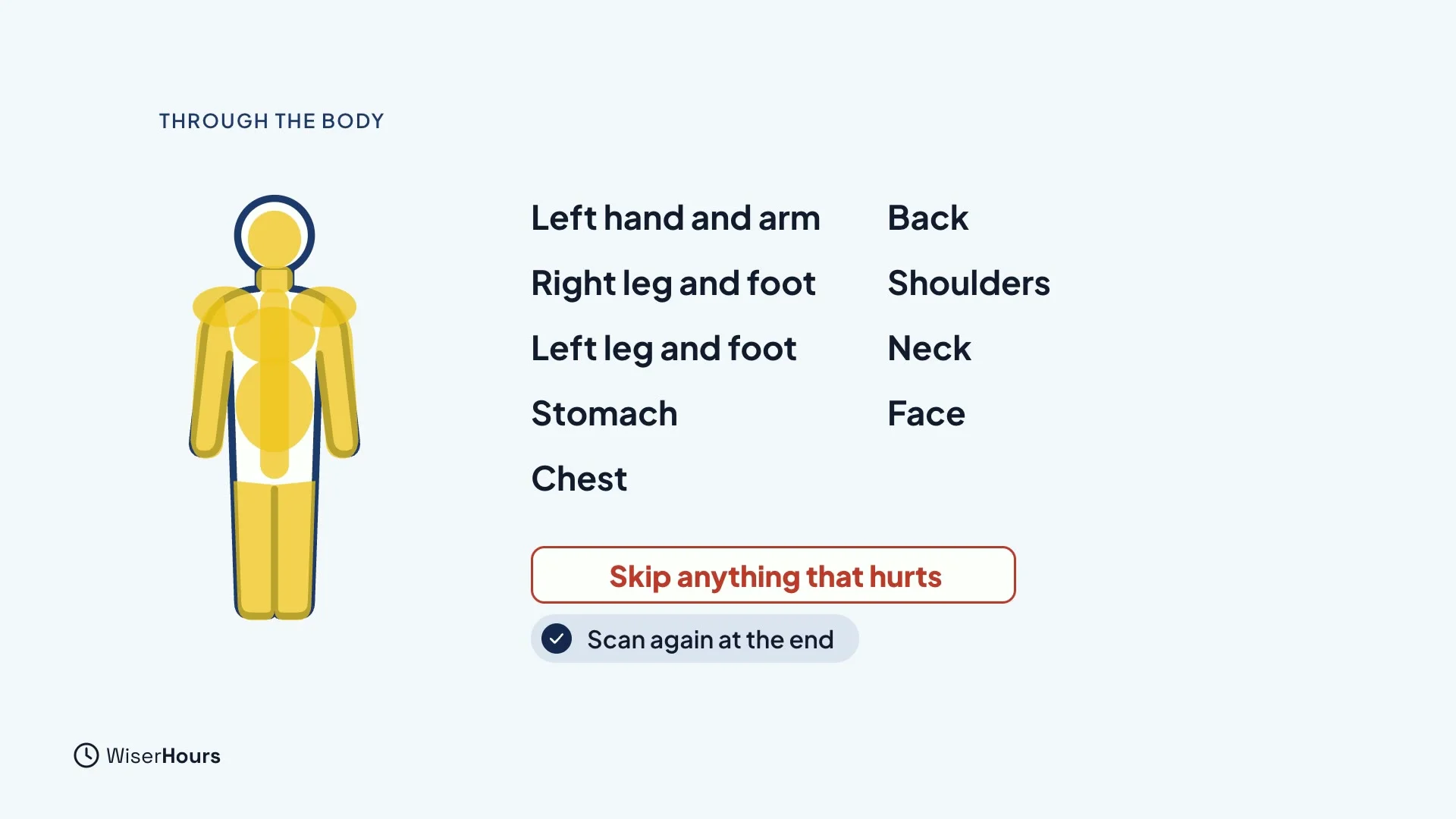
Then work through the body: your left hand and arm, your right leg and foot, your left leg and foot, your stomach, chest, back, shoulders, neck, and finally your face. At the end, scan your body again, and let go of any leftover tension as you breathe out.
Skip anything that hurts
Leave out any area that hurts or is injured.
 (opens the full-size picture)
Practise, then shorten
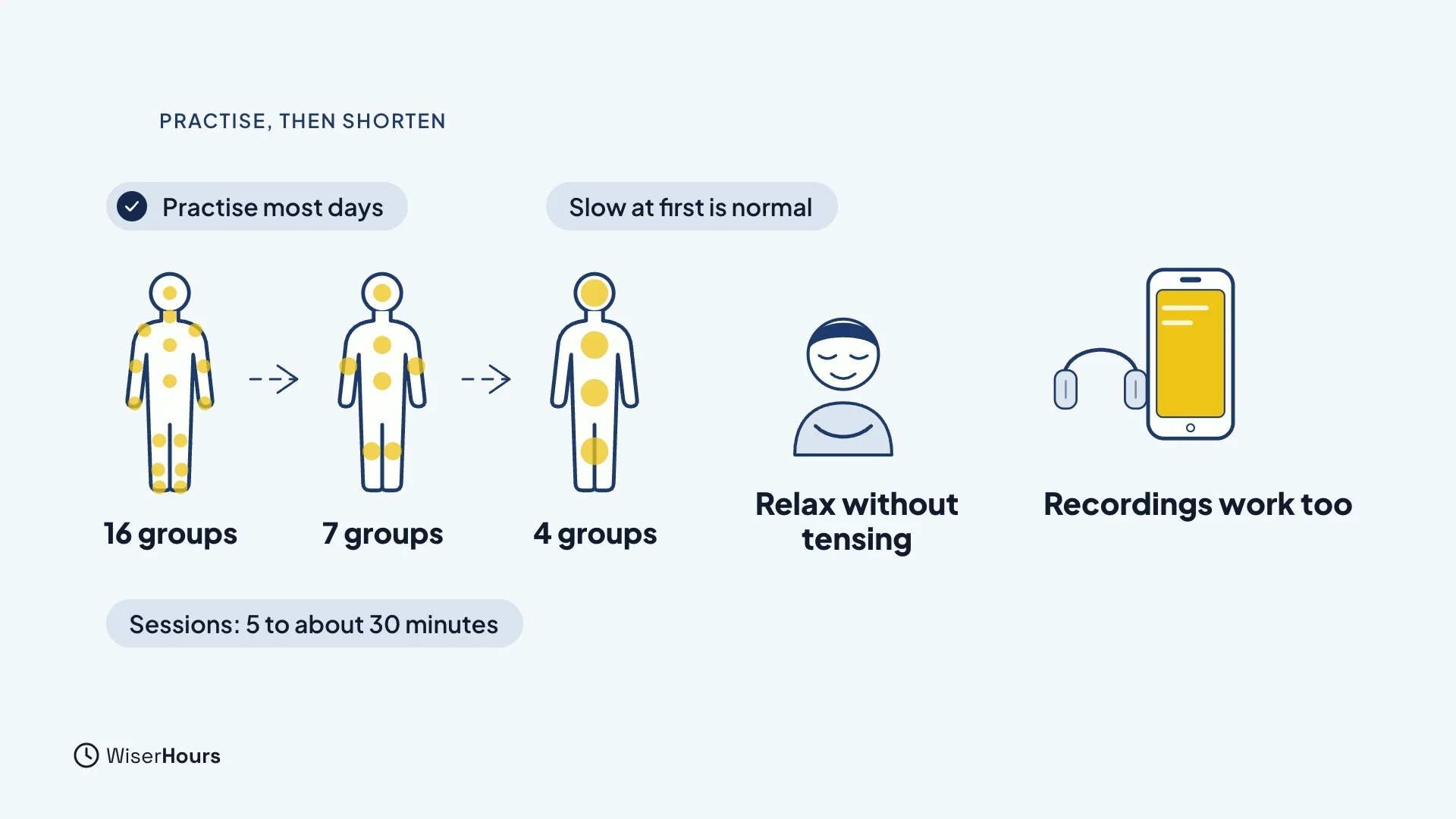
Practise most days. The first rounds can feel slow, and that is normal. Over the weeks, you can combine areas, going from many muscle groups down to a few, until you can relax without tensing first. Sessions in studies lasted from five to about thirty minutes, and recordings work well too.
 (opens the full-size picture)
Evidence and care
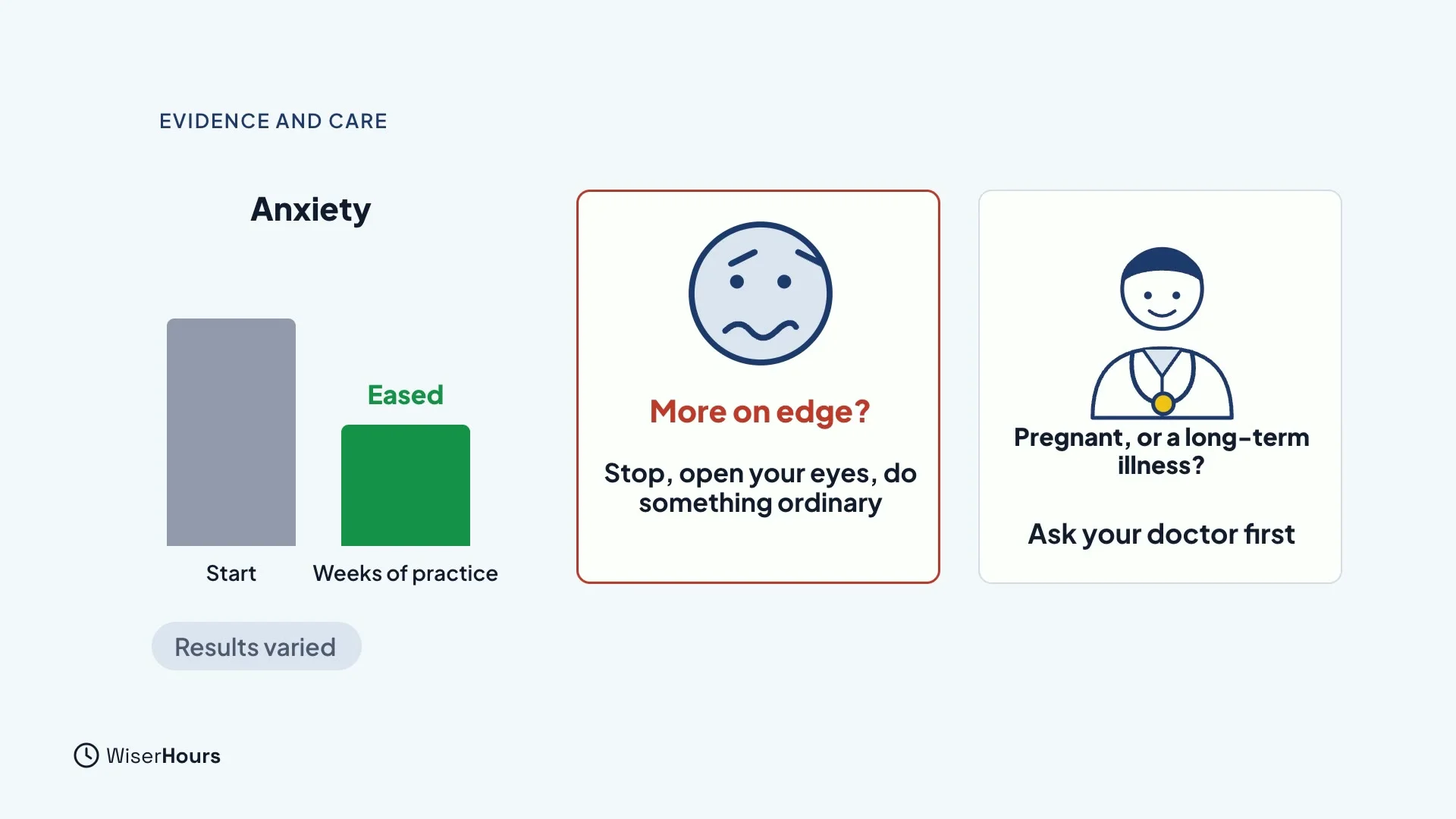
In studies, courses of practice, not a single round, eased anxiety, though the results varied. The method is generally safe, but if a round leaves you more on edge, stop, open your eyes and do something ordinary. If you are pregnant, or have a heart condition or other long-term illness, ask your doctor first.
 (opens the full-size picture)
YOUR TURN
Read more
- Progressive Muscle Relaxation for Beginners: A Guided Walkthrough: the full routine area by area, the evidence and who should take care.
Read the full lesson script
In this lesson, you'll learn progressive muscle relaxation: a simple way to notice tension in your body and let it go, one area at a time.
The idea is simple. You tense one group of muscles for a few seconds, then release it all at once, and notice the difference. Then you move to the next area. Over time, the skill is spotting tension early, and dropping it.
Find somewhere quiet and comfortable. Lie on your back, with a pillow under your knees if your lower back is sore, or sit in a supportive chair. Close your eyes if that feels okay.
Start with your right hand and arm. As you breathe in, make a fist and brace your forearm, firmly but without strain, for a few seconds. As you breathe out, let it go all at once. Then stay with that area for a moment, and notice how it feels.
Then work through the body: your left hand and arm, your right leg and foot, your left leg and foot, your stomach, chest, back, shoulders, neck, and finally your face. Skip any area that hurts or is injured. At the end, scan your body again, and let go of any leftover tension as you breathe out.
Practise most days. The first rounds can feel slow, and that's normal. Over the weeks, you can combine areas, going from many muscle groups down to a few, until you can relax without tensing first. Sessions in studies lasted from five to about thirty minutes, and recordings work well too.
In studies, courses of practice, not a single round, eased anxiety, though the results varied. It's generally safe, but if a round leaves you more on edge, stop, open your eyes, and do something ordinary. If you're pregnant, or have a heart condition or other long-term illness, ask your doctor first.
So remember: tense, release, and notice. Skip anything that hurts. And practise most days, then shorten the round. Before the next lesson, do one full round tonight, lying down or in a chair. Next, you'll learn what burnout is, and what it isn't.
MAKE IT A SMALL WIN
Finished this lesson?
Mark it complete to save your progress on this device.