Get comfortable · Lesson 1 of 16
What Is ChatGPT? A Simple Explanation
What ChatGPT is, how it writes an answer one word at a time, what it does well, and why you should still double-check what it tells you.
English captions available in the player. Prefer reading? Follow the written lesson below.
Everyone is talking about ChatGPT, but it is not always clear what it is. This lesson explains three things in plain words: what ChatGPT is, how it writes its answers, and when you can trust it. There is nothing to click yet. Most pictures are simple drawings from the video, and the two in the birthday example show a real chat in ChatGPT.
What ChatGPT is
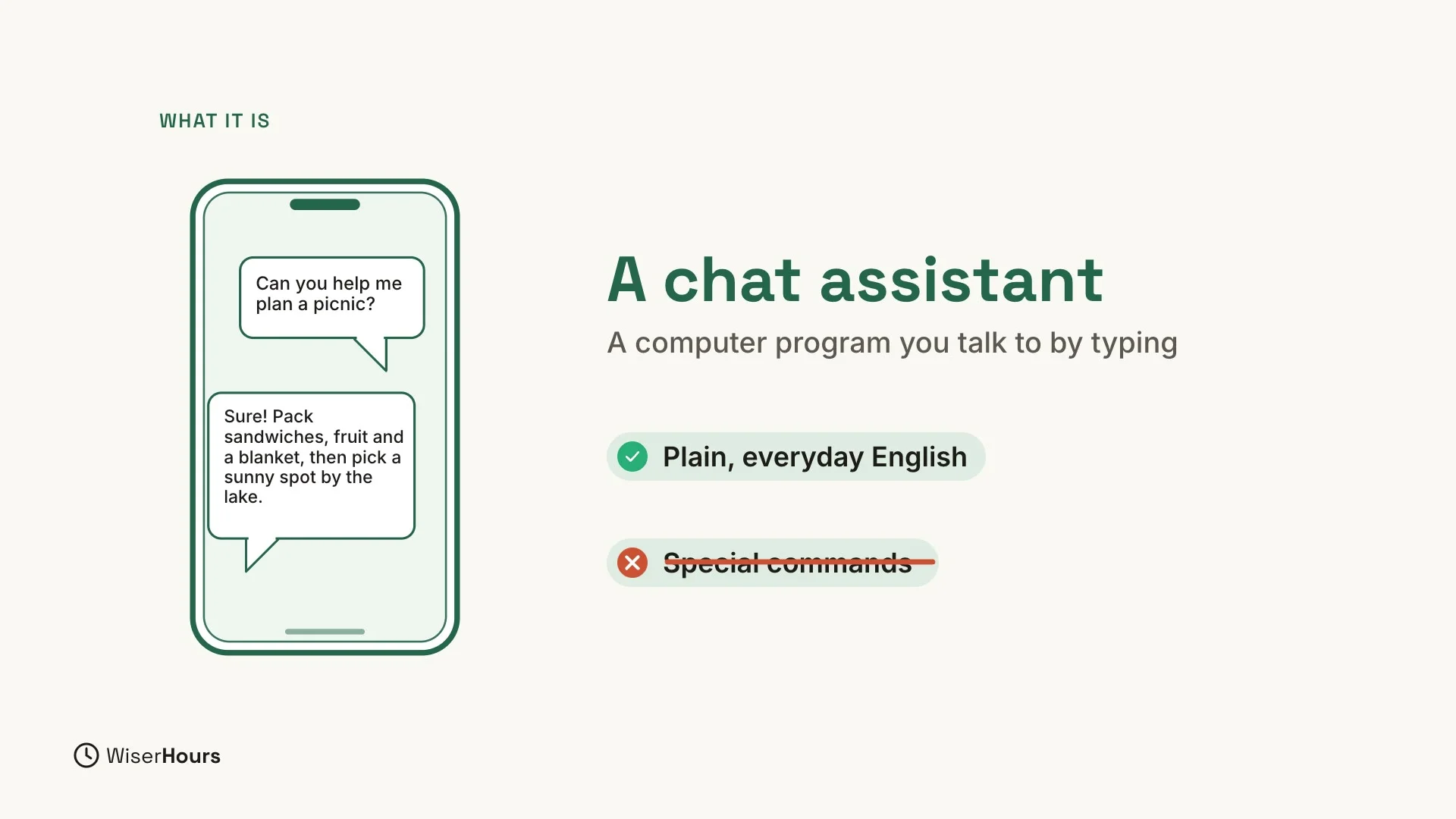
ChatGPT is a chat assistant. It is a computer program you talk to by typing, just like sending a message to a friend. You write in plain, everyday English. There are no special commands to learn. You just ask, and it writes a reply.
 (opens the full-size picture)
You may also hear this kind of program called a chatbotchatbot: A program that holds a conversation in everyday language, replying to what a user types or says. Most of today's AI chatbots run on large language models, which can give fluent, confident answers that are partly or wholly wrong.Full entry in the glossary. Because it creates new text when you ask, ChatGPT is also a kind of generative AIgenerative AI: AI systems that produce new text, images, audio or code in response to a request, by generating output that resembles the data they were trained on. Chatbots built on large language models are the best-known kind.Full entry in the glossary.
An example: a birthday message
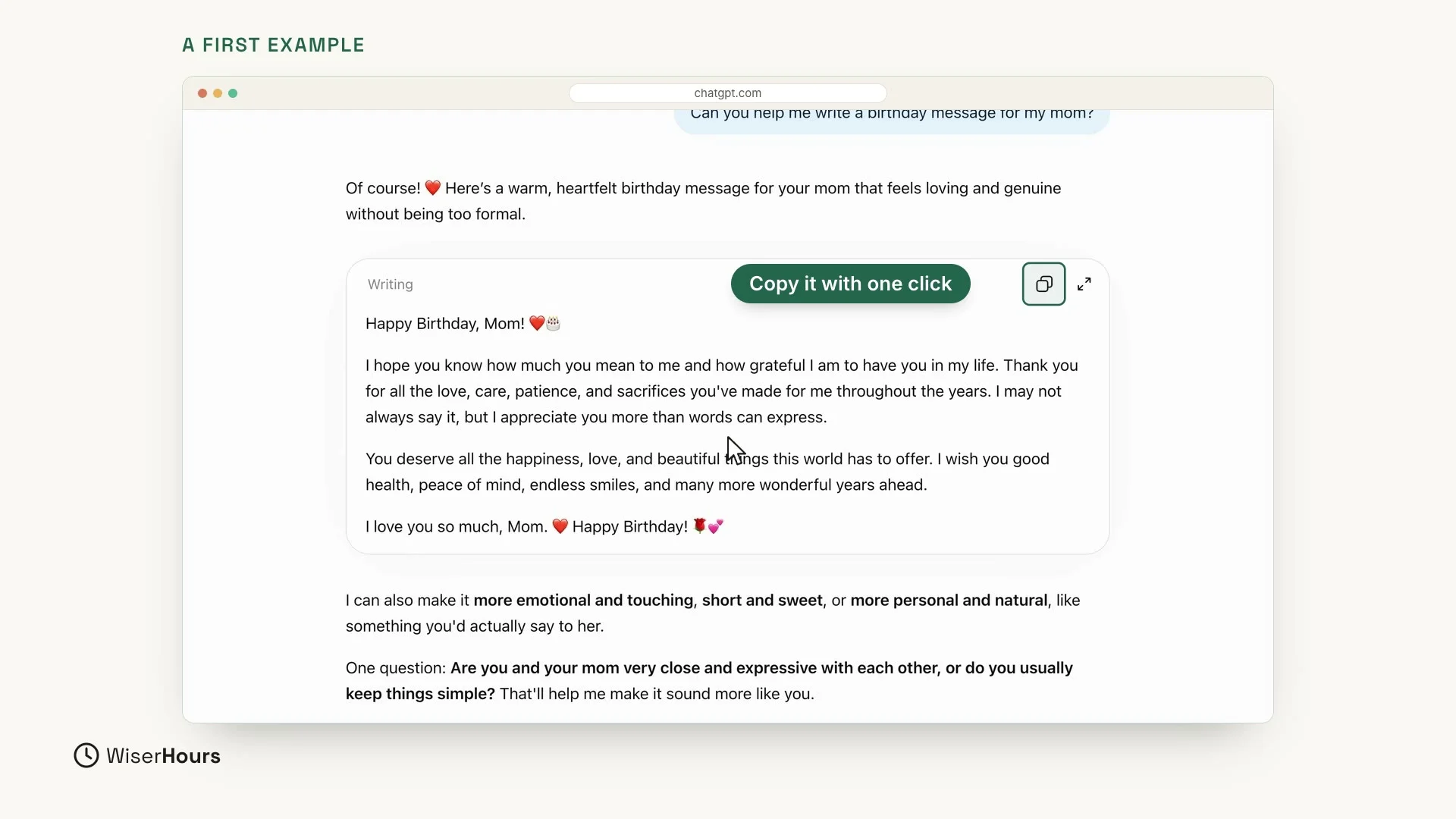
Say you want help with a birthday message. You type:
A few seconds later, a warm, friendly message appears. Here, ChatGPT puts the message in its own box, with a copy button at the top right. You can copy it, change it, or use it as it is.
 (opens the full-size picture)
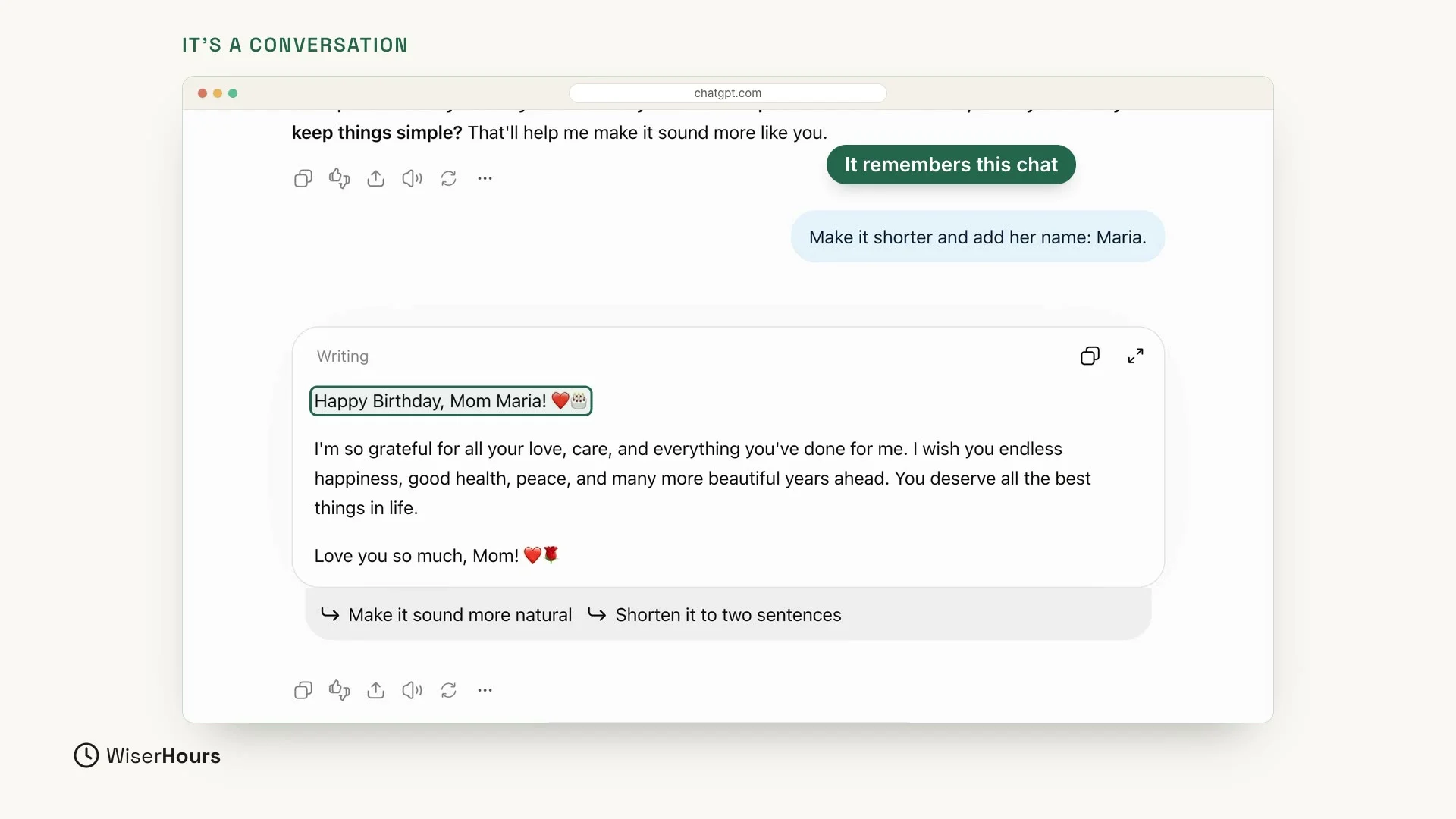
And it is a conversation. If the answer is not quite right, just say so: make it shorter, make it funnier, or add her name. In the video, the follow-up is:
ChatGPT remembers what you said earlier in the same chat, and it changes the answer. The new message is shorter and opens with “Happy Birthday, Mom Maria!”
 (opens the full-size picture)
Under the new message, ChatGPT suggests more changes you could ask for, such as “Make it sound more natural” or “Shorten it to two sentences”.
How it writes: one word at a time
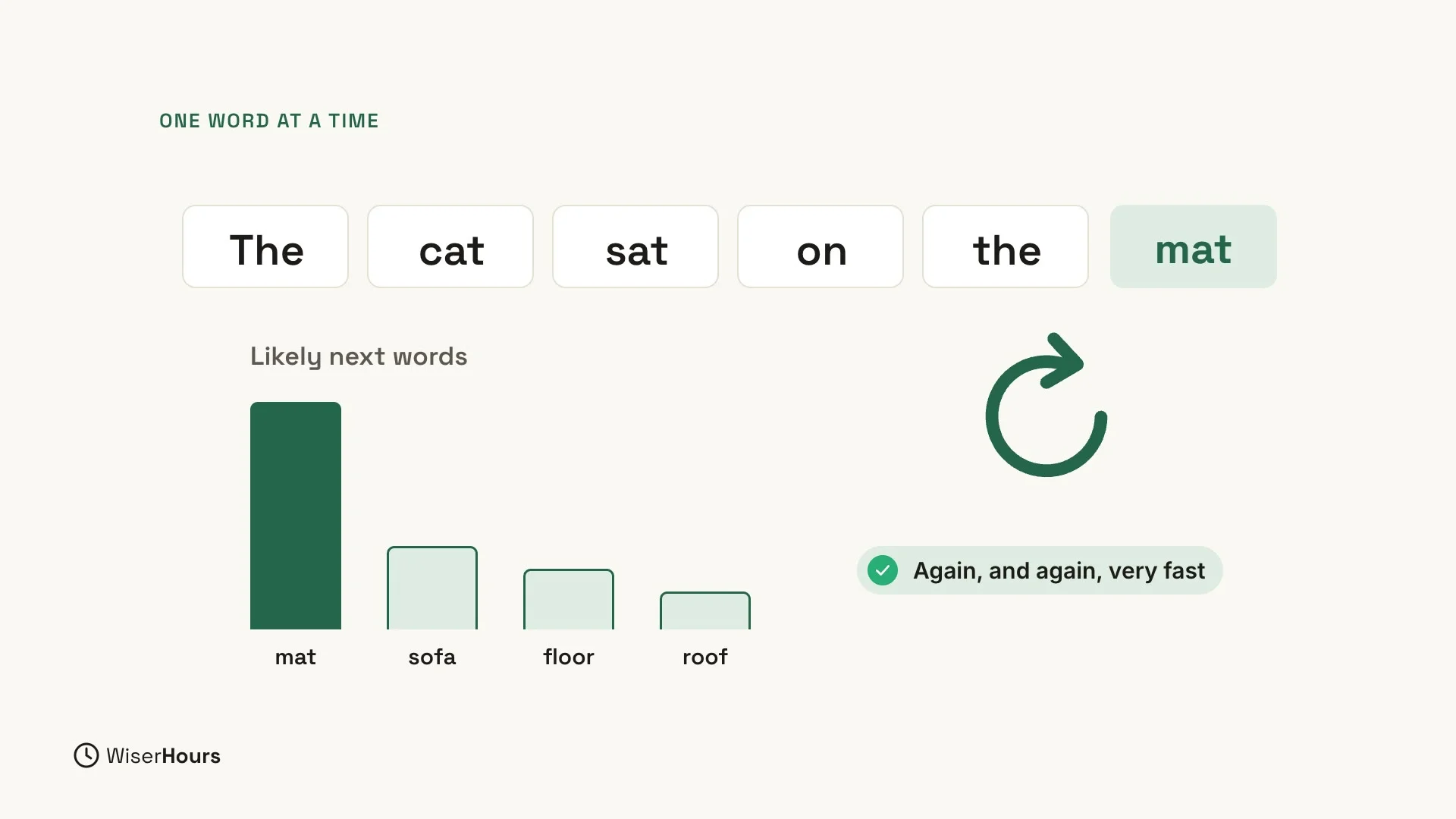
So how does ChatGPT write its answers? One word at a time. It looks at everything written so far and picks a likely next word. Then it does it again, and again, very fast.
Try it yourself. Finish this sentence: The cat sat on the… If “mat” came to mind, you just picked a likely next word. Sofa, floor or roof could fit too, but they are less likely.
 (opens the full-size picture)
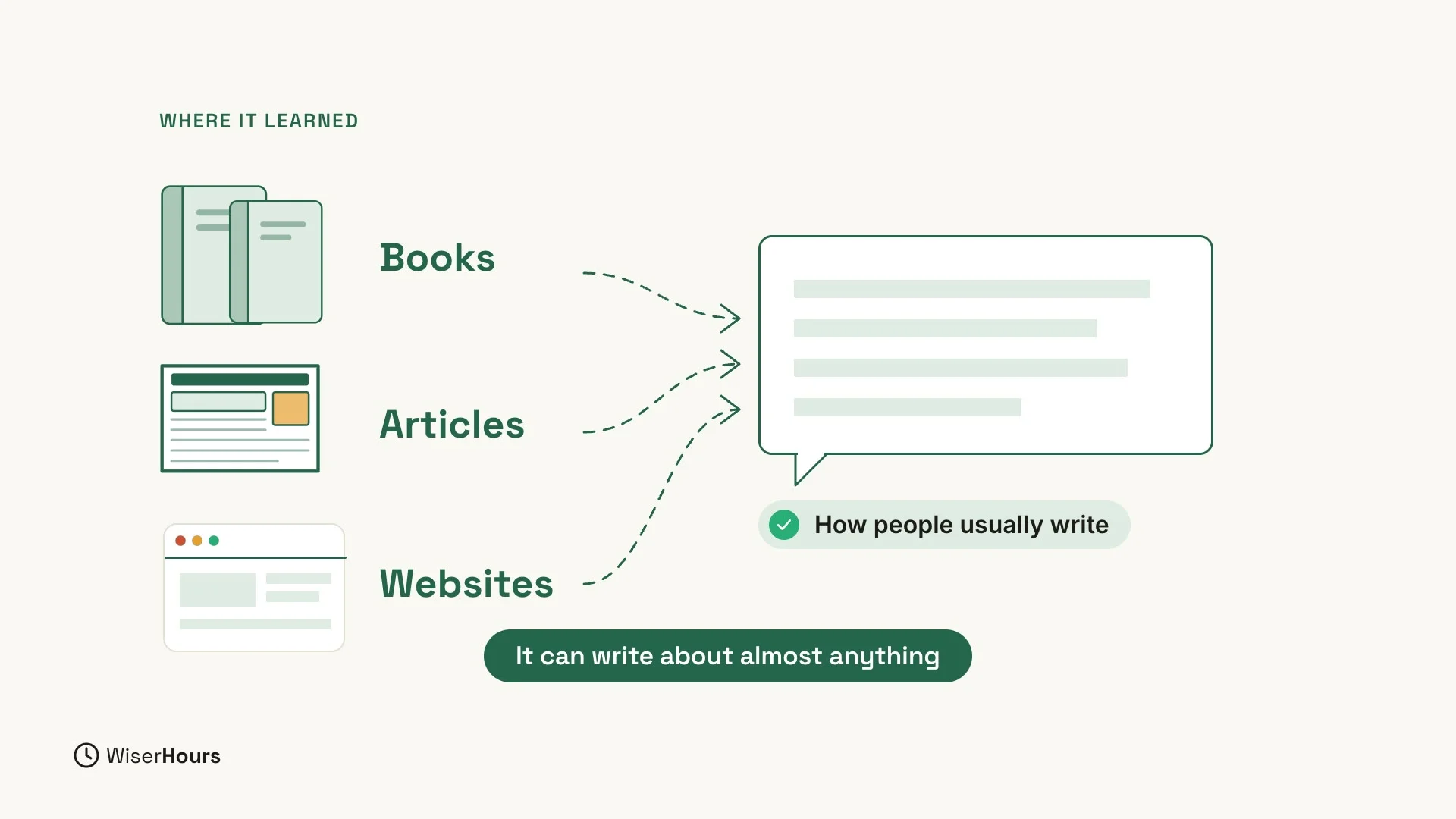
How does it know which word is likely? It learned from a huge amount of text: books, articles and websites. By reading all of that, it learned how people usually write. That’s why it can write about almost anything.
 (opens the full-size picture)
What it is great at: word work
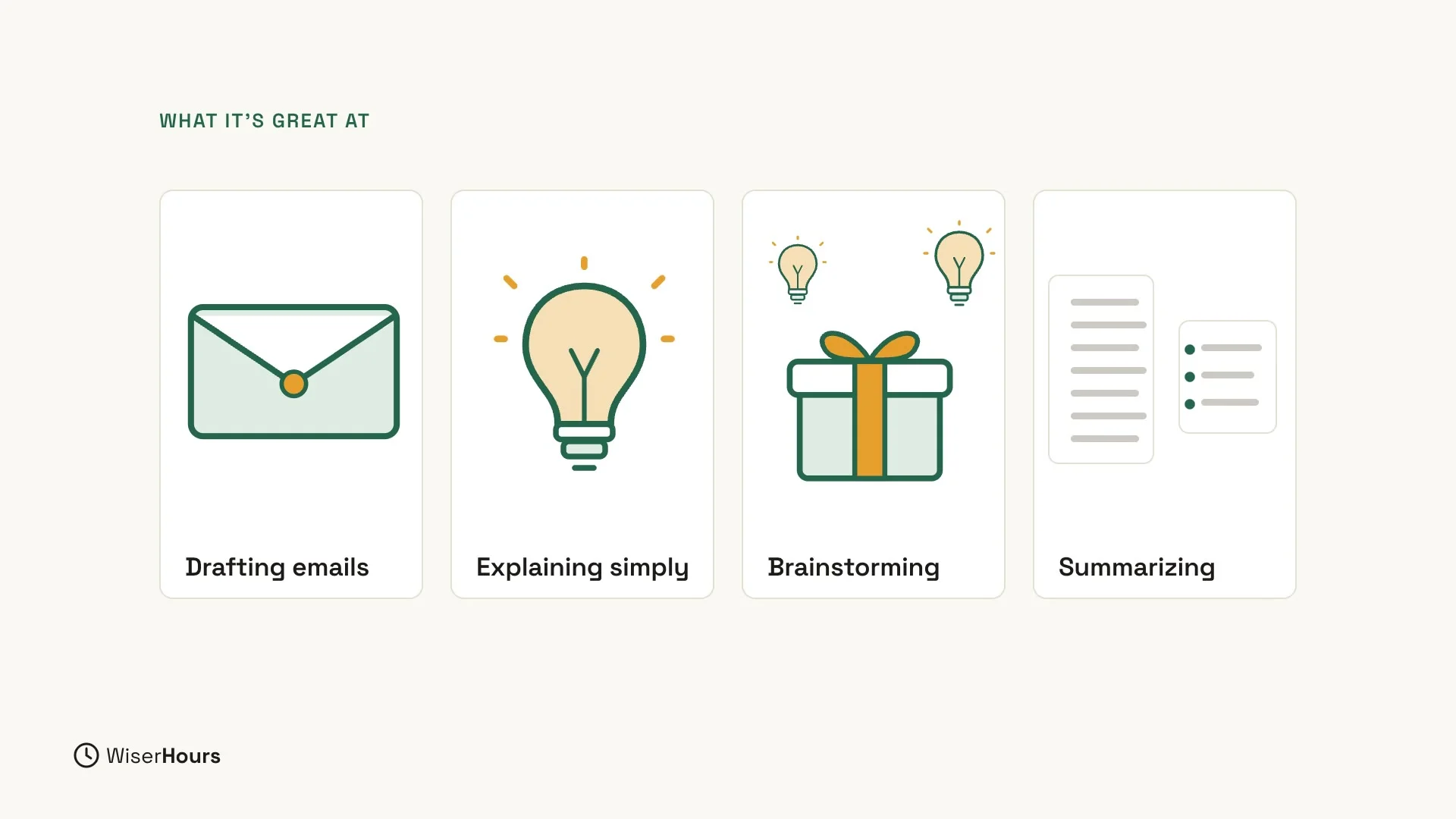
This makes ChatGPT great at word work:
- Drafting emails and messages.
- Explaining hard things in simple words.
- Brainstorming ideas, like gift ideas or names for a project.
- Summarizing long text into a few short points.
 (opens the full-size picture)
The catch: it can sound sure and be wrong
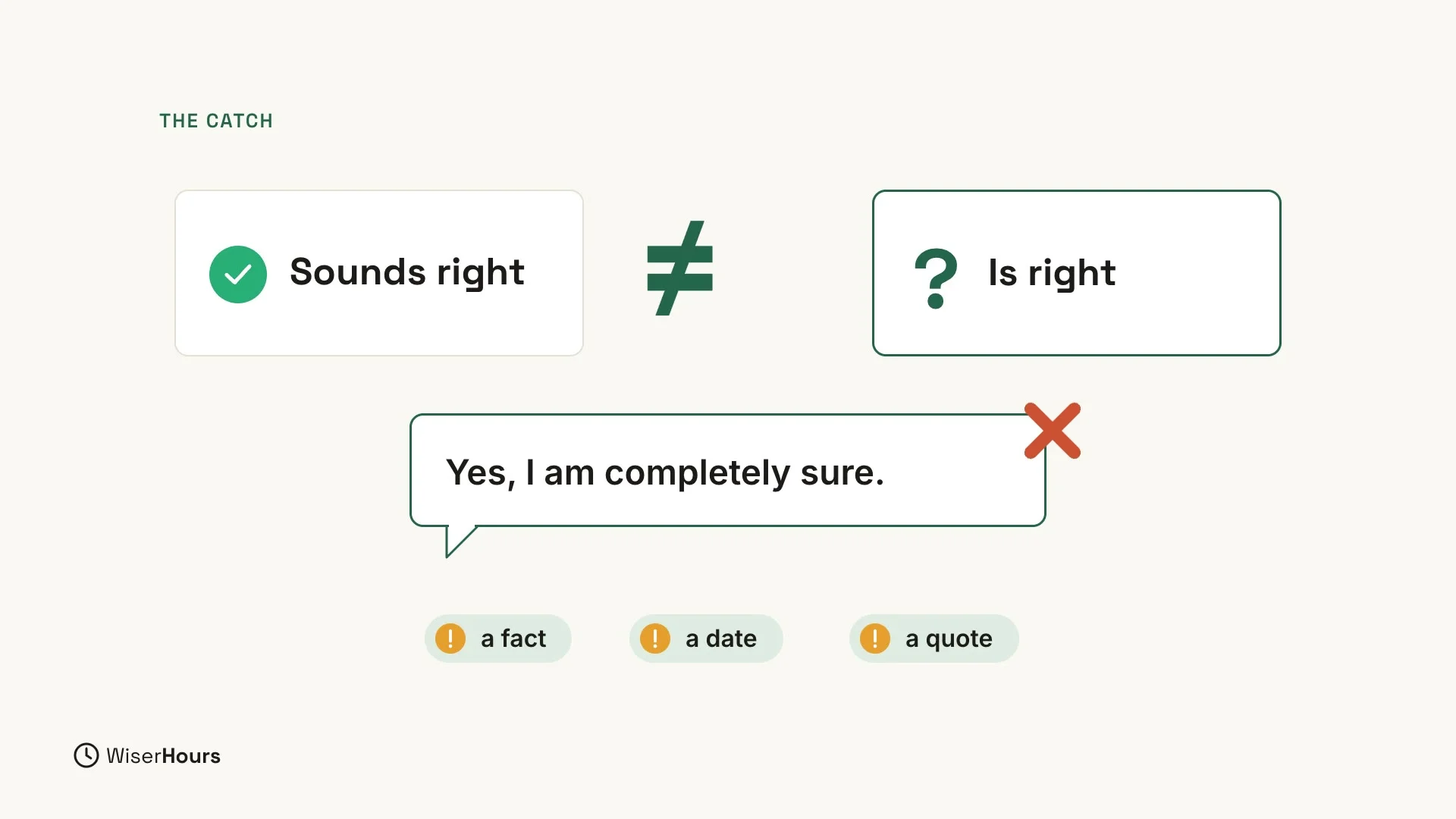
But here’s the catch. ChatGPT is built to write words that sound right. That is not the same as being right. It can sound very sure, and still be wrong. It can even make up a fact, a date or a quote.
 (opens the full-size picture)
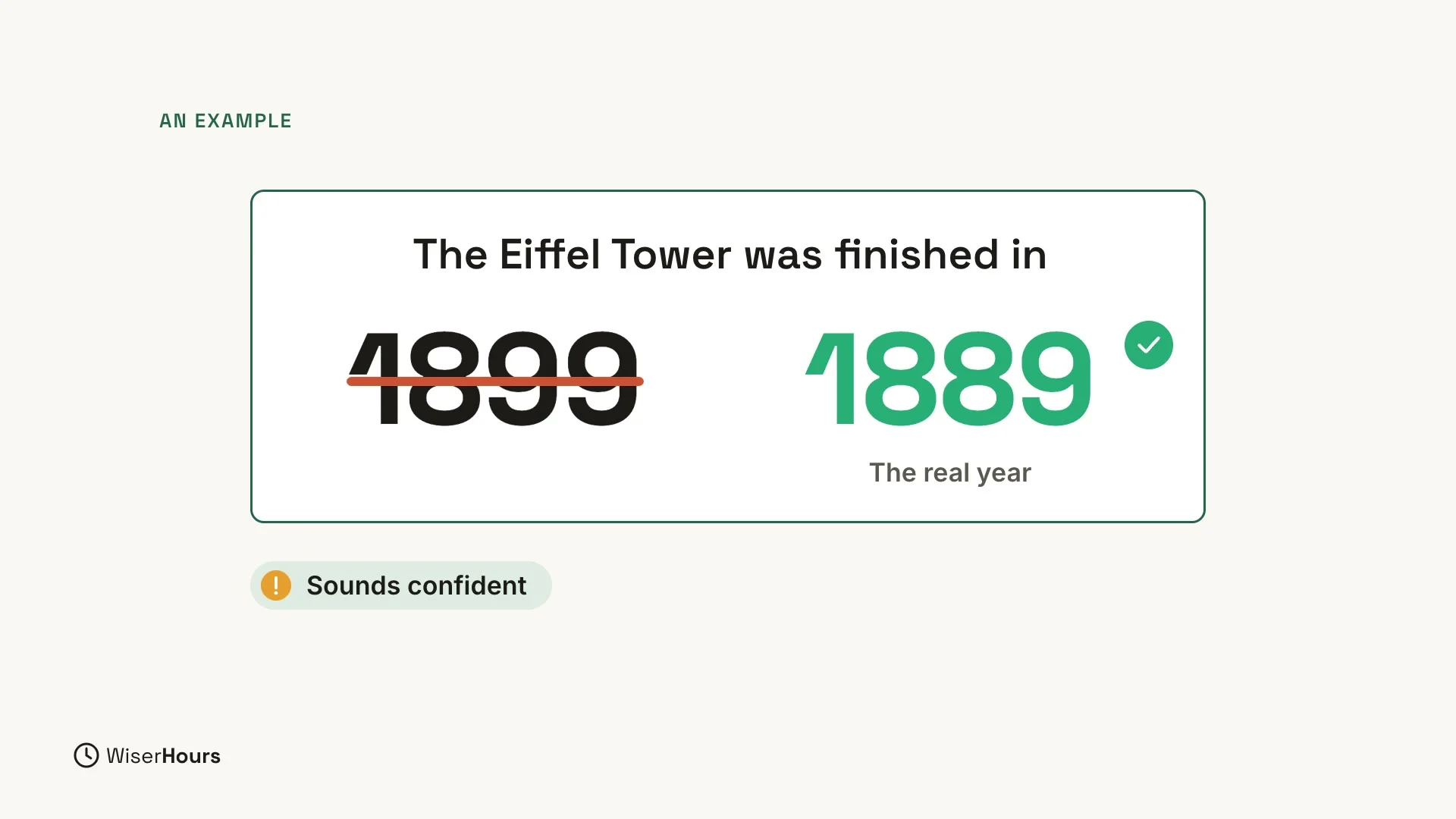
For example, it might tell you the Eiffel Tower was finished in 1899. It sounds confident. But the real year is 1889.
 (opens the full-size picture)
Two simple habits
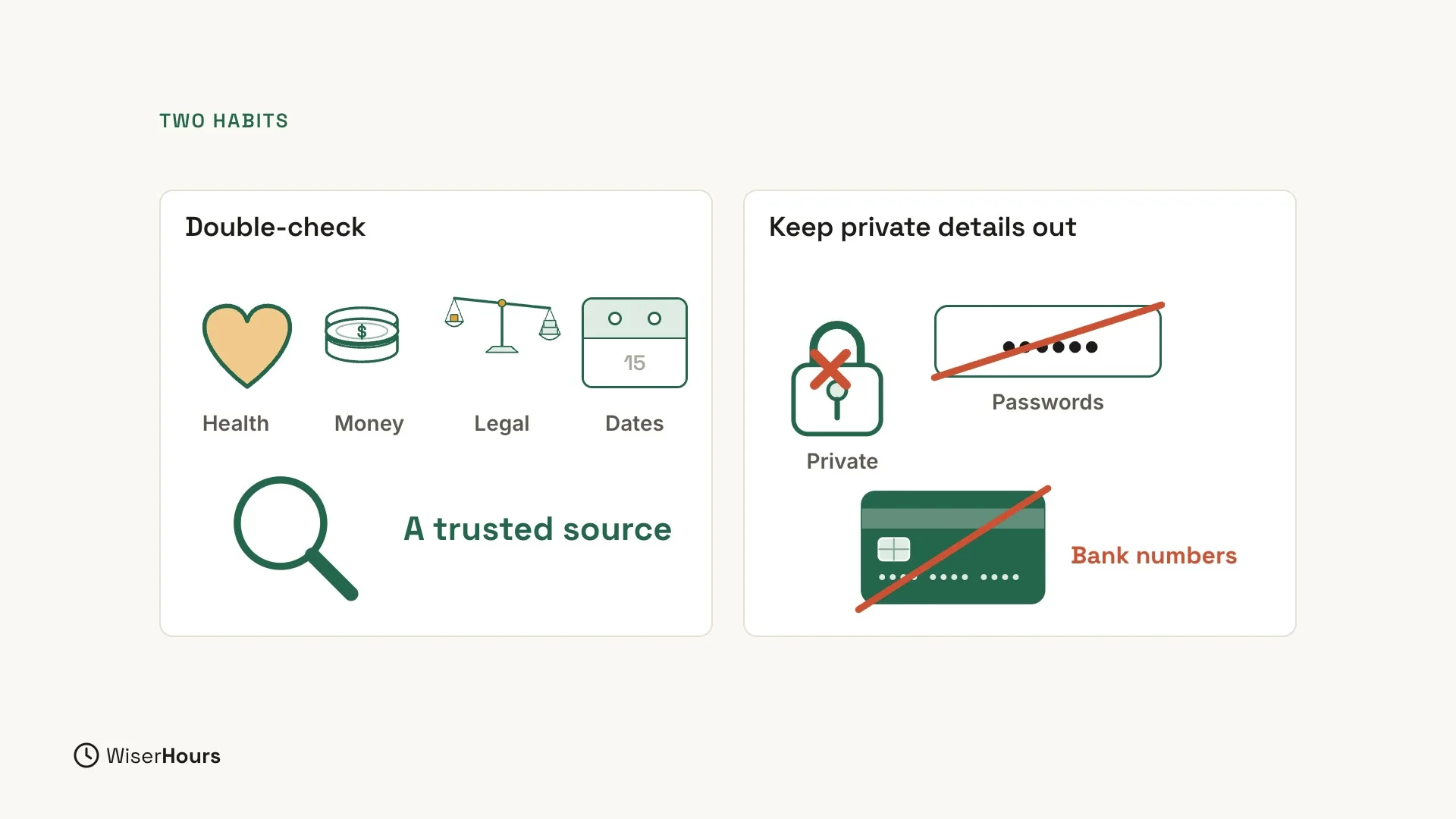
So build two simple habits:
- Double-check. For health, money, legal questions and important dates, always check what it tells you with a trusted source.
- Keep private details out. Don’t type private details, like passwords or bank numbers, into the chat.
 (opens the full-size picture)
For a closer look at what AI assistants do well and where they go wrong, read AI assistants for beginners.
In short
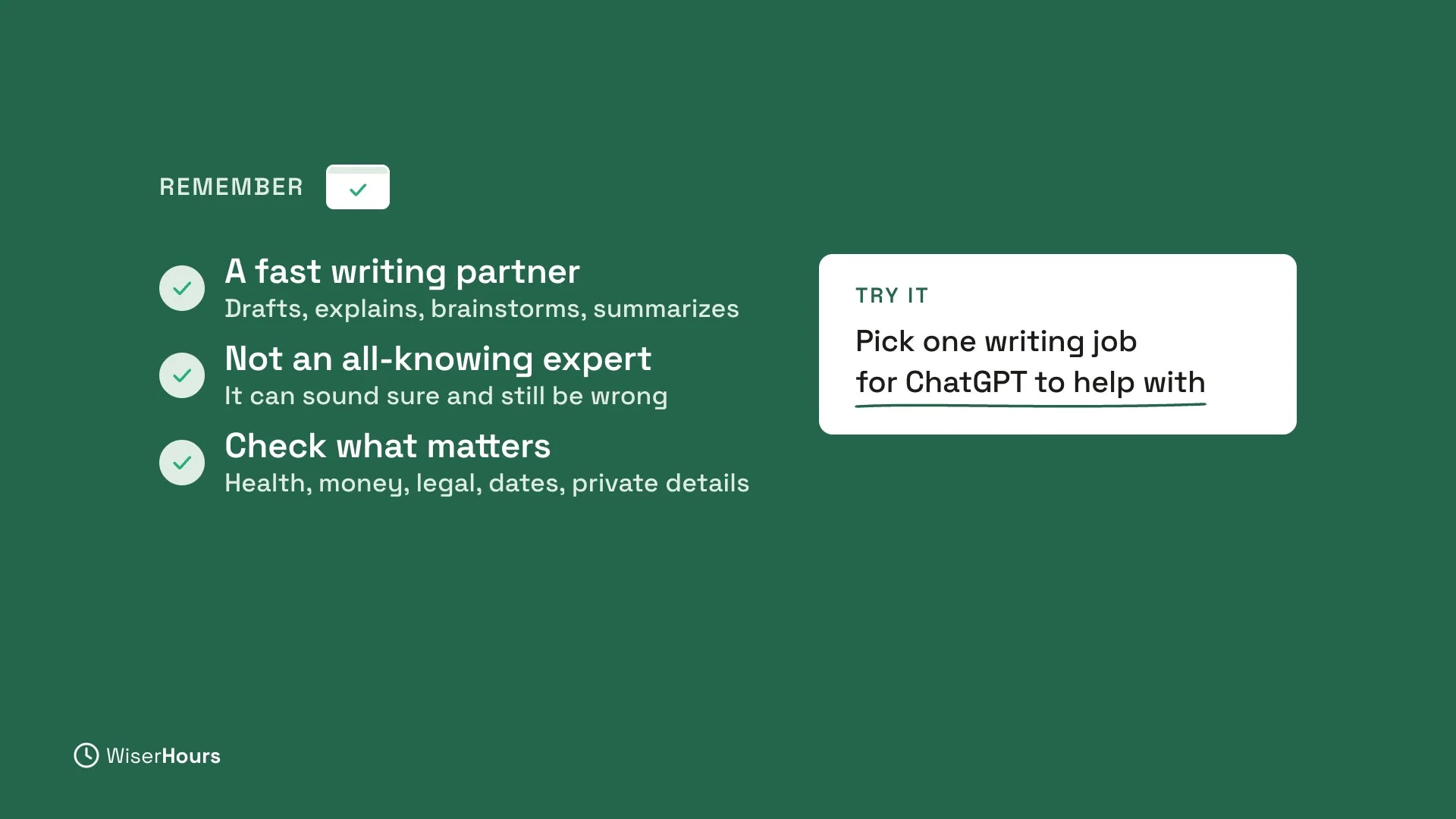
ChatGPT drafts, explains, brainstorms and summarizes. It can sound sure and still be wrong, so check health, money, legal questions and dates with a trusted source, and keep private details out of the chat.
 (opens the full-size picture)
Before the next lesson, think of one small writing job you could ask ChatGPT to help with.
YOUR TURN
In the next lesson, you will sign up and take a tour of the screen: How to sign up for ChatGPT and find your way around.
Read the full video transcript
Everyone is talking about ChatGPT. Maybe you've heard the name, but you're not sure what it really is. That's fine. In this lesson, you'll learn three things. What ChatGPT is. How it writes its answers. And when you can trust it.
ChatGPT is a chat assistant. It's a computer program you talk to by typing, just like sending a message to a friend. You write in plain, everyday English. There are no special commands to learn. You just ask, and it writes a reply.
Here's an example. You type: Can you help me write a birthday message for my mom? A few seconds later, a warm, friendly message appears. You can copy it, change it, or use it as it is.
And it's a conversation. If the answer isn't quite right, just say so. Make it shorter. Make it funnier. Add her name. ChatGPT remembers what you said earlier in the same chat, and it changes the answer.
So how does it write? One word at a time. It looks at everything written so far, and picks a likely next word. Then it does it again, and again, very fast. Try it yourself. The cat sat on the... mat.
How does it know which word is likely? It learned from a huge amount of text. Books. Articles. Websites. By reading all of that, it learned how people usually write. That's why it can write about almost anything.
This makes it great at word work. Drafting emails and messages. Explaining hard things in simple words. Brainstorming ideas, like gift ideas or names for a project. And summarizing long text into a few short points.
But here's the catch. ChatGPT is built to write words that sound right. That isn't the same as being right. It can sound very sure, and still be wrong. It can even make up a fact, a date, or a quote.
For example, it might tell you the Eiffel Tower was finished in eighteen ninety-nine. It sounds confident. But the real year is eighteen eighty-nine.
So build two simple habits. First, for health, money, legal questions, and important dates, always double-check with a trusted source. Second, don't type private details, like passwords or bank numbers, into the chat.
So think of ChatGPT as a fast, helpful writing partner. Not an all-knowing expert. You bring the question and the judgment. It brings the words. Before the next lesson, think of one small writing job you could ask it to help with. Next, you'll sign up and take a tour of the screen.
MAKE IT A SMALL WIN
Finished this lesson?
Mark it complete to save your progress on this device.