Put it to work · Lesson 9 of 16
Learn Anything With ChatGPT as Your Tutor
Ask ChatGPT to explain a topic at your level, then let it quiz you one question at a time. A real example: a solar eclipse for a 12-year-old.
English captions available in the player. Prefer reading? Follow the written lesson below.
In this lesson, ChatGPT becomes your patient tutor. You ask it to explain a topic at your level, then let it quiz you to test what you learned. The example is a simple one: what a solar eclipse is, explained for a twelve-year-old.
Say who it is for
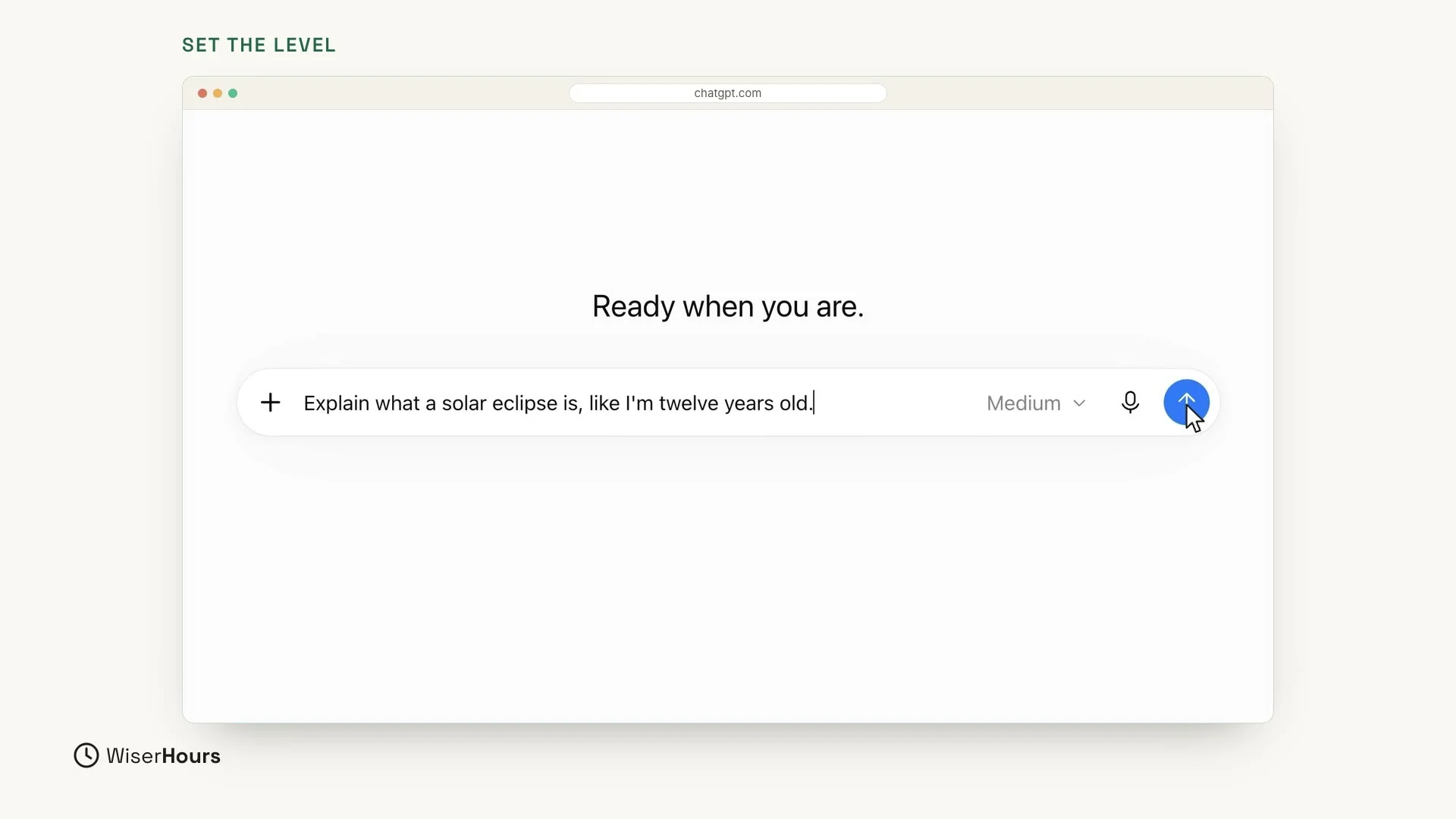
The trick is to say who the explanation is for. Type your question in the message box and add a few words about your level at the end:
Those last words, “like I’m twelve years old,” set the level. Then press Enter, or click the round blue arrow button on the right of the box.
 (opens the full-size picture)
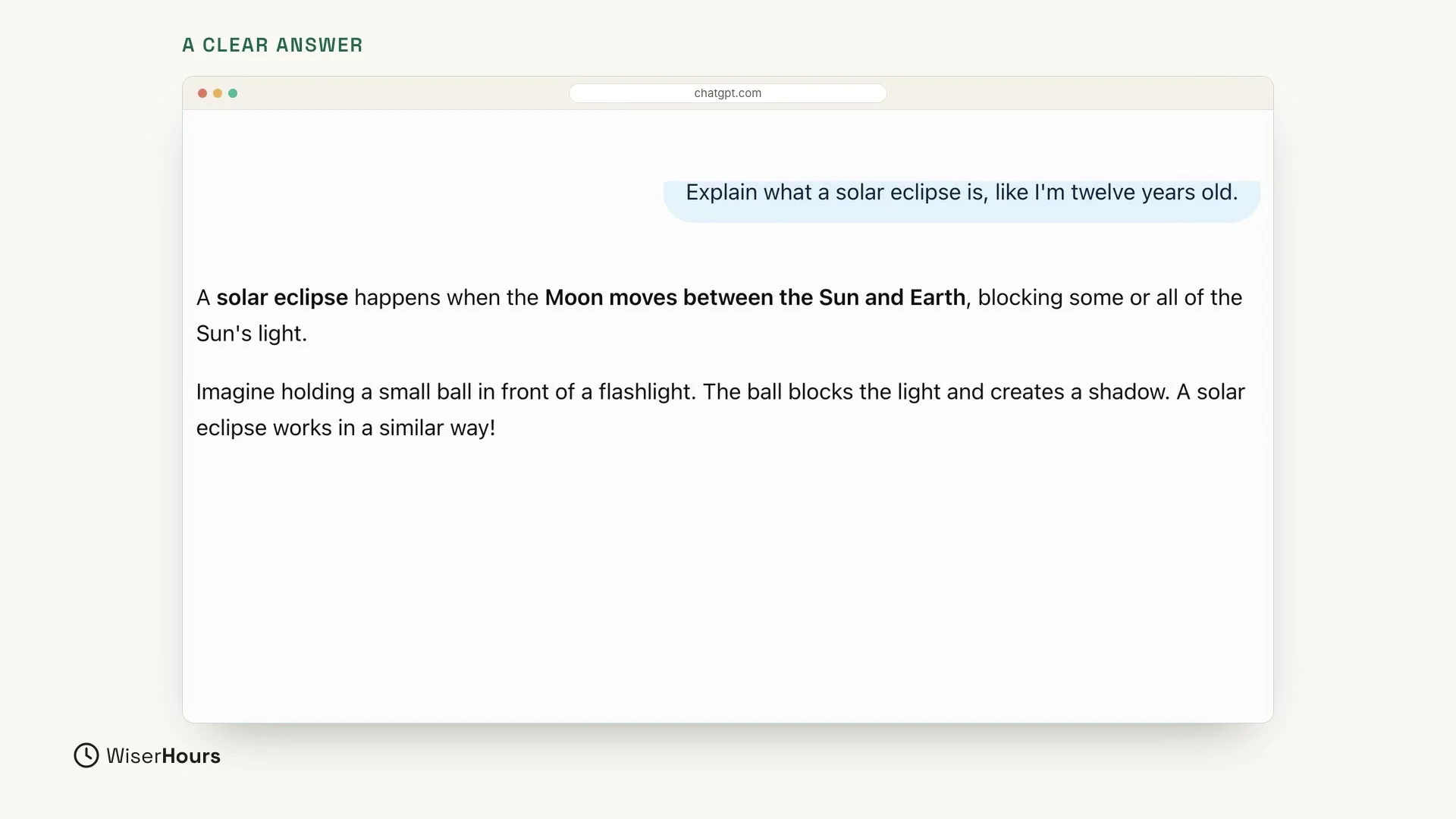
The answer is simple and clear. It starts with one plain sentence: a solar eclipse happens when the Moon moves between the Sun and Earth, blocking some or all of the Sun’s light. Then it gives you a picture you can imagine: hold a small ball in front of a flashlight (a torch), and the ball blocks the light and makes a shadow. A solar eclipse works in a similar way.
 (opens the full-size picture)
Pick any level
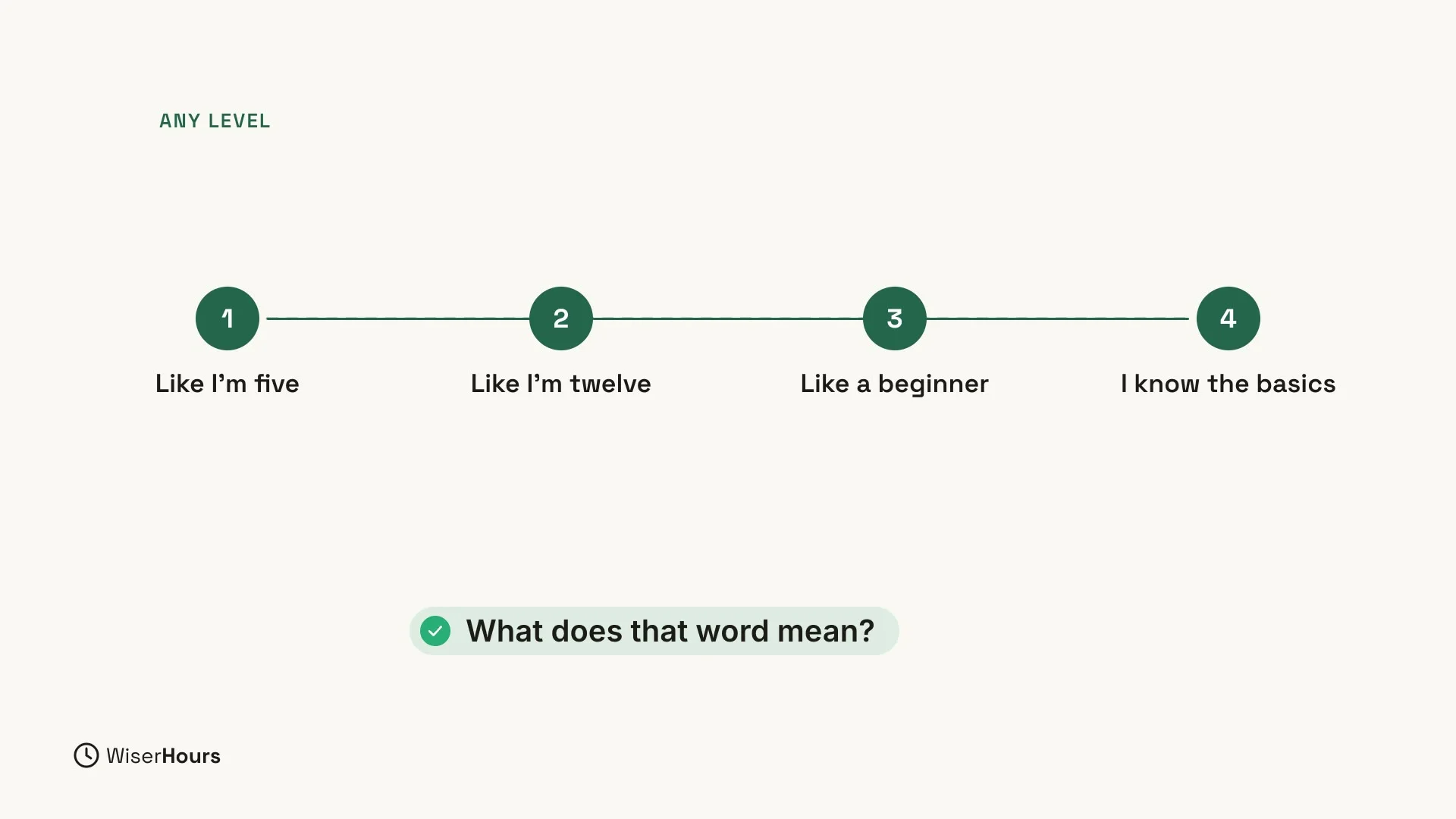
You can choose any level. Instead of “like I’m twelve years old,” end your question with “like I’m five,” “like I’m a beginner” or “I already know the basics.” Pick the one that fits you.
One tip: ask about new words
If a word in an answer is new to you, just ask: “What does that word mean?” In the quiz later in this lesson, that could be a word like “orbit”.
 (opens the full-size picture)
Let ChatGPT quiz you
Now the best part: ask ChatGPT to test you. Reply in the same chat, right under the answer:
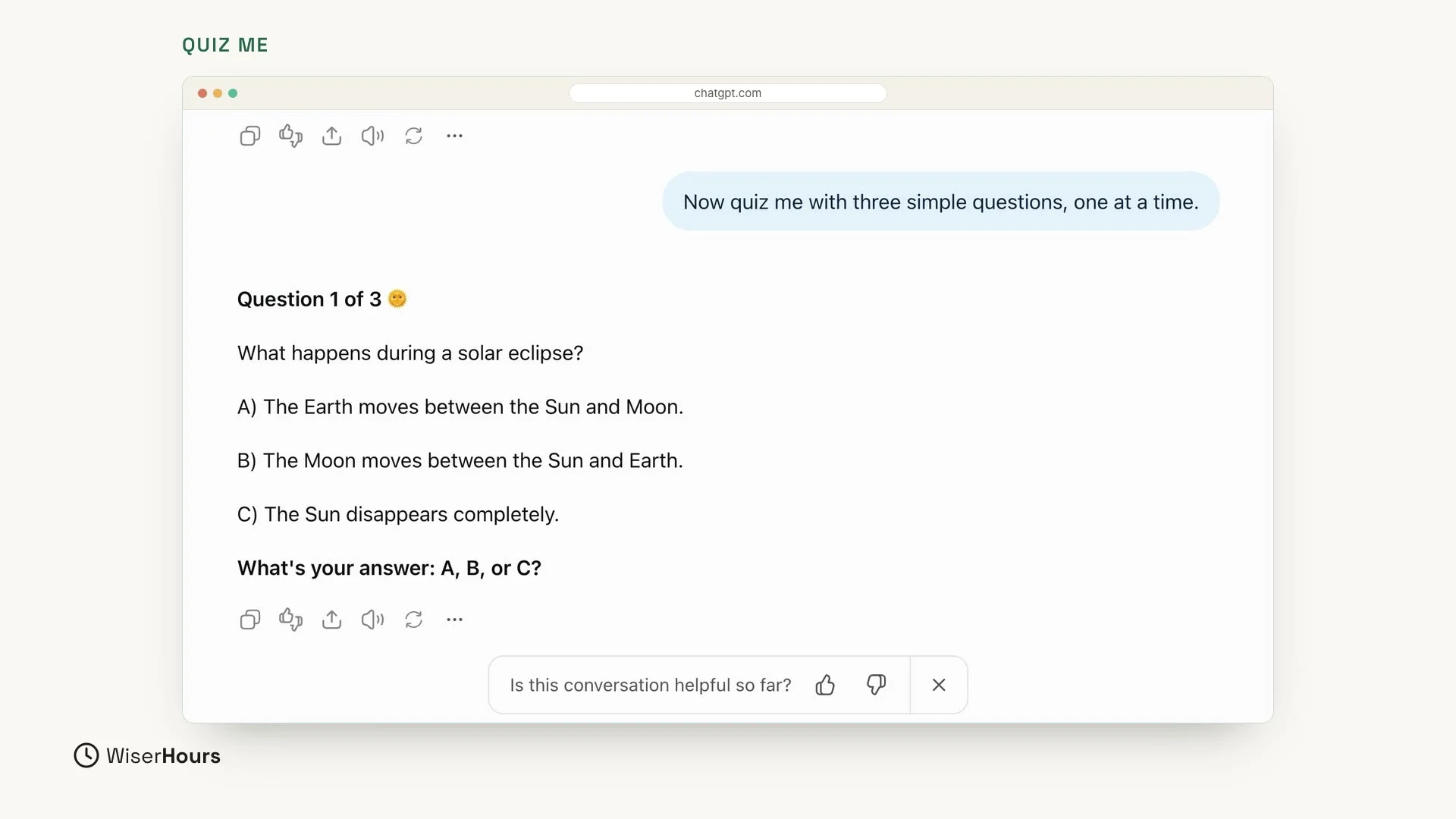
The first question appears, with three choices. It asks “What happens during a solar eclipse?” and offers A) The Earth moves between the Sun and Moon, B) The Moon moves between the Sun and Earth, and C) The Sun disappears completely. Because you asked for three questions, one at a time, ChatGPT marks it “Question 1 of 3” and waits for your answer. It remembers the earlier messages in the same chat, so its questions are about what it just explained.
 (opens the full-size picture)
A small bar may also appear at the bottom, asking “Is this conversation helpful so far?” You can ignore it, or close it with the X.
Answering questions yourself, instead of only reading, keeps you doing the thinking, and the article Is AI making us think less? explains why that matters.
Get friendly feedback
To answer, type the letter of your choice in the message box and send it, like any other reply. In the example, the first answer is B. ChatGPT replies “Correct!”, repeats why (the Moon moves between the Sun and Earth, blocking the Sun’s light) and asks the second question: “What happens during a total solar eclipse?”
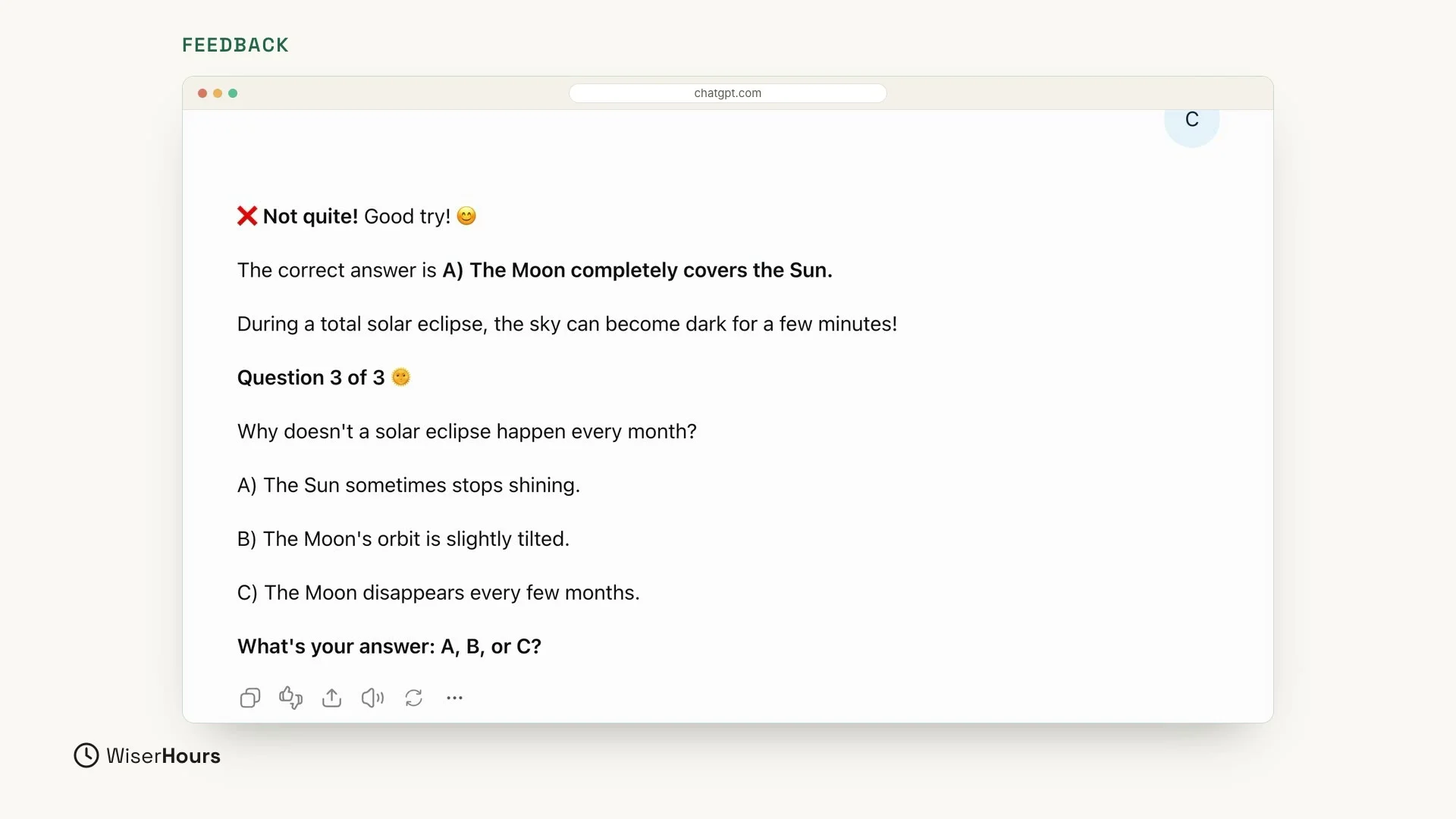
This time, the answer is wrong: C, “The Earth stops spinning.” ChatGPT does not just say it is wrong. It starts with “Not quite! Good try!”, gently explains the right answer (A, the Moon completely covers the Sun, and the sky can become dark for a few minutes), and moves on to the third question: “Why doesn’t a solar eclipse happen every month?”
 (opens the full-size picture)
Three tips for learning
Whatever topic you pick, keep these three habits:
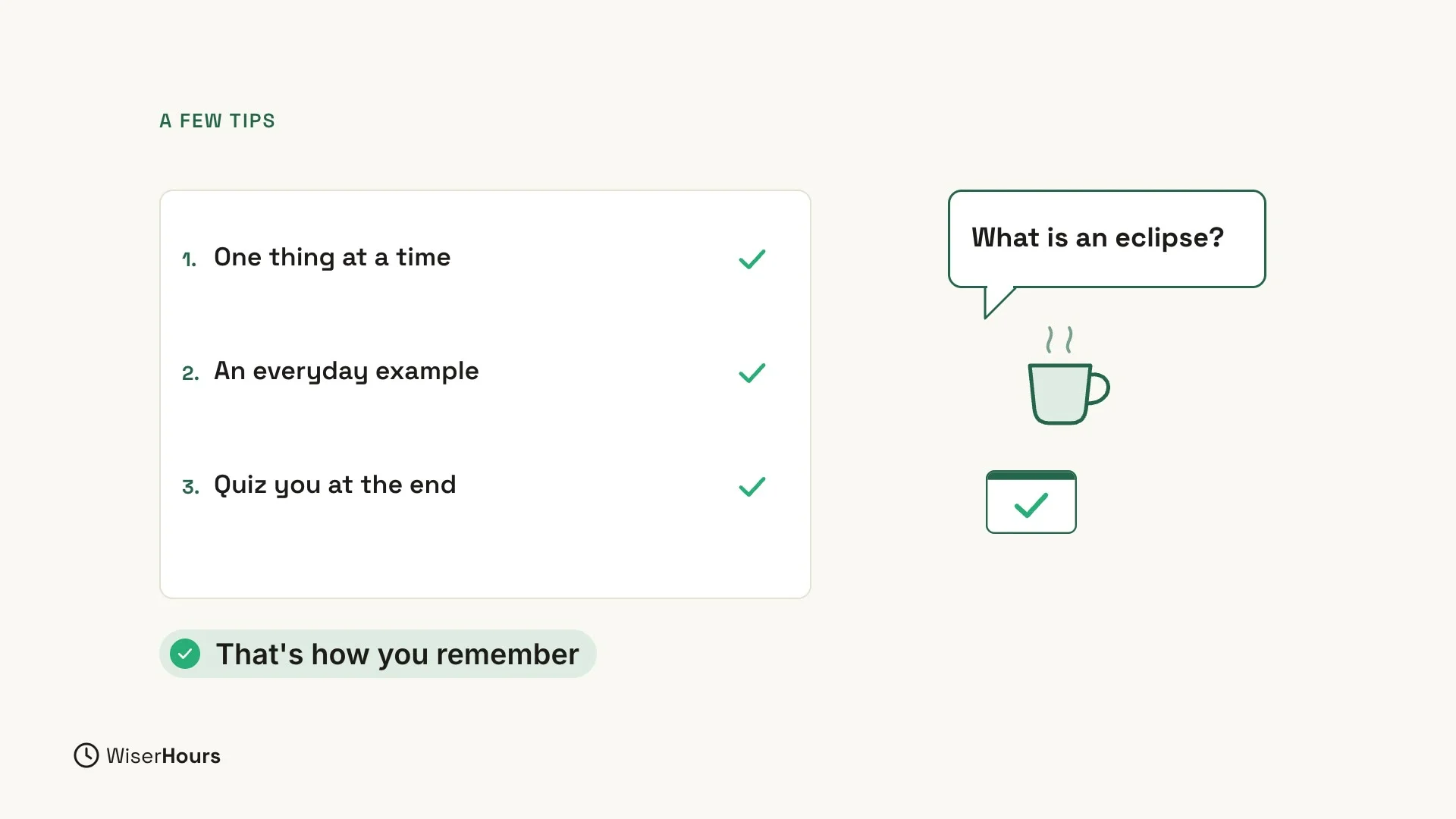
- Ask one thing at a time.
- Ask for an example from daily life, like the ball and the flashlight in the eclipse answer.
- Ask ChatGPT to quiz you at the end. That is how you remember.
 (opens the full-size picture)
YOUR TURN
In the next lesson, ChatGPT helps you plan trips, meals, and more: Plan trips and meals with ChatGPT.
Read the full video transcript
In this lesson, ChatGPT becomes your patient tutor. You can ask it to explain anything at your level, and then test what you learned.
The trick is to say who it's for. Explain what a solar eclipse is, like I'm twelve years old. Those last words set the level.
The answer is simple and clear. The Moon moves between the Earth and the Sun and blocks its light. It even uses a picture you can imagine: a small ball held in front of a flashlight.
You can choose any level. Like I'm five. Like I'm a beginner. Or: I already know the basics. And if a word is new, just ask: what does that word mean?
Now the best part. Ask it to test you. Now quiz me with three simple questions, one at a time. And the first question appears, with three choices.
I answer B. Correct! Then comes a second question. This time, I pick the wrong answer. ChatGPT gently explains the right one, and moves on to the next question.
A few tips for learning. Ask one thing at a time. Ask for an example from daily life. And ask it to quiz you at the end. That's how you remember.
So remember: set your level, ask for examples, and let it quiz you. Before the next lesson, pick one thing you've always wanted to understand, and ask ChatGPT to explain it and quiz you. Next, ChatGPT helps you plan trips, meals, and more.
MAKE IT A SMALL WIN
Finished this lesson?
Mark it complete to save your progress on this device.