Digital Safety & Privacy
Digital Safety for Beginners: The Habits That Protect You Most
Digital safety for beginners: 6 habits drawn from agencies in the UK, US, Australia and EU, from guarding your email first to backups and scam checks.

Digital safety for beginners: 6 habits drawn from agencies in the UK, US, Australia and EU, from guarding your email first to backups and scam checks.
AI for emotional support: 48 trials found modest gains from chatbots built for mental health, but everyday chatbots are barely tested. When to get help.
Shadow AI is AI used for work without approval. In IBM's 2025 study, 1 in 5 breached firms reported a shadow AI breach. Why it happens and what beats a ban.
The best time tracking apps compared for 3 jobs (seeing where your week goes, billing clients, team reports) and the rules on tracking staff.
How Gmail filters and Outlook rules work, why a few routing rules beat deep folder trees, and 5 steps to set them up and test them safely.
How to take notes from a book: a 2022 review of 36 articles found highlighting did little for understanding. Recall each chapter from memory instead.
The best note taking apps compared as 6 types, from phone notes to Markdown files: choose by how you capture, how you refind and how your notes can leave.
Ultrawide vs dual monitors: a review of 18 studies found people prefer two screens, but the evidence on speed is weaker and depends on the task.
The EU AI Act sorts AI into 4 risk tiers. What it bans, why hiring tools count as high-risk, who must comply, and the dates after the 2026 amendment.
An API lets your tool ask an app for data; a webhook has the app tell you. One form entry, 2 routes to a spreadsheet, and how to guard your keys.
AI and critical thinking: what a 319-worker survey, a school math trial and an MIT preprint found about cognitive offloading, and 4 habits to keep thinking.
Formulas, macros and scripts explained, with 5 steps to automate a spreadsheet safely, and why close audits find errors in most working sheets.
The Zettelkasten method explained: the 4 parts of Niklas Luhmann's slip-box, what note apps changed, and what research does and does not support.
Why a password manager beats memory, and how to pick one on 5 checks: encryption, track record, devices, passkeys, and sharing and recovery.
Write an AI use policy in 8 steps, with a plain template built on NIST, ISO/IEC 42001, the EU AI Act and data regulators' advice on chatbots at work.
AI hallucinations explained: why chatbots guess instead of saying they don't know, what tests from 2023 to 2026 found, and 4 signs an answer may be made up.
What robotic process automation is, how attended and unattended bots differ, where RPA fits, and where the 30-50% failure figure comes from.
Building a second brain rests on 4 steps: capture, organize, distill, express. Here is Tiago Forte's method and what memory research backs.
The best calendar apps compared for 6 situations, from Google, Outlook and Apple to Proton, Fantastical and Cozi, and why alerts matter more than looks.
Microsoft Copilot in Word, Excel, Outlook and Teams as of September 2026: what each does, how it uses work data, and what 4 government trials found.
How to write a good prompt in 5 steps: what OpenAI, Anthropic, Google and Microsoft agree on, and what tests found about wording, tips and expert personas.
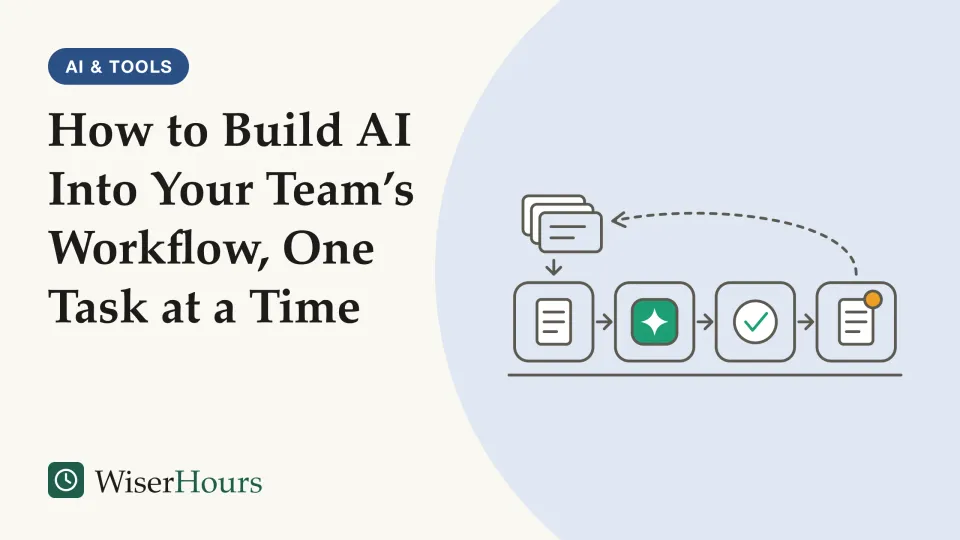
How to put AI in team workflows in 6 steps, and why, in a large trial, an AI tool for each person sped up solo work but not the work a team shares.
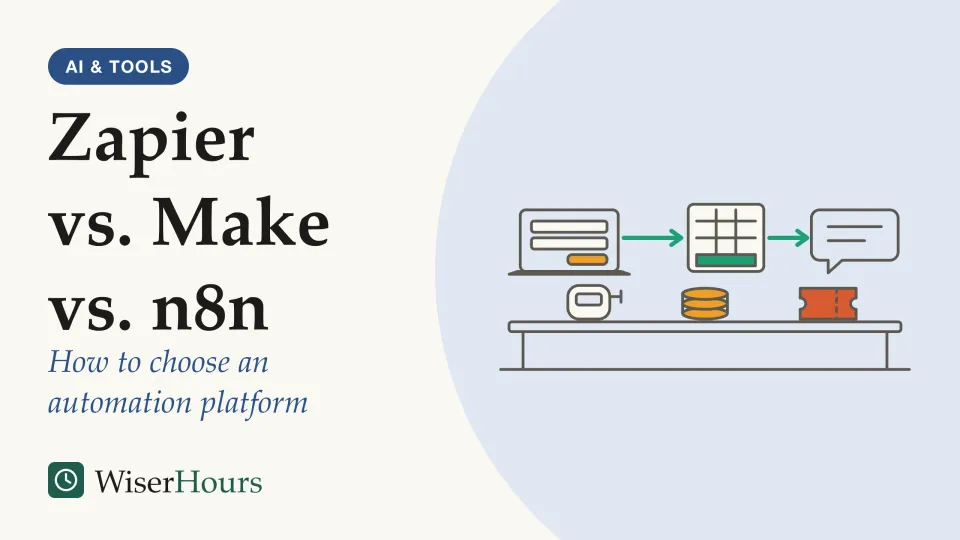
One 3-step workflow run 500 times a month uses 1,000 Zapier tasks, 1,500 Make credits or 500 n8n runs. Prices, hosting and failures compared.
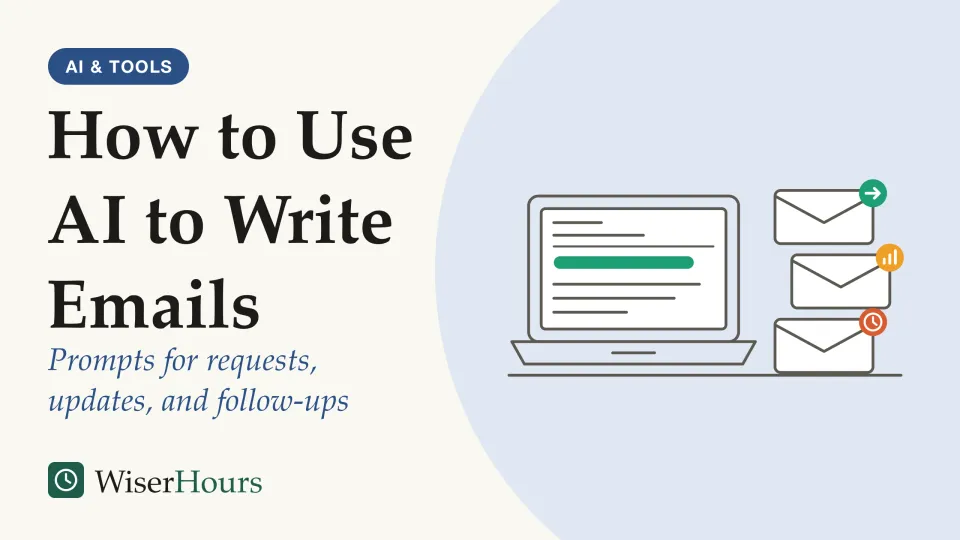
AI for writing emails: 3 copy-ready prompts for requests, updates and follow-ups, what a large trial found it saves, and what to keep out of the chat.
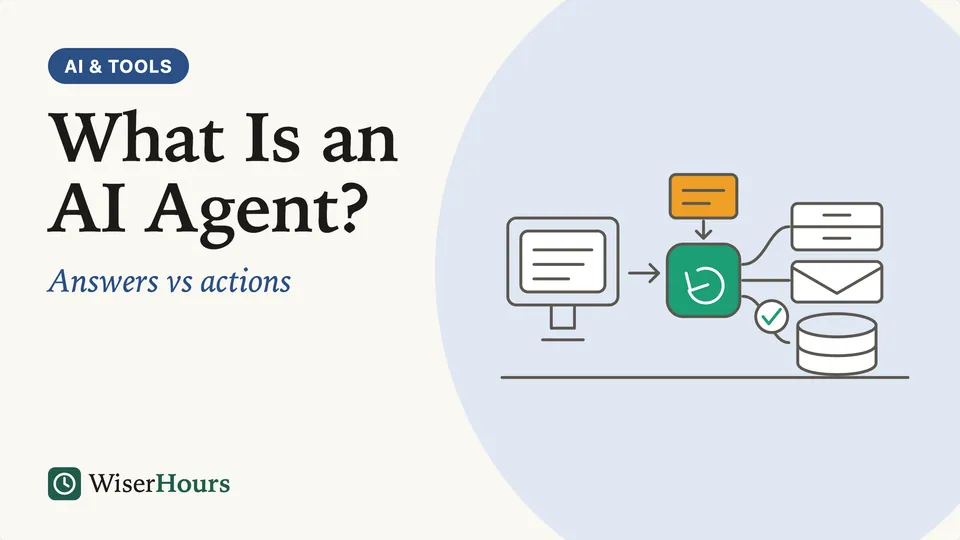
An AI agent acts, it does not only answer. What independent tests found about finishing multi-step work, and 6 things to require before you let one act.
The Cornell note-taking method splits a page into 3 areas and adds 5 steps. Research backs its self-testing step far more than the layout itself.
The best to-do list apps for 6 situations, checked on price, devices and sharing, plus a 3-step trial to run before you move your tasks in.
What workflow automation is, which tasks suit it, and 5 steps to build a first automation that saves time without quietly creating new problems.
Why take notes? A 57-study meta-analysis found only a modest benefit from taking notes; a second found substantial effects from taking and reviewing them.
How to choose productivity apps in 5 steps: name the problem, pick the smallest fix, test it on real work, judge it on set criteria, then review.
How EU law, the OECD and the US Labor Department define AI literacy, the 5 things every employee should understand, and what the EU asks of employers.
AI assistants for beginners: in a 758-consultant experiment, AI help improved work on 18 tasks but cut correct answers on another. What they do well and badly.