Rental Property for Beginners: What Being a Landlord Actually Involves
Rental property for beginners: who owns rentals, what running one costs, and landlords' legal duties in the US and England, checked against 2024-2026 sources.
How to read an MLM income disclosure statement: in a 2024 FTC staff review of 70, none counted all expenses and most left out people paid nothing.
A bear market is usually a fall of 20% or more, a convention rather than a rule. US bear markets since 1929 fell for 1 month to about 2.5 years.
Buy now pay later usually splits a purchase into four interest-free payments. Where the risks hide, the UK rules since 15 July 2026, and where to get help.
In a 2025 Fed survey, 58% of self-employed US adults said their income varied month to month. How to budget around a lean month, a buffer and tax.
Cash stuffing puts spending money in labelled envelopes. A 2024 review of 71 papers finds people spend only slightly less with cash, and the gap is shrinking.
Does money buy happiness? From the $75,000 plateau of 2010 to the 2023 truce: what income studies, lottery winners and the Easterlin debate show.
Debt snowball vs avalanche: paying the highest rate first costs least, yet in UK card data only about 1 in 10 people did it. Which fits your situation.
How an employer match works: a rate and a cap (50 cents per dollar on the first 6% of pay is one common US formula), vesting, true-ups and the UK minimum.
How to calculate net worth in 5 steps, with a worked example, and why the US Fed and the UK's ONS disagree on whether pensions belong in it.
How much do gig workers make after costs? What US studies and New York City data show, from the MIT driver-pay correction to the city's $22.13 pay floor (2026).
Fund investors often earn less than their funds report. How the behavior gap is measured, why estimates range from about 8.5 points to 0.1, and what to do.
Dollar-cost averaging vs lump sum: why investing each paycheck is a different question, and what Vanguard and research since 1979 found about windfalls.
How credit scores work: FICO weights payment history at about 35% and amounts owed at 30%. VantageScore and UK agencies weigh your report differently.
An emergency fund keeps a shock from becoming debt. Why 3 to 6 months is a rule of thumb, a smaller first target, and where the cash is protected.
Does a side hustle help or hurt your main job? A 2020 review found the evidence split; newer studies link it to better performance and distraction at once.
Passive income scams reuse 5 patterns, from returns that cannot fall to upsell ladders. How to spot each one, and where to report a scam by country.
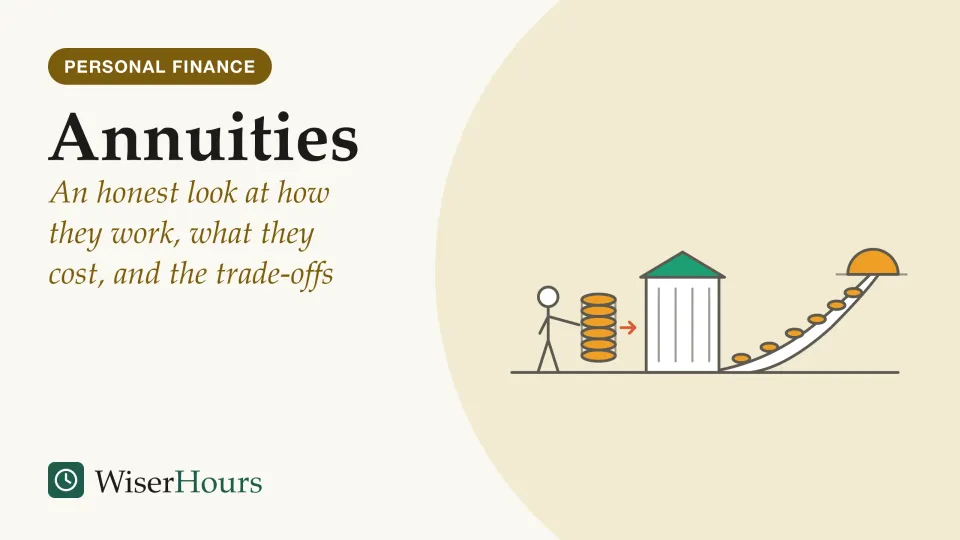
How annuities work: when income starts, who bears market risk, where fees hide, and why the UK saw 1 annuity sale per 4 plans entering drawdown in 2025/26.
In a 39-country OECD survey, only 29% of adults said they don't tend to worry about paying living costs. How money anxiety shows up and what helps.
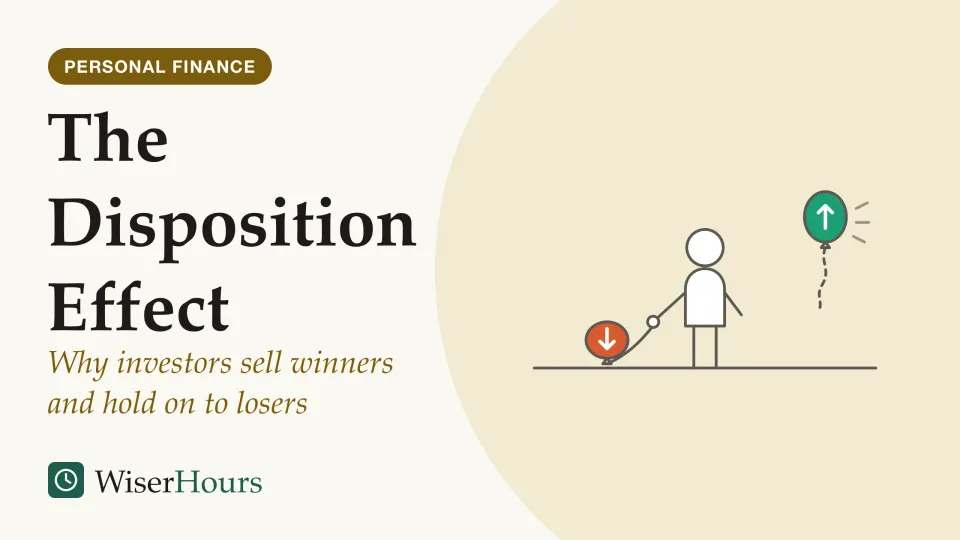
The disposition effect, named in 1985, is the pull to sell winners too soon and hold losers too long. Why it happens and 2 fixes that worked in lab tests.
An FI number is often estimated as the yearly spending gap times 25. Where that comes from, and why US estimates for a 40-year retirement point nearer 30.
How dividend income works: the 4 dates that decide who is paid, why share prices fall by about the payout, and how steady dividends stay when profits fall.
Freelancing on the side while employed: 4 checks on your contract, your employer's interests, tax and client terms, with US and UK rules as of 2026.
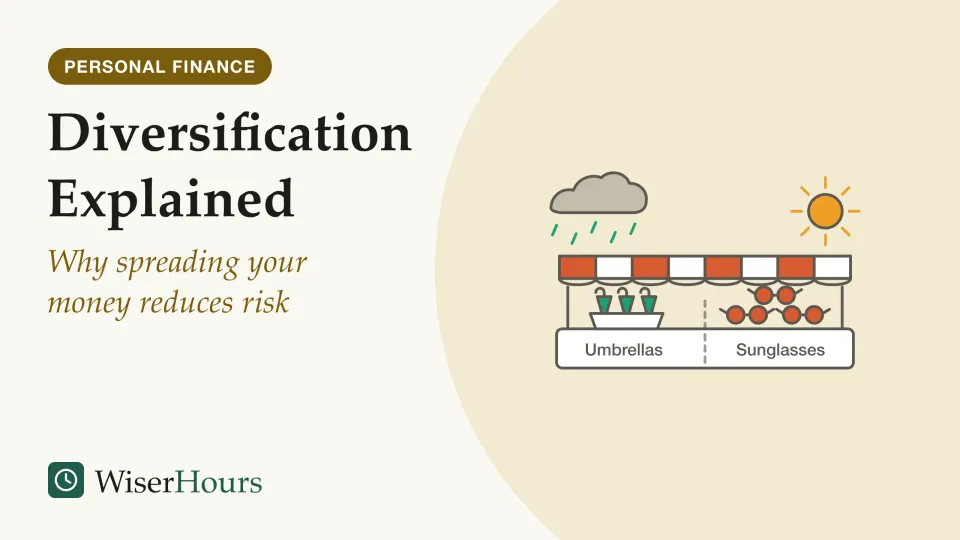
Diversification explained: why spreading cuts one company's risk but not the market's, and why one US study found the stocks needed rose from about 20 to 50.
How to track spending in 5 steps, from government money guides and from research linking regular progress checks to reaching goals.
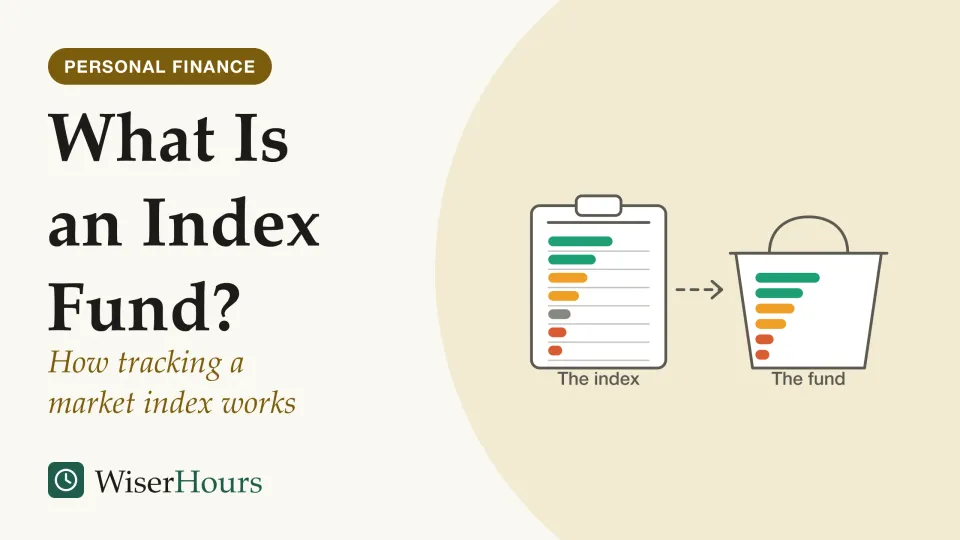
An index fund copies a market index instead of trying to beat it. How tracking works, why the copy is never exact, and 5 questions to ask before you buy.
What is a money mindset? What psychologists actually measure, the 4 money scripts in Klontz's research, and how to test your beliefs against your numbers.
Does financial independence mean never working again? A plain definition, why it comes in degrees, and why the 4% rule is a US rule of thumb, not a promise.
What is passive income? The IRS's narrow tax meaning versus everyday use, what it costs in money, work and risk, and a 4-question test for any pitch.
What is a side hustle? A definition, 4 main types, and US and UK data: in a 2024 Fed survey, 70% of gig earners spent under 5 hours a week on gigs.
Investing for beginners: how stocks, bonds and funds work, what 126 years of US returns show, and 7 steps based on US and UK regulators' guidance.
How debt works: principal, interest and time. In a Canadian regulator's example, paying C$60 instead of C$160 a month cost C$793 in interest, not C$231.
How to make a budget in 6 steps from US, Canadian and Australian government guides, plus what 2022 research shows about why spending estimates run low.